Pop star Dua Lipa has expressed her support for the 'Flamingo Revolution' movement in Albania, which is protesting a large-scale project associated with the Trump family planned for one of the country's most ecologically vulnerable areas.
Pop star Dua Lipa has expressed her support for the 'Flamingo Revolution' movement in Albania, which is protesting a large-scale project associated with the Trump family planned for one of the country's most ecologically vulnerable areas.
The British singer, who has Albanian heritage, called the movement 'inspiring' during a conversation with Albanian academic and author Lea Ypi for the Service95 book club podcast. Lipa noted that she greatly admires how much people care about the situation, especially during the sixth week of demonstrations.
Her involvement has once again drawn global attention to the movement, which the Albanian government has found difficult to ignore or stop, as protests have been ongoing for forty-six days. The protests arose due to plans to build luxury properties on the island of Sazan and the Zvernec peninsula, located near the protected Vjosa-Narta landscape. Jared Kushner's investment firm, Affinity Partners, the son-in-law of Trump, heads this $1.6 billion project, which includes plans to construct around 10,000 rooms along most of the undeveloped Adriatic coast.
These wetlands are a habitat for flamingos, seals, sea turtles, and migratory birds. The government of Prime Minister Edi Rama paved the way for this construction after parliament amended Albania's protected area legislation in 2024, weakening restrictions on construction in areas of high ecological sensitivity. Furthermore, the government granted the developer the status of a strategic investor, ensuring access to expedited approval procedures.
Lipa highlighted the lack of transparency in this process, stating: 'What really worries me is the principle that the government can simply change the law to remove environmental protection without any public discussion.' Rama described the investment as a 'gift to Europe' and a 'blessing,' refusing to halt the project despite weeks of demonstrations. He previously stated: 'There is absolutely no possibility that the investments will stop while I am here.'
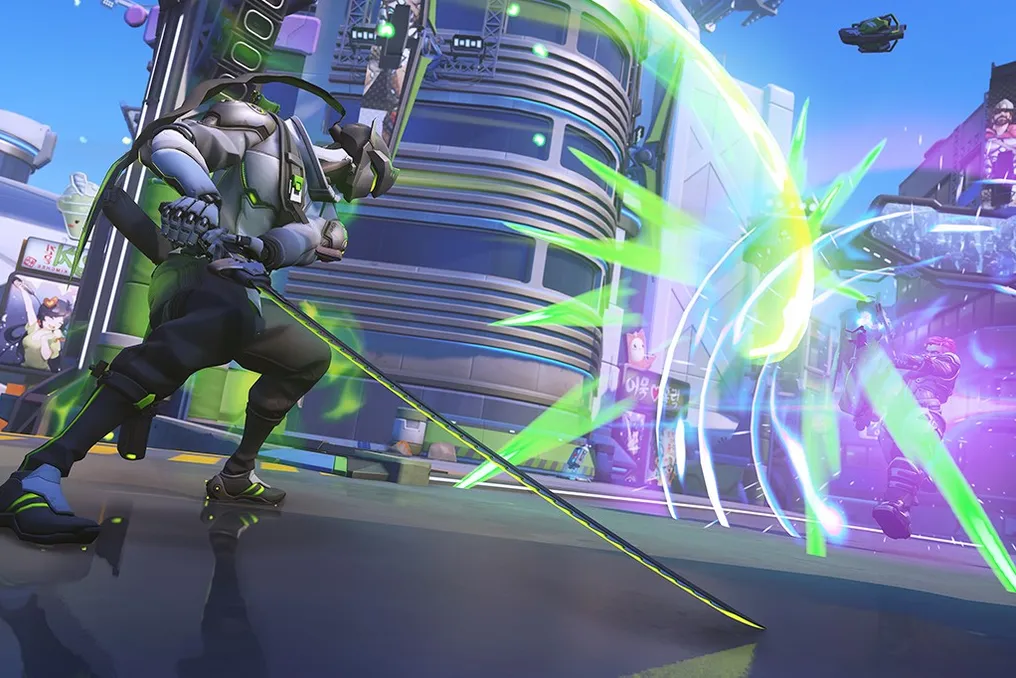
Blizzard Entertainment, the developer of Overwatch, has announced a series of experiments aimed at reforming the match format. Concurrently, the company has decided to halt updates for Stage mode, which was introduced in April 2025.
In a statement released on the official website, game director Aaron Keller presented two temporary modes to test alternatives to the conventional 5v5 (Role Queue) and 6v6 (Open Queue) formats. These modes are called Flex Queue and Dynamic Queue.
The first test, Flex Queue, will run from July 16 to 19. In this mode, matches will be played in a 6v6 format, but with a mixed structure: each team must have one tank and two fixed supports, supplemented by three damage dealers. These damage dealers will have the option to switch to the tank role at any time, provided it is only one at a time. This allows teams to play with varied compositions, such as 1 tank and 3 DPS, or 2 tanks and 2 DPS, depending on the needs of the game.
The second experiment, Dynamic Queue, is scheduled to run from July 30 to August 2. This mode seeks to harmonize the two previous approaches. The matchmaking system will prioritize traditional 2-2-2 format matches but will use the Flex Queue scheme as a contingency if there is a shortage of players willing to play the tank role, which is currently the scarcest role in the queues.
According to Keller, the current flex role tends to assign most players as tanks due to how players are distributed in the queue. The tests aim to solve persistent issues in the games, such as the disproportionate weight of the tank on match outcomes, queue wait times, and instability in 5v5 confrontations. However, he emphasized that the results obtained do not automatically imply changes to the main game format; they may instead serve as inspiration for adjustments to existing modes or for the creation of new options in Arcade. Keller concluded that, like any successful experiment, the results will only be known after all phases are completed.
The announcement also confirmed that Blizzard will cease updates for Stage mode. This mode, launched in April 2025 during Overwatch 2 Season 16 (before the shift to Overwatch), offers a more dynamic experience, allowing players to customize their heroes with items and powers that alter their abilities.
Player data from June 28 presented by Keller indicates that only 6% of players opt for Stage mode (with 3% in casual matches and 3% in ranked). This participation is significantly lower compared to traditional 5v5 (54% in casual mode), 5v5 Competitive (37%), and even Open Queue 6v6 (19%). Given this low engagement, Keller stated that the team will no longer expand Stage with new maps or heroes. Despite this, the mode will not be eliminated, as it will continue to receive balancing updates, rank resets, and seasonal rewards, although the dedicated project team will be reassigned to other initiatives within the game.
The decision generated divided opinions in the community. On threads in the official forum, a topic titled “Save Stadium” characterized the change as a “hard blow” for players who invested a large part of their time in this mode. On platforms like ResetEra, the response was mixed: some lamented the end of updates, citing Stage as their preferred mode, while others considered the measure expected given the low adoption rate and internal competition.
Google announced two new features for Google Vids, its video creation platform integrated into Google Workspace, on Thursday (16). These additions enable content generation using artificial intelligence from texts and images, in addition to offering the ability to create custom digital avatars.
The new tools were designed to streamline audiovisual production, allowing users to edit, adjust, and personalize their videos without needing conventional filming or extremely complicated editing processes. This feature is available to subscribers of the Google AI Pro and Ultra plans, as well as to Workspace business clients.
This update elevates Google Vids beyond its original function as a mere corporate presentation tool, aligning it with specialized AI-generated video platforms. The system utilizes the Gemini Omni model, a multimodal artificial intelligence model, combining it with sound and visual personalization features.
The main innovation lies in the integration of Gemini Omni, which allows for the creation of videos from textual descriptions and reference images. The user can input an idea in natural language and supplement it with visual elements, such as sketches or photographs, to guide the final result. Furthermore, the technology supports continuous modifications to the generated material; through written commands, it is possible to request specific changes, such as changing scenes or improving the lighting of a video shot with a cell phone, without having to restart the entire project.
According to Google, this functionality aims to simplify editing, as adjustments can be made sequentially. The company assures that this operating method applies to both videos created by the AI itself and content captured by users.
Another significant advancement is the ability to develop personal avatars that digitally represent the individual. To generate this virtual character, the user must provide a facial photo (selfie) and a brief voice recording. After that, they simply type the desired message for the avatar to present, eliminating the need for a new recording. Google clarified that these avatars are linked to the user's account and can only represent that specific person. There are access restrictions, as the tool is only available to those over 18 years old in certain locations.
Finally, the company announced that all videos produced with the aid of artificial intelligence will receive an invisible digital watermark, created by SynthID. This mechanism serves to identify AI-generated content and increase transparency regarding the origin of these materials.
The area known as Hipódromo Condesa emerged in the 1920s as one of the pioneering examples of modern urbanism in Mexico City. This neighborhood was built on the former capital's hippodrome, which gave it a unique urban identity, marked by an organic and curved design, maintaining the memory of the equestrian circuit through the current Amsterdam Avenue.
In the 1930s and 1940s, Hipódromo established itself as a avant-garde residential refuge, adopting Art Deco as the dominant style. Beyond the formal aesthetic, this movement proposed a new way of living, characterized by functional, well-lit apartments intimately connected to urban life.
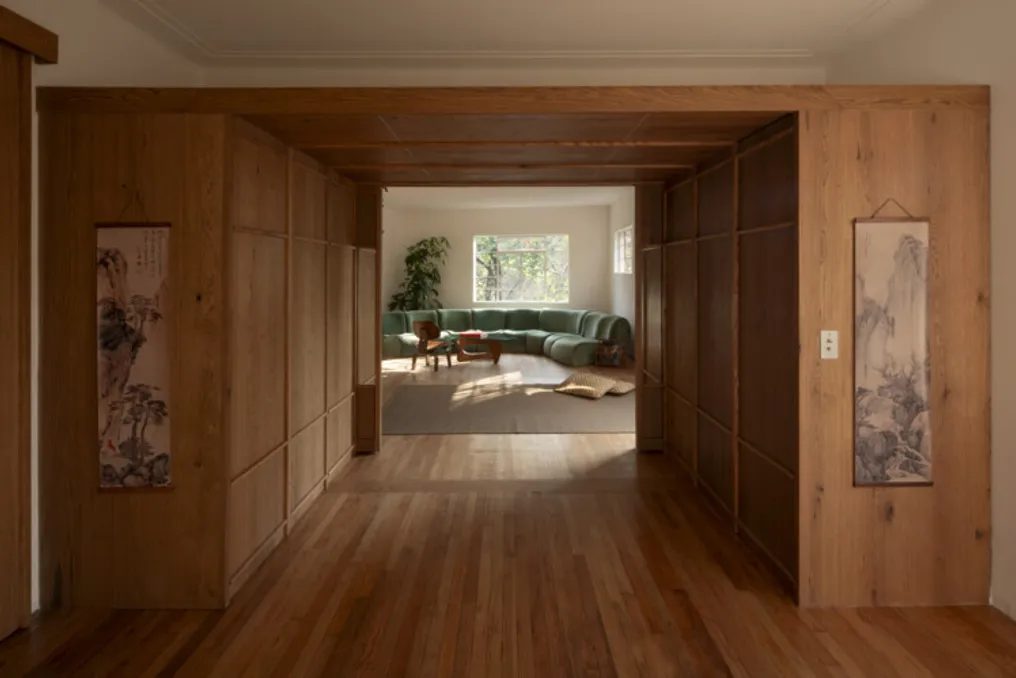
In this historical and urban setting, the Popocatépetl 35 building is part of the Art Deco fabric that defines Hipódromo Condesa. The renovation of this apartment aims to establish a dialogue with this tradition, focusing not on a literal restoration, but rather on a temporal continuity that preserves the memory of the neighborhood and projects it toward new standards of living.
Originally, the apartment presented a state of deep decharacterization, due to the addition of carpets, drywall partitions, and the loss of its original finishes and arches.
Plaza Popocatépetl serves as the immediate landscape and urban reference for the project, with its roundabout being a social and spatial landmark of the surroundings. The central vaulted structure, with its clear geometry and civic function, inspires the edge vault of the intervention. This creates a sense of refuge and spatial continuity, functioning as a connection point for daily communal spaces, such as the living room, kitchen, powder room, and access.
The curved path, echoing the old hippodrome, gradually guides the resident to the center of the vault, which becomes the visual and spatial focus of the project. The master bedroom connects to the living room through a closet positioned where there was previously a dividing wall. This large piece of furniture is strategically open, allowing the bedroom to integrate with the living room space and extend its views to the plaza.
The carpentry used in the kitchen, closet, and bathrooms has a unified language, as do the curved doors. Combined with white ceramic tiles, brushed steel elements, and locally molded granilite in a curved shape in the central corridor, the project uses a limited selection of noble materials. The goal is to promote coziness and maximize the entry of natural light, which now flows continuously through the integrated environments.
The intervention revitalizes the apartment by directing visual perspectives, hierarchizing the communal spaces, and using geometries that converse with the curvature and concentric logic of both the plaza and the old hippodrome. Plaza Popocatépetl transcends the role of mere background, integrating itself as a perceptual extension of the interior, strengthening the link between architecture, urban memory, and daily life.