An international team of scientists has identified superheated water hidden beneath the floor of the Atlantic Ocean, specifically in an area associated with the enigmatic hydrothermal field known as Lost City.
An international team of scientists has identified superheated water hidden beneath the floor of the Atlantic Ocean, specifically in an area associated with the enigmatic hydrothermal field known as Lost City.
This discovery contributes significantly to understanding how ecosystems without solar exposure can generate energy, and it may also provide clues about extraterrestrial environments capable of sustaining life.
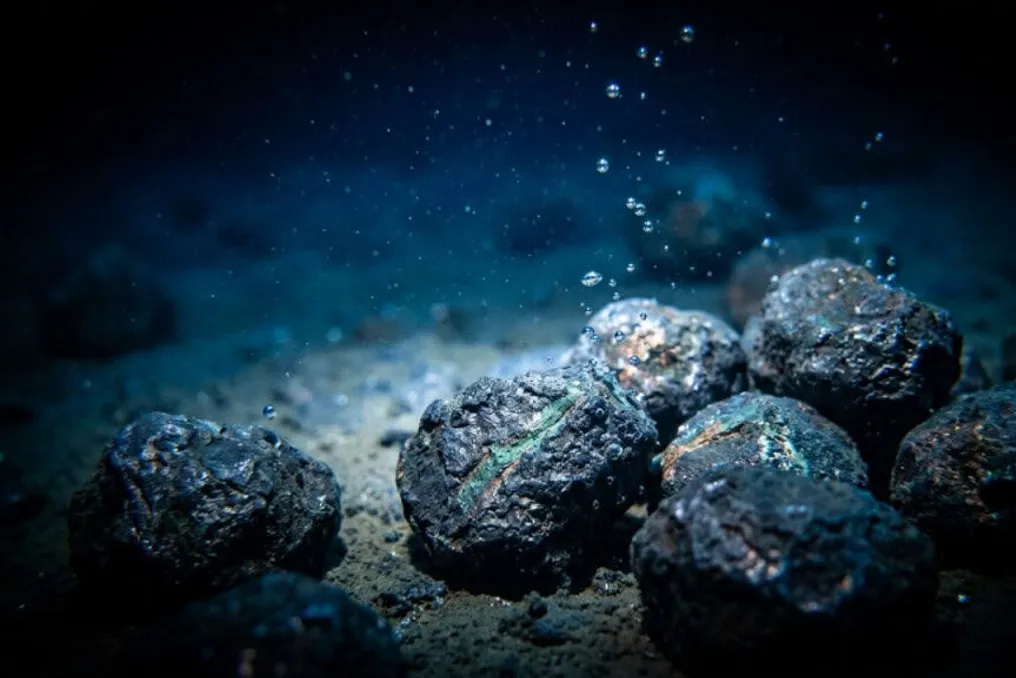
The Lost City hydrothermal field is known for its vast white carbonate formations and for hosting organisms that depend on chemical reactions between water and minerals, independent of solar energy. To investigate the origin of this natural fuel, researchers drilled into a section of the Atlantis Massif in the Atlantic, reaching depths of 1,268 meters below the seabed during expedition IODP 399, conducted in 2023.
The activities took place aboard the vessel JOIDES Resolution, which inaugurated borehole U1601C approximately 800 meters from the hydrothermal field. After drilling, water samples were collected from various depths. At the deepest points, located between 675 and 800 meters below the ocean floor, up to 80% of the collected liquid originated from natural water circulating through the rocks.
Analysis of these samples showed a very particular chemical signature: the fluid had lost almost all its magnesium while accumulating calcium and other elements extracted from the rocks. Among the components found were traces of lithium, rubidium, cesium, and strontium. This composition is similar to that observed in fluids reaching the Lost City vents.
The researchers concluded that this finding constitutes the first direct proof of deep circulation of high-temperature fluids within the rocks located under the Atlantis Massif. The study's authors stated: 'Our result provides the first direct evidence of deep circulation of high-temperature fluids through gabbroic and ultramafic lithologies beneath the Atlantis Massif.'
This mechanism operates as an underground system where ocean water penetrates the Earth's crust, interacts with heated rocks, incorporates minerals into the fluid, and then returns to areas near the surface, carrying energy.
In addition to elucidating the functioning of Lost City, the study is relevant to the search for life on other planets and moons. Analogous environments may exist in the subsurface oceans of frozen celestial bodies.
However, scientists emphasize that uncertainties remain, given that the samples obtained after drilling were contaminated with seawater, freshwater, and fluids used during the procedure. The next phase of the work will involve returning to the site to collect purer samples and determine with greater accuracy how these deep reservoirs transport chemical energy. The study reinforces that Earth preserves natural systems capable of offering clues about the origin of life and potential habitats beyond our planet, even in extreme and dark regions.
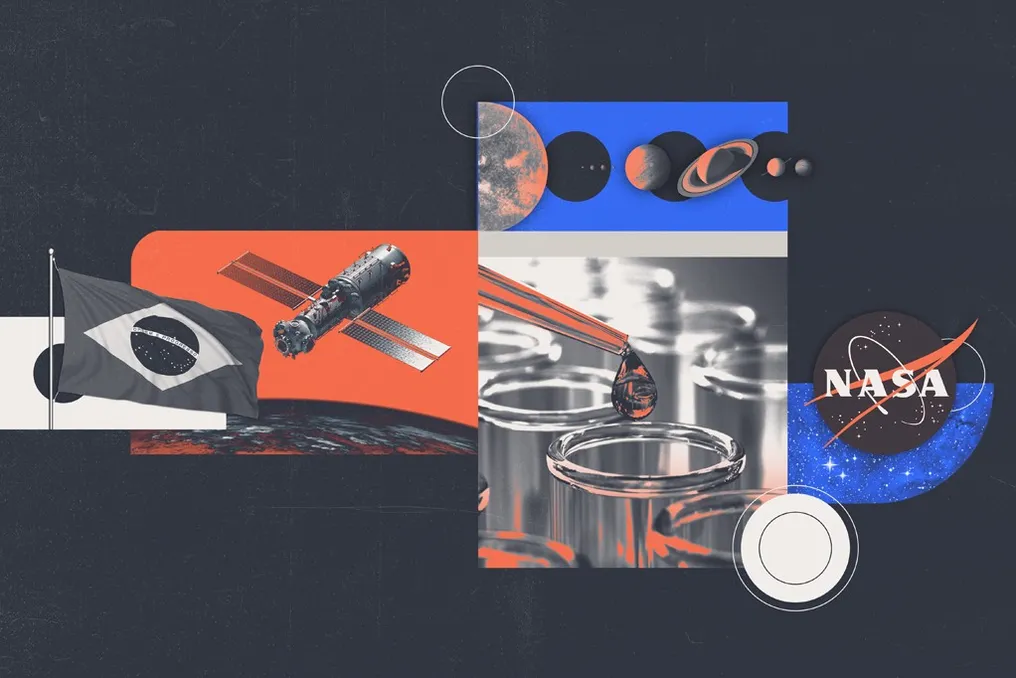
Researchers from Brazil are actively participating in NASA missions, studying Mars, volcanoes on Saturn's moons, and the function of 'mini-brains' on the Space Station. These scientists make a significant contribution to the American space agency's research.
A biologist from Brasília, Alina Martins, became interested in space at around age 14 after watching the film 'Blade Runner' (1982). She was drawn to the final words of the android Roy Batty. This interest led her to co-direct a laboratory conducting advanced research for NASA.
Martins began engaging in space research in 2022 after meeting Allison Muotri, a neurobiologist from San Diego. They collaborated with chemist John Yates from The Scripps Research Institute. Their joint work involved analyzing samples of cellular material sent to the International Space Station (ISS). The study examined how the space environment affects dormant parts of DNA, potentially accelerating the aging of astronauts' neural cells.
Allison Muotri emphasizes that the goal of all their space experiments is to understand the influence of space on the human brain and apply this knowledge to treat neurological diseases on Earth. Among the projects, they study mechanisms of accelerated aging, methods of radiation protection, the search for neuroprotectants, the development of new materials for brain-machine interfaces, and modeling conditions such as Alzheimer's disease, autism, Parkinson's, and dementia.
In 2024, Alina Martins became co-director of the University of California, San Diego (UCSD) laboratory with Muotri. The laboratory was named 'Orion,' which held personal significance for her. Martins, 49, is responsible for onboard experiment technologies and the analysis of mini-brains returning from the ISS, noting that Americans view Brazilians as a missing 'spice' in research.
Of the ten scientists working on space projects, nine were born in Brazil. Luisa Coelho, a biologist from Florianópolis, 27, is one of the younger members of the team. She joined the project seven years ago while pursuing her master's degree at UCSD. Coelho began working with Muotri after seeing his work on simulating Neanderthal characteristics in organoids, which he calls 'mini-brains,' in a television report about him as a professor at the same university. Today, she is a mission specialist focusing on studying the brain's immune systems.
Muotri, 51, moved to the US in 2002 for postdoctoral research. He is known for his pioneering research, including discovering the link between the Zika virus circulating in Brazil and microcephaly in 2016. In 2018, he founded the field of 'neuroarchaeology,' creating Neanderthal mini-brains. His involvement in space research began in 2016 when he detected signs of accelerated aging in human cells in space. Despite warnings he issued to NASA, he decided to fund the sending of a mini-brain experiment into space in 2019, which confirmed his hypothesis. Since then, NASA has paid attention to and funded his work.
Muotri's laboratory is the most Brazilian among research centers working with NASA in the US. However, there is another center closely associated with the presence of Brazilian scientists—the Jet Propulsion Laboratory (JPL) in California, which has been operating since 1989. JPL is a traditional NASA center, established in 1936. In 1991, planetary geologist Rosalina Lopez became a member of the Galileo Project, which studied Jupiter and its moons. She observed the volcanic moon Io from 1996 to 2001, leading to the discovery of 71 active volcanoes, earning her a Guinness record. Afterward, she worked on the Cassini mission to Saturn and continues to study the volcanoes on Titan, the largest moon of the solar system's sixth planet, which are cryovolcanoes.
Scientists such as Ramon De Paula, an engineer who led the Phoenix probe mission to Mars, and Ivair Gontijo, an engineer who participated in the Curiosity mission to Mars, also worked at JPL. Planetologist Nilton Renno from São Paulo began working with probes aimed at Mars in 2007. He led research that resulted in the discovery of liquid water beneath the surface of Mars in 2008.
Google has promoted a name change in its generative artificial intelligence tool, NotebookLM, which has been renamed to Gemini Notebook. This service assists users with study tasks and data structuring.
Currently, the service is used by over 30 million individuals and about 600 thousand organizations. NotebookLM was introduced during the Google I/O 2023 event under the codename Project Tailwind. Despite unexpected success, which led to widespread adoption, the name change was seen as a way to make the designation more accessible, leveraging the recognition of Google's main AI service.
Although the transition is underway, the service may still appear as NotebookLM on the web version, while the applications have already been updated with the new name.
Google clarified that Gemini Notebook will continue to operate as an autonomous product, but now incorporating a new capability. A feature has been activated that allows Gemini Notebook to connect to a secure cloud computing environment for writing and executing code when creating a notebook. This functions as an isolated testing environment, allowing the system to perform complex analyses without exposing confidential data or interfering with other features.
However, this specific advancement is limited to Google AI Ultra subscribers and Workspace corporate clients who have AI Ultra Access or AI Expanded Access subscriptions. Google AI Pro users will gain access to this functionality at a future time.
Gemini Notebook is described as a powerful generative AI service designed to help the user organize, summarize, synthesize, and retrieve specific information, acting as an advanced digital notebook. It is particularly useful for students or professionals dealing with large volumes of information. In addition to processing text, the tool can also handle audio data (such as podcasts) or generate personalized videos.
It is important to note that the service has a free version, but certain advanced functionalities require purchasing paid AI packages offered by Google.
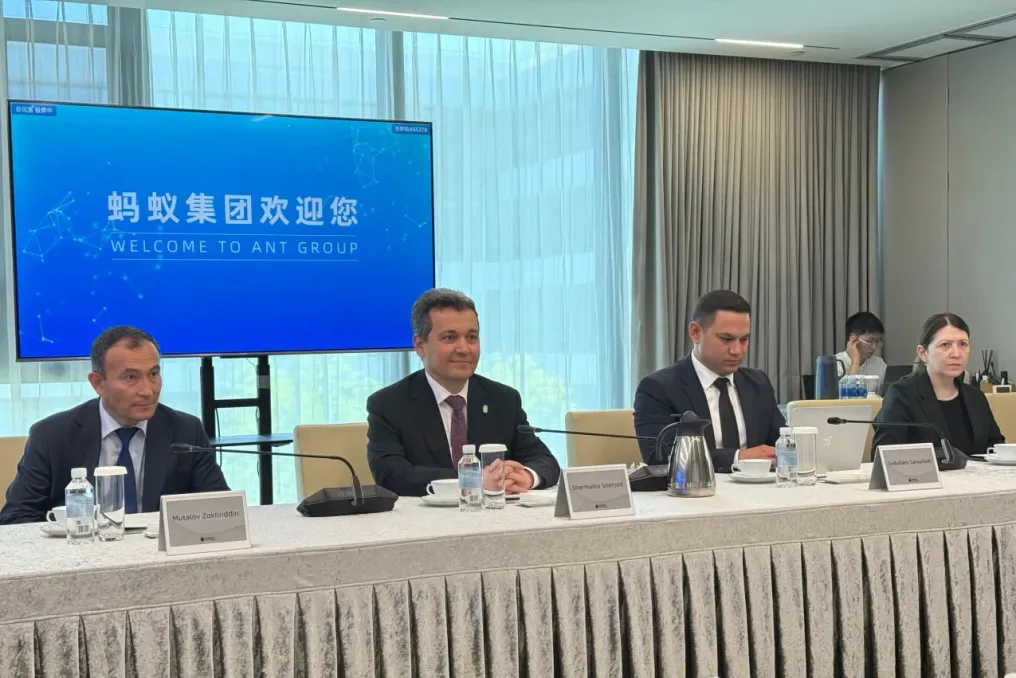
The Minister of Digital Technologies of Uzbekistan, Sherzod Shermatov, met with a delegation from China's Ant Group in Shanghai. The delegation was headed by Harry Qian, the company's Director of Innovation and International Business Solutions.
The parties discussed potential interaction in areas such as artificial intelligence, data centers, digital infrastructure, financial technologies, and the implementation of advanced digital solutions. These negotiations took place on the sidelines of the World Artificial Intelligence Conference (WAIC), which was attended by the Uzbek delegation.
Representatives of Ant Group presented their strategy in the field of artificial intelligence, designating AI as one of the most important long-term priorities. The company stated its use of the most cost-effective AI models to solve a wide range of tasks. Furthermore, Ant Group demonstrated its developments in healthcare, e-commerce, and financial services, as well as deepfake detection technologies, digital identification systems, cloud services, and AI agents. Company representatives emphasized that they view artificial intelligence as a tool that enhances human capabilities, rather than replacing them.
For his part, Shermatov provided an overview of the development of the artificial intelligence ecosystem in Uzbekistan, as well as plans to increase computing power and create modern data center infrastructure. He highlighted the country's competitive electricity tariffs, the opportunities for using renewable energy sources, and the favorable conditions for hosting modern data centers. The Minister invited Ant Group to consider participating in the development of Uzbekistan's AI infrastructure and to use Tashkent as a platform for the company's regional office. Representatives of the Chinese firm expressed readiness to study the possibilities of phased expansion of their activities in the region.
At the end of the meeting, Shermatov invited Harry Qian to attend the ICT Week Uzbekistan event, scheduled for September of this year.