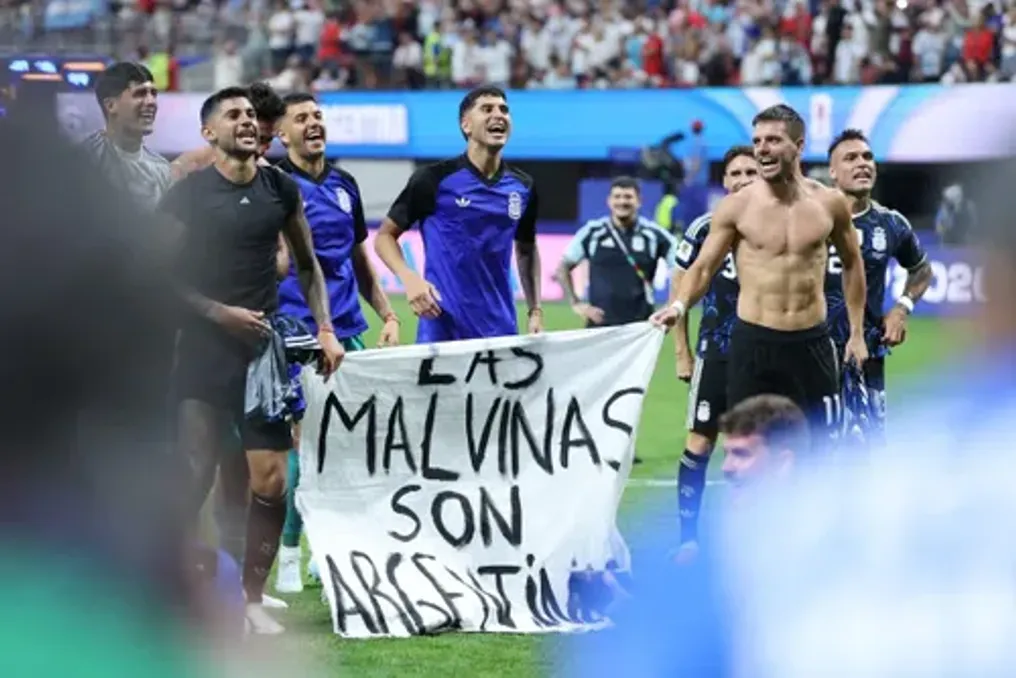
After Argentina defeated England 2-1 in the 2026 World Cup semi-final, players from the Argentine team displayed a banner in Spanish reading: 'The Falkland Islands belong to Argentina.'
After Argentina defeated England 2-1 in the 2026 World Cup semi-final, players from the Argentine team displayed a banner in Spanish reading: 'The Falkland Islands belong to Argentina.'
When sport intersects with politics, the consequences of this clash can have a significant impact on society. In this case, it revealed an unsightly side of football, which, according to the author, was somewhat provoked by FIFA itself.
Despite controversial refereeing decisions, unpleasant scenes occurred both on social media and in the streets after the match in Atlanta. These events followed Argentina's victory over England in the World Cup semi-final on Wednesday.
One of the moments that caused controversy was the lack of VAR review regarding fouls committed by Argentine players. The author noted that Enzo Fernández's elbow to Elliot Anderson's head was an obvious yellow, and possibly even a red card. He emphasized that hitting someone in the back of the head is forbidden even in extreme combat sports like UFC, but towards Argentina, he said, 'everything is allowed.'
Furthermore, questions arose regarding Argentina's first goal, as Lionel Messi appeared to be in an offside position. No replay was shown during the broadcast to illustrate Messi's positioning. Nevertheless, the goal was counted, and Argentina was able to return to the game to reach the final.
The situation sharply escalated after the final whistle when fans from both countries engaged in street fights, forcing the Atlanta police to enter riot mode. Although hostility has always existed between the two nations, the situation was exacerbated by the statement of Argentine Vice President Victoria Villarruel, who called the English 'invaders' shortly before the match began.
The author believes that for the head of state, imposing personal political views on such a large stage was a disgrace to Argentina and gave the fans an aggressive mood before the game. The World Cup semi-final became almost secondary, while revenge for the Falklands War became the central theme, overshadowing the fact that Argentina completely outperformed England in play.
On Thursday morning, social media was flooded with various conspiracy theories, slander, racism, and insults among fans of both countries, marking a dark turn in football. The author once again drew attention to FIFA, demanding that it ensure 'fair play' and 'transparency.' He stated that the attitude towards a game that holds immense importance for people, with such impunity, speaks volumes about the leadership of Gianni Infantino and FIFA as a whole. The public and football fans around the world have undoubtedly lost respect and trust in FIFA, which seems to have ceased being just football and turned into politics.
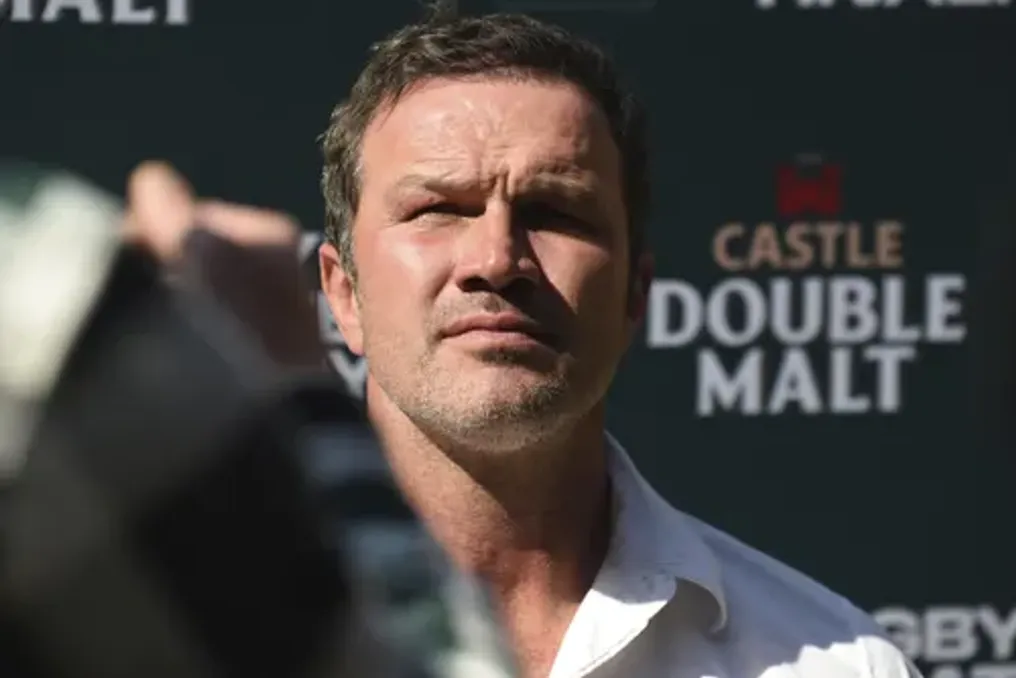
Former Springbok player and hooker Bismarck du Plessis expressed admiration for how Rassie Erasmus develops versatile players to support the Boks team in their pursuit of a third consecutive Rugby World Cup title.
Du Plessis believes that the depth created by Rassie Erasmus in the national team is unprecedented. The world champions continue to perform well despite constant changes in the squad on match day. Under Erasmus, the Boks have become known for their player rotations, but this has not led to a decline in the high level of play. This characteristic has allowed Erasmus to utilize new players while South Africa maintains the same intensity and physical power in the Test series matches.
This coming weekend, when the team faces Wales at Kings Park in Durban (match starts at 17:40), four players will make their debut. This match is the last in the Tri Nations, and the Boks intend to maintain their winning streak.
Du Plessis specifically noted the usefulness of front-rower Jan-Hendrik Wesels, who seamlessly switches between the positions of left prop and hooker, despite the differences in the technical requirements of these roles. Du Plessis stated: 'I think it's very difficult for a guy like Jan-Hendrik.' He added: 'Playing left prop and playing hooker are very different things. You have to give him credit for how he handles it, because they are still trying to figure out where he contributes most to the team.'
He also shared his personal experience, noting: 'He is a very talented player. I am glad I didn't have to switch positions in the front row. It was already hard to throw out lines, one week I throw, and the next week I don't.'
Although Wesels' versatility attracted attention, Du Plessis was most impressed by Erasmus's ability to develop adaptable players. He referred to recent performances by South Africa, where the Boks made extensive changes from week to week while achieving victories against strong opponents such as England and Scotland. Du Plessis is convinced that Erasmus has repeatedly demonstrated why his squad decisions cannot be questioned, even if they raise questions.
'I have complete trust in how he uses his squad,' said Du Plessis. He explained that having a player capable of covering two positions allows them to 'almost have an extra man somewhere else.' He recalled the 2023 World Cup when Deon and Marco covered the hooker position, although they did not play there regularly. 'I think we won the World Cup again, and this versatility is helping our team flourish in the best way right now.'
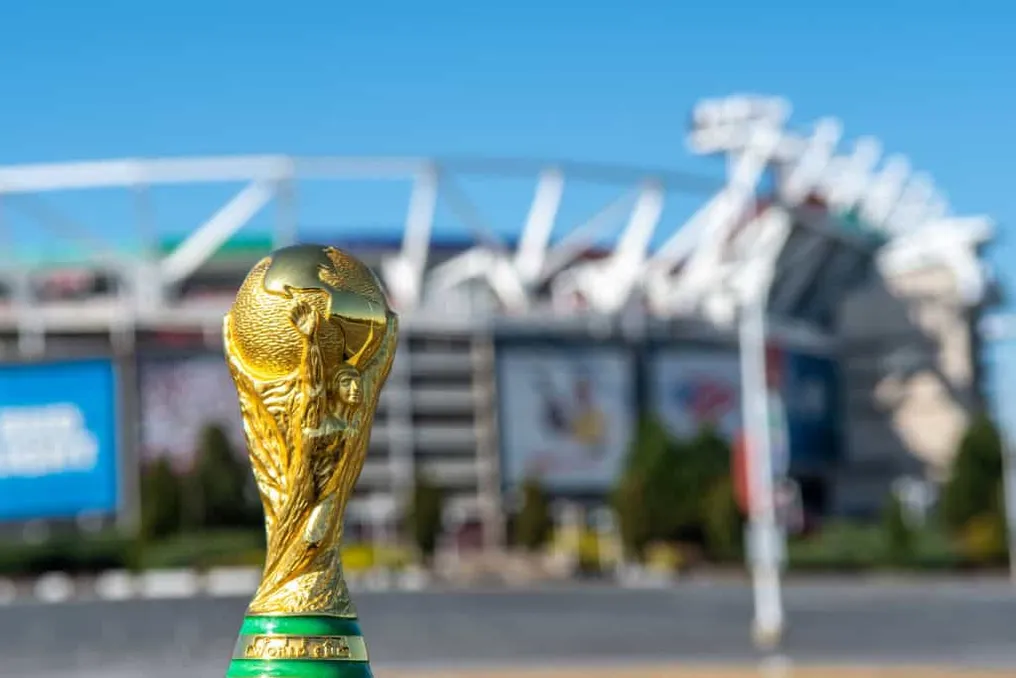
With the 2026 World Cup final approaching, an analysis conducted by an Opta supercomputer generated significant interest by pointing to Spain as the team with the highest probability of winning the tournament. The decisive match is scheduled for this Sunday (19th) in New Jersey and will feature the confirmed presence of Donald Trump.
Data provided by the Opta supercomputer indicates that the Spanish national team is the favorite, holding a 56.05% chance of winning the match during regular time. Conversely, Argentina, which is the top South American team and holds three world titles, has a 43.95% probability of securing victory within 90 minutes.
If this projection materializes, Spain would achieve its second world title. Meanwhile, Argentina would aim for its fourth trophy.
The grand final will be held at MetLife Stadium, located in East Rutherford, New Jersey. This stadium, temporarily named New York-New Jersey Stadium, has a capacity to host up to 82,500 spectators. The venue has previously hosted the final and both semi-finals of the 2025 FIFA Club World Cup.
Historically, the last encounter between Spain and Argentina took place on March 27, 2018, during a friendly match held at the Wanda Metropolitano Stadium in Madrid, where the Spaniards won 6 to 1.
The final is set to begin on July 19th at 4 PM (Brasília time) and 7 PM (GMT) at MetLife Stadium. Furthermore, for the first time in a World Cup final, there will be an halftime show inspired by the Super Bowl format. Among the anticipated artists are Madonna, Justin Bieber, Shakira, BTS, Burna Boy, Gustavo Dudamel, and the PS22 choir, featuring Coldplay.
The musical performance is expected to last approximately 11 minutes, allowing the break to be extended up to 30 minutes. Before the opening whistle, a closing ceremony will commence 90 minutes prior, featuring Tom Cruise, Robbie Williams, and Nicole Scherzinger. FIFA has also confirmed that the United States President, Donald Trump, will be present to present the trophy to the winner.
After the conclusion of this final, the focus will shift to the 2030 World Cup, which will be hosted in Morocco, Spain, and Portugal. In celebration of the tournament's 100th anniversary, there will also be matches in Uruguay, Argentina, and Paraguay. Although the final city has not yet been determined, Madrid is cited as the main candidate.
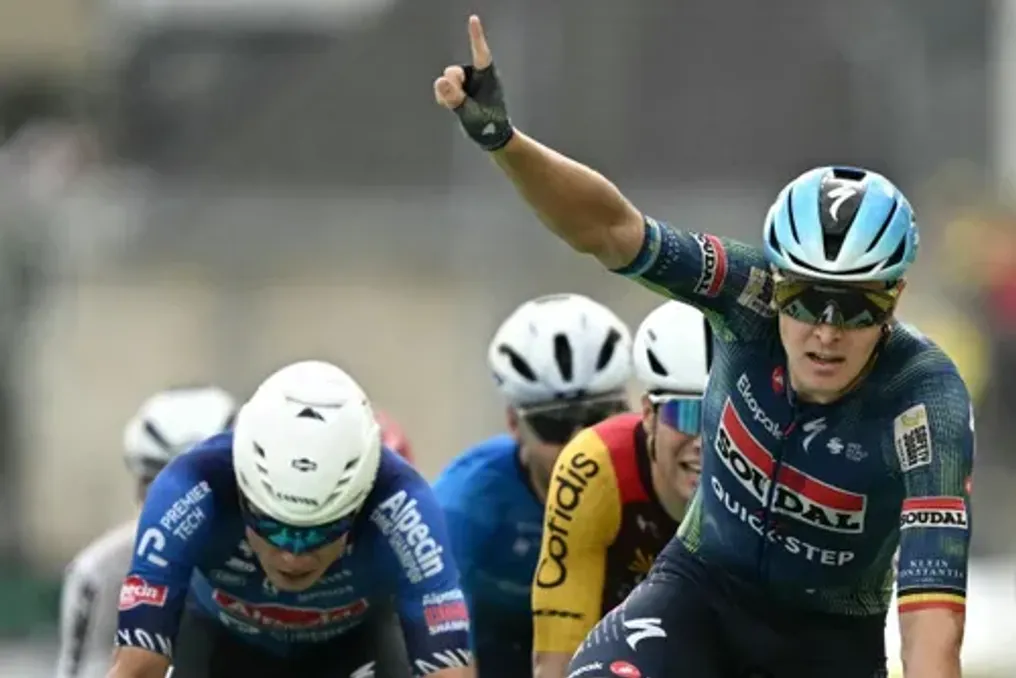
Belgian rider from the Soudal Quick-Step team, Tim Merlier, won Stage 12 of the Tour de France by crossing the finish line. This victory marks his third in the current year on this tournament and allowed him to climb to sixth place in the general classification.
Merlier's win was achieved during a chaotic race marked by numerous crashes. He overtook Dutchman Olaf Kuijz and his Belgian teammate Jasper Philipsen. Merlier noted that this victory held special significance for him because his partner and three-year-old son, Jules, were watching at the finish line.
Merlier shared his feelings, stating that it provided him with motivation and brought his son onto the podium. The race turned into an unorganized sprint again, exacerbated by the crash of Colombian Fernando Gaviria, which caused several other athletes, including Stage 11 winner Soren Waerenschild, to fall.
The Alpecin Premier Tech team once again tried to organize a victory for Philipsen, but Merlier, as he had done twice before in the 113th edition of the Tour de France, managed to find a way through the crowd and finish first. Kuijz, the winner of Stage 5, finished second for the second day in a row.
Milan Fretin attempted to follow Philipsen's sprint squad but was overtaken by faster riders, finishing fifth. He stated that he did not regret his decision as he managed to finish in the top five and hopes for an opportunity on Stage 17.
Dominant champion Tadej Pogačar successfully completed the 179-kilometer stage from Manny-Cour to Salon-sur-Saône. He maintained his lead in the general classification with a margin of more than three and a half minutes over two-time champion Jonas Vingegaard. Pogačar reported that he plans to conserve energy for the upcoming hilly 205 km stage from Dole to Belfort, which precedes the mountain races on the weekend.
He noted that the next day would be unusual, very long, with one and a half climbs towards the end, and a finish after a descent. Pogačar emphasized that the team would have a hard time, but they needed to survive to save energy for the more important days on Saturday and Sunday.
Approximately 25 kilometers into the race, Baptiste Weistroff started an attack in a breakaway for the third time, riding completely alone the second time. After three riders joined him 57 kilometers later, all three were dropped by the time they reached the last 50 kilometers. In the final 35 kilometers, there were many other attempts at attack, allowing a group of 14 riders to break away from the increasingly exhausted peloton, but this was stopped 24 kilometers before the finish. This prompted many riders to risk it in the fast final stretch, but no group could maintain their pace.
Two active participants are American champion Quinn Simmons and his teammate from Lidl-Trek, Mads Pedersen, who is leading the fight for the green jersey of sprinters. Lidl-Trek Sports Director Kim Andersen commented: 'We tried something. We won't win the sprint just by following the sprinter's team controlling the sprint.' He added: 'We knew it would be difficult. I think it was nice to watch?'