The first group of Trek4Mandela 2026 participants has begun their journey with the aim of raising awareness and collecting funds for the Imbumba Foundation's fight against menstrual poverty and to support girls' education.
The first group of Trek4Mandela 2026 participants has begun their journey with the aim of raising awareness and collecting funds for the Imbumba Foundation's fight against menstrual poverty and to support girls' education.
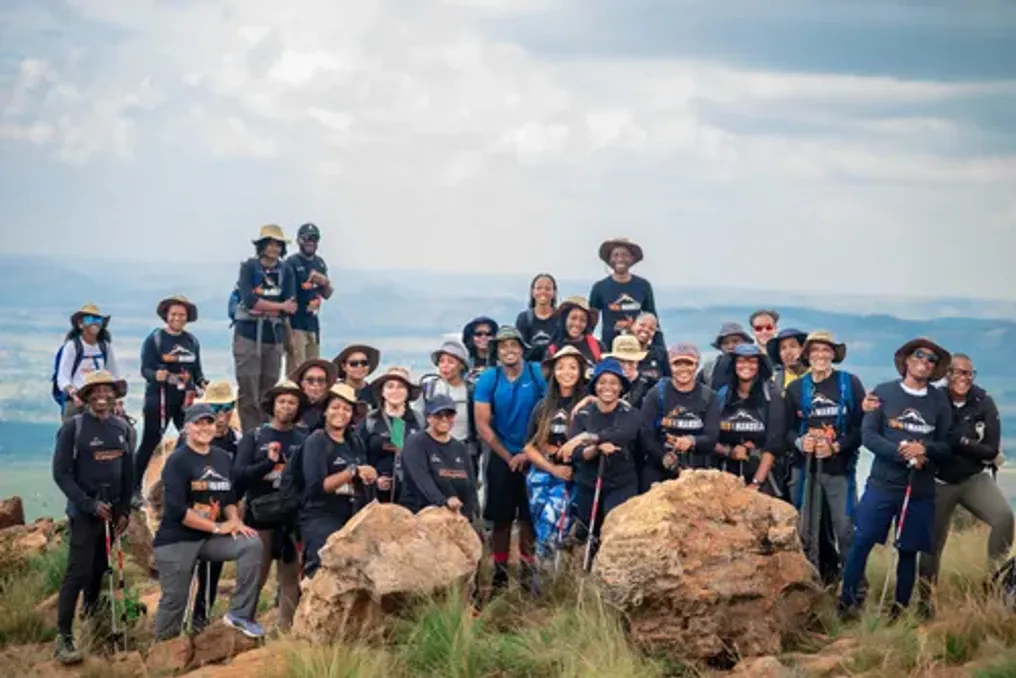
This first group officially commenced its route on Monday, marking the beginning of a new phase in the Imbumba Foundation's campaign to eradicate menstrual poverty and ensure that no girl misses school due to her menstrual cycle. This start signifies the launch of the Trek4Mandela expedition series this year, which will involve 40 mountaineers in three separate challenges aimed at fundraising and raising awareness for the foundation's Caring4Girls Program.
Forty participants will undertake three challenges within Trek4Mandela 2026, including climbs up Mount Kilimanjaro, to support the Caring4Girls Program. Trek4Mandela, considered the largest annual charitable expedition on Mount Kilimanjaro in South Africa, has mobilized hundreds of adventurers over many years to support women's health and girls' education. This year, the first team will travel to Tanzania to climb Mount Kilimanjaro in honor of Mandela Day, while the second group is scheduled for August 9th, International Women's Day. The campaign will also expand its horizons by hosting the Larapinta Outback Challenge in Australia for the first time, allowing it to reach a new international audience.
The mountaineers represent a diverse group of business leaders, corporate teams, public figures, and ordinary citizens united by a common goal: to remove barriers preventing young girls from receiving an education. This initiative was founded in 2012 by social entrepreneur Richard Mabaso after a deeply personal experience involving his niece, who experienced fear, confusion, and stigma during her first menstrual cycle due to limited access to hygiene products and information. What began as an attempt to change one girl's experience has evolved into the Caring4Girls Program, which has reached nearly three million beneficiaries across South Africa.
Mabaso stated that 'mountains symbolize the challenges many girls face daily in accessing education and opportunities.' He added that 'every mountaineer joining Trek4Mandela becomes an ambassador for change, helping us ensure that young girls are not deprived of education simply because they lack access to hygiene products.' Since 2012, Trek4Mandela has used the challenge of mountain climbing to highlight the issue of menstrual poverty and raise support for women's health initiatives across South Africa. In addition to raising awareness, the expeditions play a crucial role in ensuring the long-term sustainability of the program. The Imbumba Foundation has also launched its own brand of pads, available online and through Takealot, enabling individuals, schools, organizations, and community groups to support women's health initiatives independently.
As part of Mandela Month, the foundation collaborates with several long-standing corporate social investment partners, including SOUTH32, Industrial Development Corporation (IDC), Spur Corp, Sidima Sisters, Shell South Africa, and Estée Lauder South Africa, through public relations programs that include volunteer participation. The foundation has called on the public, corporate partners, and stakeholders to support the 2026 mountaineers and contribute to providing hygiene products and women's health educational materials to vulnerable students across the country under its current #MakeADifference campaign.
As part of Mandela Month, South African youth are demonstrating their activity by addressing issues that have long been discussed by adults. The national school curriculum allows teenagers to actively participate in solving social problems.
Mandela Day is observed on Saturday and is dedicated to the birthday of former President Nelson Mandela. This day calls upon South Africans to spend 67 minutes on charity—one minute for each year he dedicated to public service. This year's theme is 'The fight against poverty and inequality remains in our hands.'
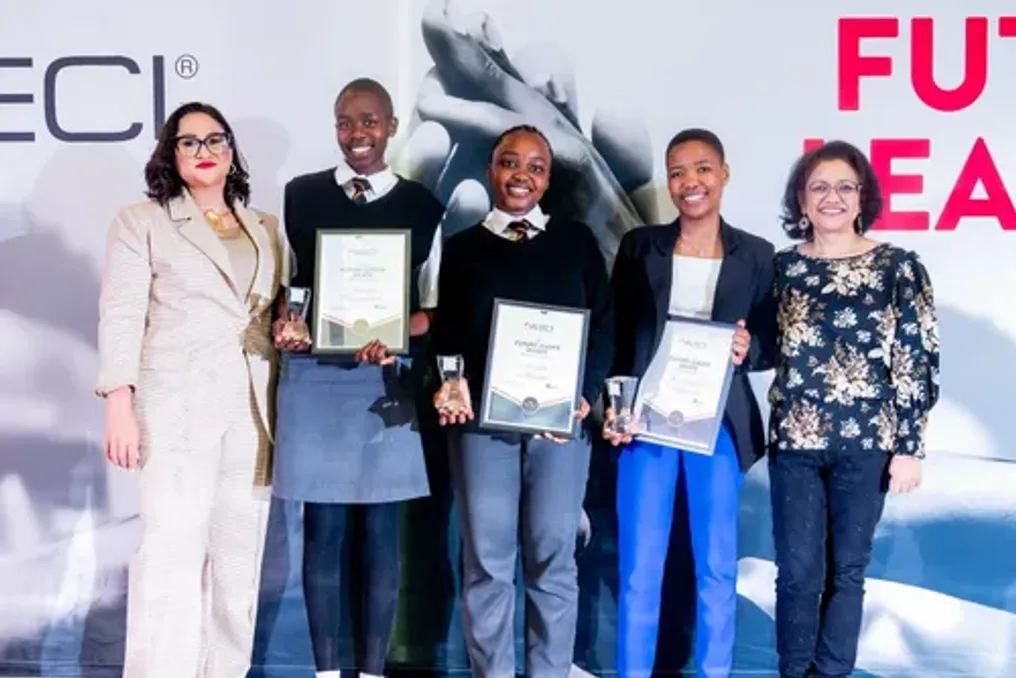
The Future Leaders Challenge program is conducted by AECI in collaboration with Primestars and YouthStart Foundation. Last year, it reached 8,216 students across five provinces. Participants presented 386 projects covering topics such as poverty, lack of hygiene facilities, gender-based violence, drugs, banditry, and elderly care.
The twenty-sixth round of the program is currently underway, which will conclude with a leaders' summit and the Future Leader Awards ceremony in October. Ten teams made it to the shortlist this year. One team developed the Student Helper application, which connects students with teachers, automatically checks homework, and motivates students. Another team, working on the Desk Revival Project, focuses on repairing damaged desks and chairs in schools instead of replacing them.
A student named Talenta Mbatata independently created a panic button application connected to local police stations. Other teams tackled topics rarely covered in schools. BKS Creative Hub uses art and music to discuss substance abuse and teenage banditry. The Her Rise project combines issues of poverty, gender-based violence, mental health, and the status of girls in STEM. The Hands of Change initiative aims to solve the problem of insufficient sanitation facilities in poor schools.
Award recipients do not stop at achievement. Winners receive mentorship through Seed Academy to turn their school ideas into viable small businesses. Organizers are also considering providing seed grants, creating a network of mentors connecting students with AECI staff, and conducting follow-up checks after six to twelve months to assess the sustainability of these ideas. The organizers stated in their submission that 'this is not the end of the road, it is the beginning of real work.'
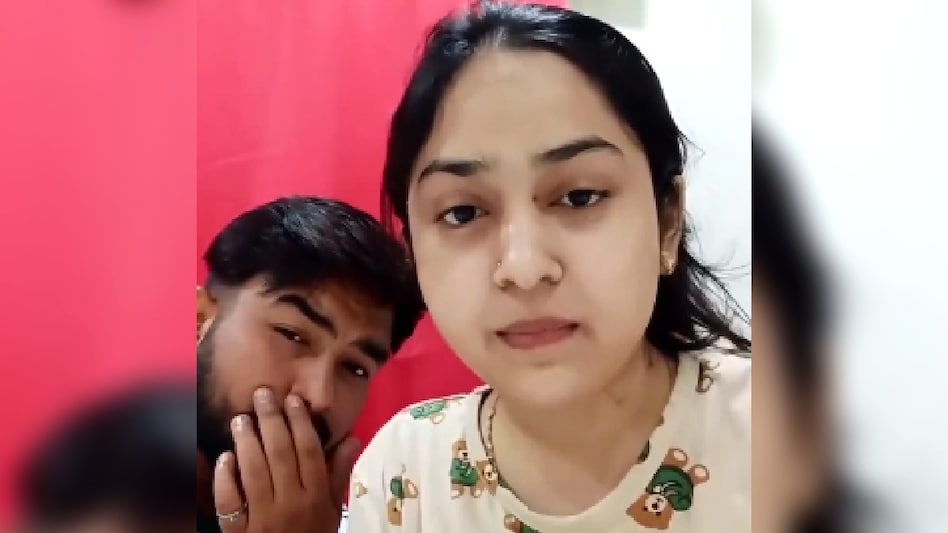
In Jalaun, Uttar Pradesh, a sensational case related to love marriage has emerged. Twenty-one-year-old Muslim woman Kajal Mansuri, residing in the Koltavi area, defied traditional and religious societal norms by marrying her Hindu lover, Om.
After the Hindu wedding ceremony took place, a video of the couple began circulating widely on social media. In this video, Kajal levels serious accusations against her own relatives and appeals to law enforcement for her safety.
According to Kajal, she and Om were in a relationship for seven years, and she left home alone on the night of July 7th. She claims that her family exerted pressure, demanding she marry someone else, and also suspects them of attempting to file a false lawsuit regarding the abduction of her lover.
Kajal emphasizes that she is an adult and made the decision to marry of her own free will, without coercion. Through the video appeal, she expresses concerns for her life, questioning the actions of her own relatives.
She states that after informing her family of her feelings, they not only strongly opposed it but also started insisting on holding another wedding. Furthermore, Kajal fears that her relatives are plotting a false campaign against her husband, Om.
In her video statement, Kajal declared that if anything unforeseen happens to her or her husband in the future, her relatives and their accomplices will be held directly responsible.
Following the appearance of the video on social media, local authorities took action. The Koltavi coordinator, Rajesh Kamal, reported that a complaint has been registered under relevant sections regarding this sensitive matter, and the investigation is proceeding at an accelerated pace. Officials are monitoring the viral video and attempting to contact the couple. The young woman is soon scheduled to be brought in to record her testimony in court, based on which further legal proceedings will be initiated.
The Philippine Department of Foreign Affairs expressed its indignation against a series of videos and opinion caricatures, specifically an animation published on the newspaper's Facebook page on July 10. This material relates to Beijing's refusal to accept the 2016 arbitral ruling, which nullified China's territorial claims over a large part of the South China Sea.
The Philippines sought assistance from the international court in The Hague in 2013 after China took control of a bay west of the archipelago, in a stalemate scenario between the two nations. However, Beijing contested the court's jurisdiction, chose not to participate in the process, and rejected the verdict, classifying it as a fraud.
The video, published by China Daily, shows a monkey holding a leaf inscribed with 'Arbitral Award on the South China Sea,' dressed in attire reminiscent of traditional Filipino clothing. Subsequently, two hands labeled 'USA' and 'Japan' throw the monkey into the sea, where it is hit by a water cannon fired from a ship similar to those of the Chinese coast guard.
The video's description argues that the arbitral decision 'is not a remedy for peace, but a source of confrontation disguised as law.' Furthermore, it alleges that Filipino politicians, by 'clinging to external forces and provoking problems in the South China Sea,' are turning the country 'into a pawn in the geopolitical game of others.'
In response, Manila conveyed a 'firm objection to the offensive content' to the Chinese ambassador in the Philippines, Jing Quan, on Thursday. The Philippine Secretary of Foreign Affairs, Leo Herrera-Lim, demanded the removal of the material, emphasizing that 'this type of material is incompatible with the mutual respect expected between states,' according to the Ministry.
During the protest, Manila stressed that China Daily 'crossed the limits of legitimate political debate by resorting to degrading, dehumanizing, and racist representations of Filipinos,' and added that 'disagreements over legal and political issues do not justify resorting to images that have no place in the public discourse of responsible states.' The Philippine embassy in Beijing also sent correspondence to the director of China Daily, reinforcing the request for immediate elimination of the considered offensive content.
On the matter, the spokesperson for the Chinese Ministry of Foreign Affairs, Lin Jian, stated that the video 'does not represent the official position' of China and refrained from further comment. However, he reiterated that Beijing views the arbitration on the South China Sea as 'a political farce disguised as a legal process,' maintaining that the decision is 'illegal, void, and without any binding force.'
The Philippine government celebrated the anniversary of the July 12, 2016 decision as a historic victory for the rule of law against aggression. The United States, the United Kingdom, more than a dozen Western and Asian nations, and the European Union have also reaffirmed their support for the said arbitral decision.
Territorial conflicts in the disputed South China Sea have intensified in recent years, mainly involving fishing forces and fleets from China, the Philippines, and Vietnam. Disputes also include Malaysia, Brunei, and Taiwan.