Foreign news agencies publish materials analyzing and evaluating the concept of New Uzbekistan. These reports provide an objective view of how the international community perceives the country's development path, open policy, and ongoing reforms.
Cooperation with Belarus
The information agency 'BelTA' notes that relations between Belarus and Uzbekistan, based on historical friendship, are transforming into modern technological and industrial partnership. The official visit of the President of the Republic of Uzbekistan, Shavkat Mirziyoyev, in July 2024 is expected to give a new impetus to the strategic partnership between the two states.
Historical ties formed during World War II unite Belarus and Uzbekistan through mutual trust and political dialogue. Today, cooperation extends beyond trade relations to include joint production, industrial cooperation, investments, digital technologies, pharmaceuticals, agriculture, and tourism.
According to the agency's data, the volume of trade between the two countries has increased 13 times over the last decade, and the trade in services has increased 30 times. In 2025, the trade volume reached almost 855 million US dollars, and the parties have set a goal to increase this figure to 2 billion dollars in the coming years.
Furthermore, the article emphasizes that Uzbekistan is valued as an important partner for Belarus in accessing Central Asian and Afghan markets, while Belarus offers Uzbekistan engineering solutions, industrial technologies, and high-value production experience.
International Forum in Tashkent
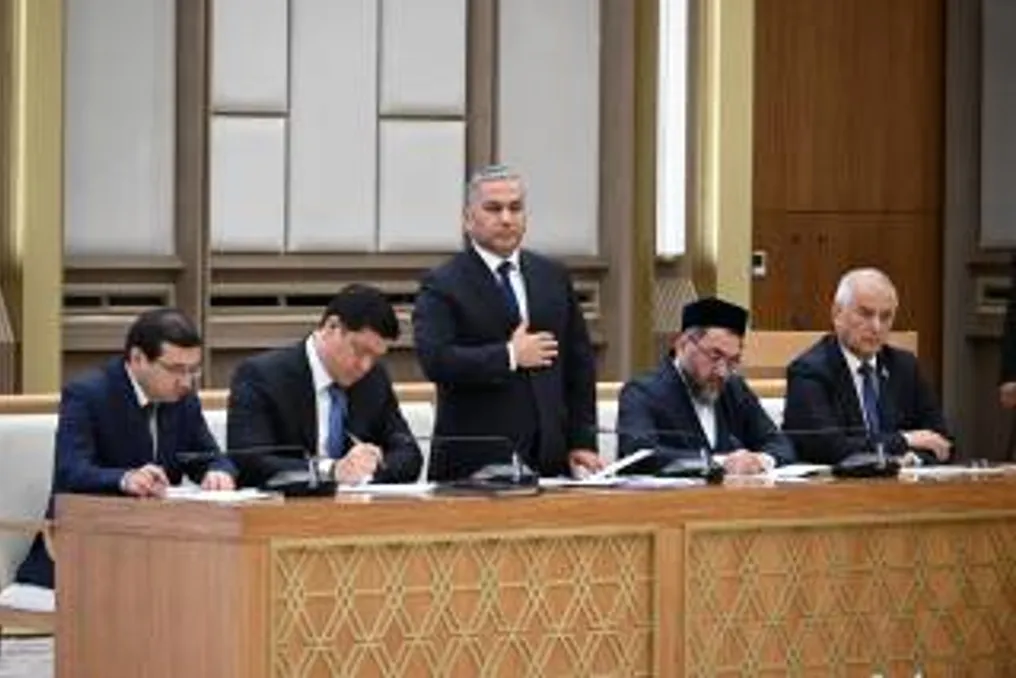
The information agency 'Anadolu' reports that the I International Forum on the topic 'Islamic Civilization: The Path of Peace, Tolerance, and Knowledge' has begun in Tashkent. At the opening of the forum, an address by the President of Uzbekistan, Shavkat Mirziyoyev, was delivered to the participants.
The head of state stressed that serious threats face the modern world, such as global conflicts, extremism, intolerance, and Islamophobia, and noted that the most effective way to counter these problems is through science, education, culture, and high spiritual values.
The article's author highlighted that the initiative put forward by President Mirziyoyev in 2017 at the UN General Assembly, 'Knowledge Against Ignorance,' remains relevant. It was also noted that the country is the birthplace of great scholars who made enormous contributions to human civilization, such as Muhammad al-Khwarizmi, Ahmad al-Farraghani, Abu Rayhan Al-Biruni, Abu Ali ibn Sina, Mirzo Ulugbek, Alisher Navoiy, Imam Bukhari, Imam Tirmidhi, and Imam Maturidi, whose legacy is the common wealth of all humanity.
Overall, the I International Forum held in Tashkent is recognized as an important platform for widely promoting Uzbekistan's rich spiritual and scientific heritage on the international stage, as well as for advancing the ideas of tolerance, enlightenment, and interreligious dialogue. 'Anadolu' emphasized that this forum is a practical embodiment of the New Uzbekistan's open policy in preserving and promoting its spiritual heritage globally.
Cooperation with Georgia
The South Korean information agency 'Yonhap' published an analytical article about the state visit of the President of Uzbekistan, Shavkat Mirziyoyev, to Georgia. This visit was the first state visit by the head of Uzbekistan to Georgia in the last 23 years and was a reciprocal visit following the official visit of the Prime Minister of Georgia to Uzbekistan in March 2025.
During the negotiations held in Tbilisi, President Shavkat Mirziyoyev met with the President of Georgia, Mikheil Kvelashvili, and Prime Minister Irakli Kobakhidze, signing a number of documents aimed at developing bilateral cooperation. Uzbekistan plans to open its embassy in Tbilisi soon; until then, diplomatic relations with Georgia have been maintained through the embassy in Baku.
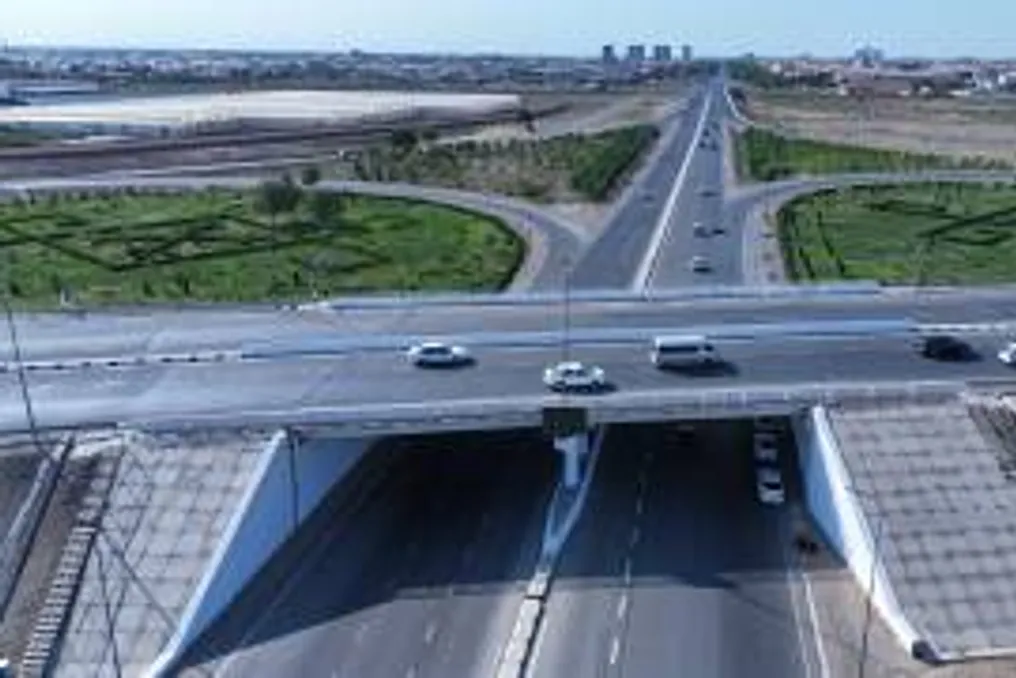
The parties set a goal to increase the volume of trade from 270 million US dollars in 2025 to approximately 1 billion US dollars. One of the key issues of the negotiations was transport and railway logistics. The possibility of integrating the 'China–Kyrgyzstan–Uzbekistan' project with the infrastructure of the Black Sea port in the city of Poti, Georgia, was discussed. It is emphasized that this initiative is of great importance for forming new transport corridors connecting Central Asia with Europe.
In addition, both countries expressed their intention to expand cooperation in the fields of agriculture, electrical engineering, energy, pharmaceuticals, food industry, construction material production, and tourism, as well as to create a joint investment fund to support new projects. The publication characterized this visit as an important diplomatic step aimed at diversifying the country's foreign economic ties, expanding opportunities to access European markets, and strengthening its position in regional logistics chains.
Development of Green Energy
The Associated Press of Pakistan (APP) reports that the share of renewable energy sources in Uzbekistan is constantly growing. According to the agency, since the beginning of 2026, solar and wind power plants in the country have collectively generated 6 billion kilowatt-hours of electricity.
Of this volume, 3.8 billion kilowatt-hours belong to solar stations, and 2.2 billion kilowatt-hours belong to wind power. This figure is 24.3% higher than in the same period of 2025, which allowed for savings of 1.6 billion cubic meters of natural gas.
The agency recalls that it was previously reported that Kazakhstan, Uzbekistan, and Azerbaijan planned to start exporting 'green' electricity to Europe by 2030. The article also notes that between 2017 and 2025, the number of hydroelectric power plants in the country increased from 36 to 100, and their total capacity grew from 1.6 GW to 2.4 GW.
Achievements in solar, wind, and hydropower in Uzbekistan are assessed as an important step towards ensuring the country's energy security, reducing natural gas consumption, and increasing export potential.
Migration Cooperation
The information agency 'Italpress' reports that Uzbekistan and Italy are creating new opportunities for legal, transparent, and systematic cooperation in the field of labor migration. This was stated by Marco Farci, Vice President of the Italian-Uzbekistan Chamber of Commerce, in an interview with the agency.
He noted that the population of Uzbekistan is about 40 million people, nearly 60% of whom are under 30 years old. The country's population continues to grow by approximately one million people annually, increasing the potential of labor resources.
According to the agreement signed by Italy and Uzbekistan on labor migration issues, an official mechanism has been created for the exchange of labor between the two countries. According to Marco Farci, the main task is to form a simple, transparent, and reliable cooperation system between the Migration Service of Uzbekistan and employers in Italy.
The article mentions the growing demand for Uzbek specialists in Italy in the healthcare sector, as well as increased interest in Uzbek labor in the agriculture, logistics, and construction sectors. Marco Farci also emphasized that Uzbekistan already cooperates successfully in labor migration with countries such as Germany, France, and Japan.
In his opinion, Uzbekistan has developed a system for training personnel for work abroad, including Italian language courses based on certificates. Furthermore, educational cooperation is strengthening through the opening of branches of three Italian universities in Uzbekistan.
Shoe Export and Ecology
The State Information Agency of the Kyrgyz Republic, 'Kabar', reports that the government of Uzbekistan is actively developing the leather and footwear industry and increasing export potential. The government has set a goal to achieve shoe exports of 150 million US dollars by the end of 2027.
From July 1, 2026, to July 1, 2029, enterprises engaged in collecting raw materials from leather and wool in Uzbekistan will be exempt from profit tax, property tax, and land tax, and part of the interest payments on loans obtained for working capital will be covered by the state.
Financial assistance is provided to producers of finished leather goods for every square decimeter of production. Footwear and leather goods manufacturers have the opportunity to receive a subsidy for every new model introduced into production. The state partially covers the costs of importing shoe molds and special equipment, as well as expanding brand retail networks.
The article's author also points out that from September 1 of this year, enterprises in the leather industry that use local raw materials, create new jobs, and have their own brand will receive a 15% advantage in public procurement.
Environmental Sustainability Strategy
China's 'Xinhua' information agency published an article stating that the President of Uzbekistan, Shavkat Mirziyoyev, approved a comprehensive strategy for the period 2026–2030 aimed at combating desertification, rational use of desert lands, and implementing 'green city' principles in the country.
It is noted that by 2025, the level of greening in the country reached 14.3%, which is a significant increase compared to 8% in 2020. The creation of forest areas on the dried bed of the Aral Sea, where more than 2 million hectares have been restored, has gained particular importance.
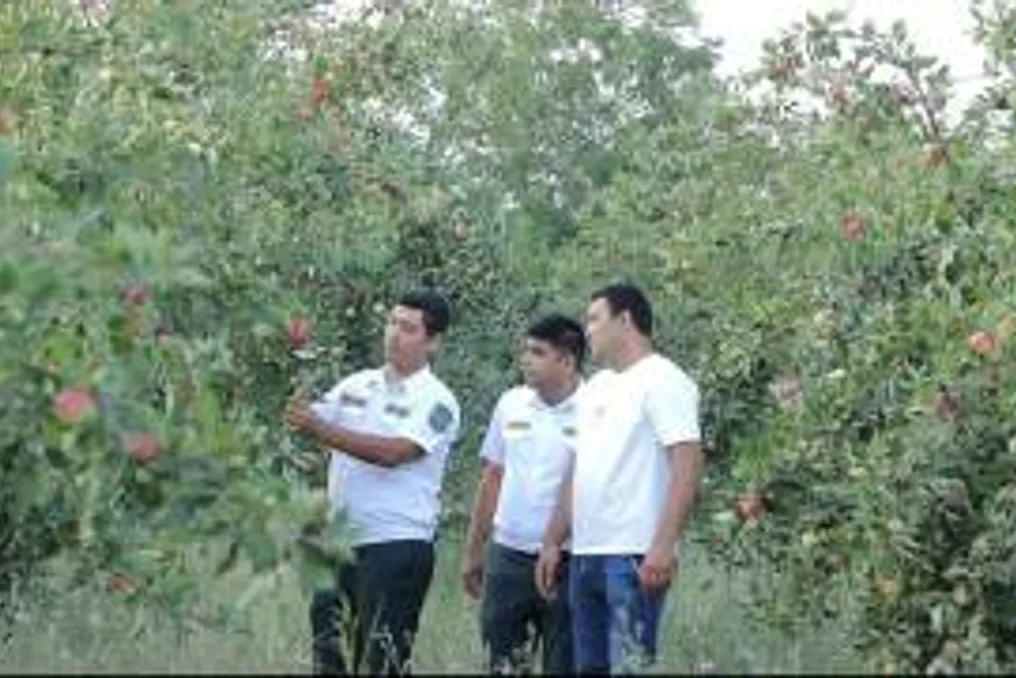
Within the adopted strategy, the restoration of forests over an area of 1.27 million hectares is planned, as well as the development of the 'desert farming' concept. This approach involves creating new sources of income by cultivating drought-resistant crops, increasing the number of halophytic plants, and developing pastoral livestock farming.
The agency also emphasized that special attention is paid to strengthening environmental cooperation between Central Asian countries. Plans include expanding the activities of the regional research center, increasing the number of joint projects under the 'Green Shield' program, and developing a regional strategy until 2040.
The article also discusses the 'Green Samarkand' pilot project in urban planning. Under this project, it is planned to halve air pollution in Samarkand by 2030, switch public transport to electric power, create a green protective zone 102.7 kilometers around the city, and relocate large industrial enterprises with high environmental risks outside the city.