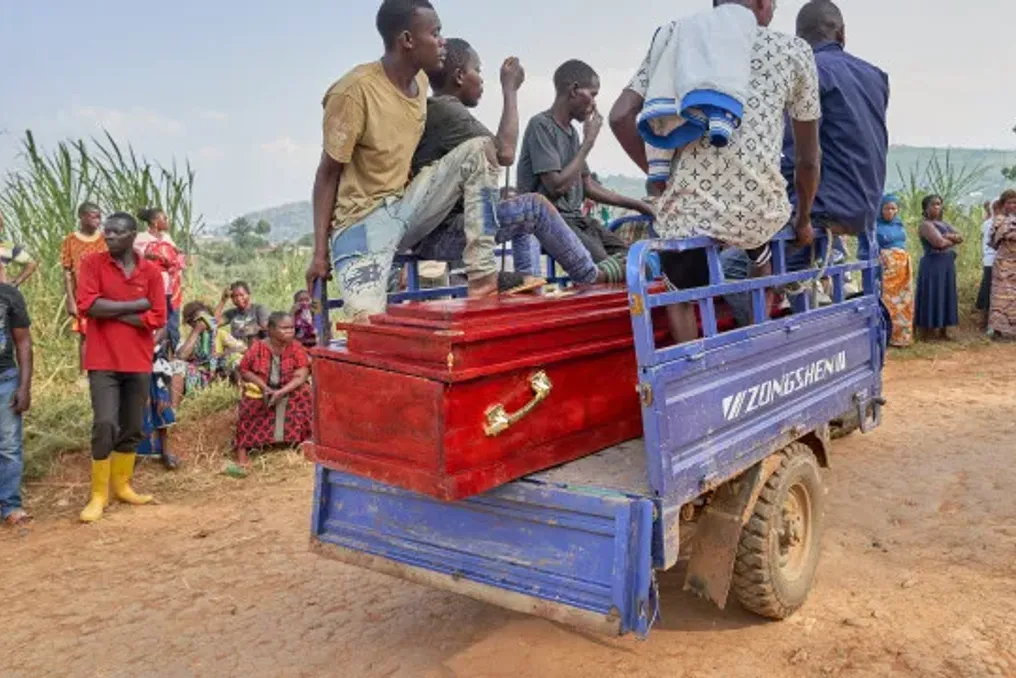
According to data released on Tuesday evening by the Ministry of Health of the Democratic Republic of Congo (DRCongo), more than two thousand Ebola cases have been confirmed, resulting in a total of 754 deaths. Currently, 753 individuals remain in isolation or in hospitals, while 366 have recovered.
Challenges in Tracing and Spread
Contact monitoring in the country, which has over one hundred million inhabitants, remains a major obstacle, with coverage of exposed people reaching only 67%. Médecins Sans Frontières (MSF) reported in a statement issued that day that Ebola is spreading in DRCongo at a rate considered 'unprecedented.'
Trish Newport, MSF's emergency coordinator, emphasized that the number of infected individuals is growing, leading more families to lose loved ones, which complicates epidemic control. She stressed the need for 'firmer and coordinated international action to act more quickly and improve access to both Ebola medical care and other essential health services.'
Epidemic Context
DRCongo, located in Central Africa, has been facing the epidemic caused by the Bundibugyo virus since May. Two months after the start, the spread continues to be faster than health authorities can track, even with an expanded response.
The World Health Organization (WHO) reported on Tuesday that at least 80% of new cases originate from unknown transmission chains. Furthermore, the WHO warned that the true scale of the Ebola epidemic in DRCongo could be 'two to four times' larger than official estimates.
Operational Obstacles and Human Impact
One of the biggest problems is that health authorities have not yet identified the 'patient zero' of the epidemic. Additionally, displacements caused by armed conflicts and movements related to mining complicate the tracing of thousands of people who came into contact with infected individuals.
Chikwe Ihekweazu, WHO's head of health emergencies, reported on Tuesday, after returning from Bunia, in Ituri—the most affected province—that many of the recent deaths occurred in people who never accessed a health center or received medical assistance.
Health professionals in various areas of Ituri are on strike, claiming they have not been paid since the beginning of their work on the epidemic. Containment efforts are also hampered by the absence of approved vaccines or treatments for the Bundibugyo virus.
Evolution and Geographic Reach
In just two months, this Ebola outbreak, which has evolved into an epidemic, has become the 17th to hit DRCongo, making it the third largest and the fastest growing among all recorded to date.
Officially declared in May in Ituri, a border province with Uganda and South Sudan, the epidemic has spread to Uganda. In this latter country, 20 cases have been confirmed, 15 of which were brought from DRCongo, including two fatalities.
Virus Characteristics and Global Alert
The epidemic is linked to the Bundibugyo strain, which has a fatality rate ranging between 30% and 50%, and for which there is no authorized vaccine or specific treatment, according to the WHO. The organization classifies the risk of the outbreak spreading in Sub-Saharan Africa as 'high', but globally as 'low'. The WHO estimates that the virus began circulating in Ituri about two months before the outbreak was declared and classified the epidemic as a 'public health emergency of international concern' on May 17.
The virus is transmitted through direct contact with the body fluids of infected people or animals and causes severe hemorrhagic fever, vomiting, diarrhea, and internal bleeding.