Lelowhatsgood's new EP, titled Rebirth Is Necessary, expands the boundaries of the gqom genre, presenting five tracks of experimental South African club music. This project pushes gqom into a new sonic and linguistic territory.
The Evolution of the Gqom Genre
The gqom genre emerged in Durban townships in the early 2010s, created by a young Black man and reflecting its nature: dark, confrontational, and percussive. Lelowhatsgood, whose real name is Ntshikelelo Mselani, does not abandon this history but develops it.
The five-track release integrates gqom with styles such as is’qinsi, Afro tech, 3-step, and experimental club music, while enriching the linguistic spectrum within which the genre has historically functioned. The result is a darker and more textured segment of South African electronic music; although the pulsating, shifting energy of gqom remains the foundation, the genre itself has been reconstructed.
Career and Creative Approach
Mselani worked on this project for nearly a decade. He started DJing in 2017, gaining recognition on the underground scene by performing ballroom, gqom, and afro-electronic tracks, and also playing at venues such as Boiler Room (twice), Tresor Berlin, and Ultra Music Festival.
His debut EP, Next Level, received a SAMA nomination, which he called an unexpected achievement at the time. Before music became his main activity, he was a writer, publishing in publications like the New York Times, Mail & Guardian, and HUNGER Magazine. This dual role as critic and creator is evident in the precision with which he formulates his creative concepts.
Mselani stated that 'Rebirth Is Necessary is dedicated to allowing music to evolve just as we do.' He added: 'I have always believed that our stories, our languages, and our identity deserve to exist on every dance floor. This project is an invitation to hear gqom differently, to embrace its capacity to hold many voices, many influences, and many futures.'
Lineup and Visual Concept
Each of the five tracks features different collaborators. The main single 'Ba Ko Kae' includes Espacio Dios. The track 'Hypnosis' unites DJ Emotive and KIING BHUTIE. 'Mind Your Business' brings Lazarusman back into the realm of spoken word art, and KIING BHUTIE participates again. 'Ngiw’logogo' features Unkle Ken, Rifle Deep, Thobeka, and Sunornza, while the closing track 'Ten Toes' includes Omagoqa and Joshua Futura.
The lineup spans electronic music, spoken word art, and underground dance culture. It is not merely a showcase, but a structural argument: the EP's thesis on the multifaceted nature of gqom is realized through the list of participants as much as through the sound.
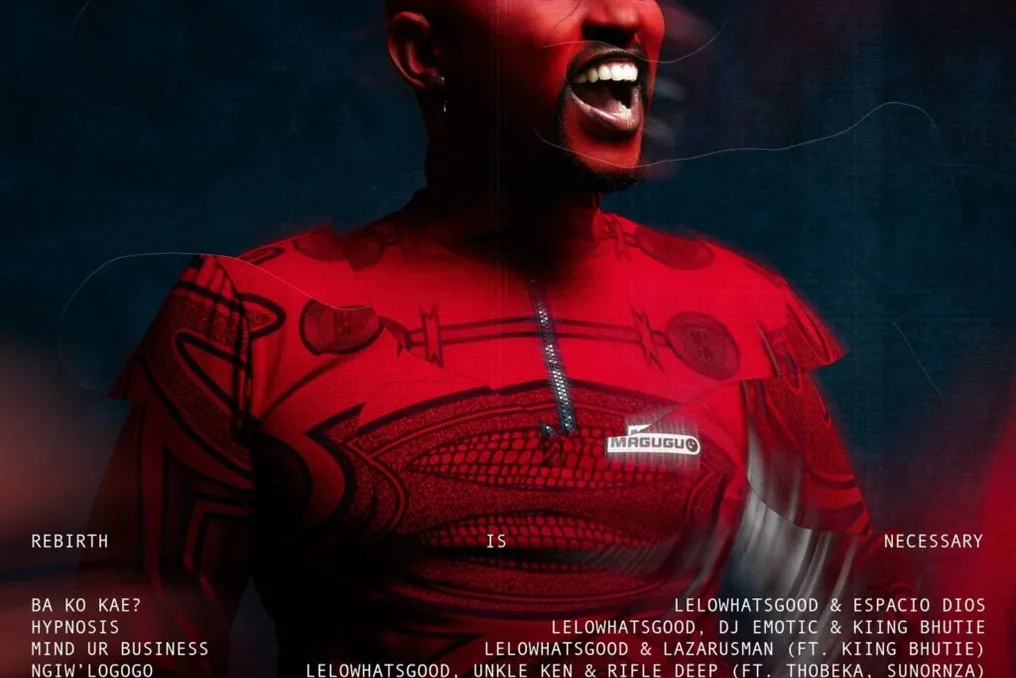
The visual design also supports this idea. On the cover, Mselani is depicted fragmented, his image broken into puzzle pieces and reassembled into something new. This was inspired by the late multidisciplinary artist Lunga Ntila, a close friend whose approach to form and identity shaped the project's visual language.
In an interview with Texx and the City, Mselani mentioned a similarity to Grace Jones. He told the publication: 'There was something so deeply personal and moving in how she [Ntila] realized complex ideas of identity. The concept of having all these fragmented parts of ourselves and putting them together to create a new whole—that is what represents me now. I am too much to fit into one idea.'
Gqom as a Language of Self-Determination
This fragmentation is a key point. Initially, gqom was a genre of otherness, created by communities finding their own space. Mselani, who founded VNJ Ball (formerly Vogue Nights Jozi) in 2018 as a sanctuary for the queer ballroom community in Johannesburg, has argued for years that gqom and ballroom style are closer relatives than they appear. Both genres arose from exclusion. Both are languages of self-determination. Rebirth Is Necessary is where these threads weave into something that can be heard.