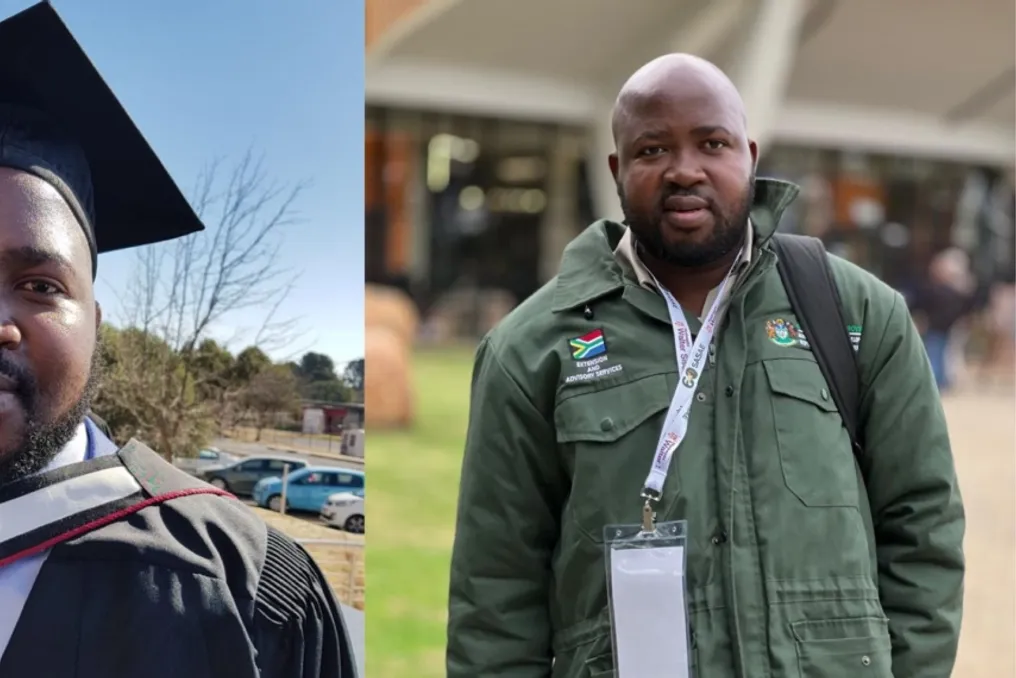
Nkhlakanifo Nzama, who grew up in Greytown, KwaZulu-Natal, spent his childhood raising livestock and helping his family grow imifino and amadumbe. When his father bought a tractor to help local communities plow the land, Nkhlakanifo actively participated in this process. Today, this rural experience forms the basis of his work as an agricultural consultant in KwaZulu-Natal.
Educational Journey and Career Start
Although watching his father transition from a taxi driver to assisting the community brought him closer to the land, the real turning point came in 2001 when he was in seventh grade. Nzama recalls his mother listening to Reggie Humalo on Ukhozi FM radio in the program Cobelela Falaza, where there was an advertisement for a new agricultural college opening in Bennsfield, near Pietermaritzburg. His mother seized this opportunity, and in November, they attended an open day at Zach's Agricultural College, which was a new boys' institution.
Education and Professional Growth
Nzama became one of the first 24 students at this school. The curriculum included classroom lessons from 07:30 to 13:00, followed by intensive practical sessions on the farm. He notes that in livestock management, practices began at 4 am before classes, and they rotated weekly to cover all aspects of farming. After graduating from school, he continued his studies at Zululand University, earning a Bachelor of Science degree in Agricultural Economics. A scholarship from the Faculty of Agriculture led to permanent employment after graduation, and in 2012, he officially started working as a consultant, providing practical assistance to farmers in the Vryheid and Zululand areas. In 2018, he further obtained a Master's degree in Sustainable Agriculture from the University of the Free State.
Current Activities and Focus
He tells Food For Mzansi that his main focus is on crop production, specifically grains and vegetables. Nzama's daily work involves providing practical consulting services. He visits farmers on their plots, inspects crops, and gives appropriate recommendations. This includes conducting monthly grain study groups and implementing soybean production in collaboration with Grain SA. Additionally, he launched a seed pilot project with Capstone and participates in community 'war rooms' to solve local problems through targeted field training.
Overcoming Innovation Barriers
As seasons change, his duties shift: during the dry season, he collects yield data and maize samples, and also helps transport the harvest to market. Nzama has noticed a common misconception among novice farmers that new technologies are too complex or only intended for large commercial enterprises. He advocates for accessible and easy-to-use tools, such as mobile weather forecasts, the O-VELD tool on WhatsApp, as well as precision agriculture and drones. According to him, with proper implementation, these technologies significantly increase productivity, but changing old mindsets remains a challenge.
He emphasizes that the adoption of climate-resilient and environmentally friendly agriculture is slower because some farmers view climate variability as a temporary occurrence rather than a long-term reality requiring new methods. To accelerate this process, he advocates for practical demonstrations, engaging technically skilled youth, and private sector partnerships. Nzama believes that uniting government researchers, agronomic staff, the private sector, and farmers will allow the sector to build a sustainable and food-secure future for rural communities.