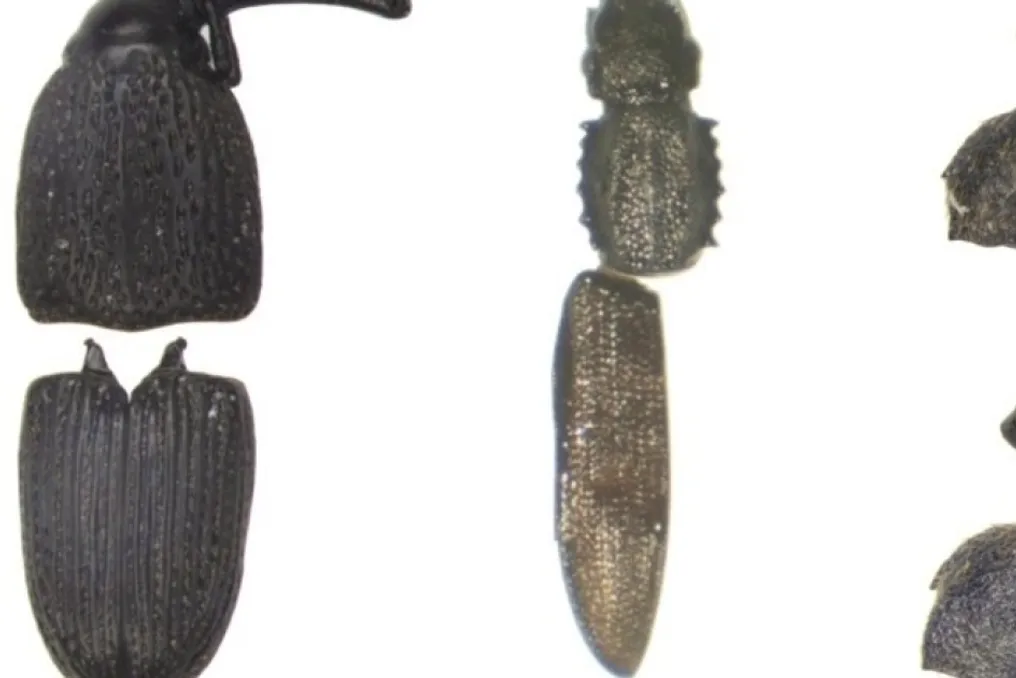
British researchers analyzed insect remains extracted during excavations of the Neolithic settlement Lin-3, located in Albania. The analysis revealed that early farmers inhabiting the shore of Lake Ohrid in the sixth millennium BCE were confronted with at least four different species of pests.
The Historical Transition to Agriculture
Before the tenth millennium BCE, the population of the Fertile Crescent transitioned from a lifestyle of hunting, gathering, and fishing to agriculture and animal husbandry. This process gradually spread to other regions of Eurasia and Africa. Specifically, in Europe, the first farmers and herders appeared around the seventh millennium BCE, which is confirmed by archaeological sites on the Balkan Peninsula. This transition was accompanied by the migration of populations from Southwest Asia, as evidenced by paleogenetic studies.
Study of the Lin-3 Settlement
One of the important archaeological sites associated with early European farmers is the Lin-3 settlement, discovered at the bottom of Lake Ohrid in Albania. Initially, this settlement was found by researchers back in 1984. Over time, archaeologists discovered remains of numerous dwellings there, capable of housing several hundred people. Radiocarbon and dendrochronological analysis of wood from this monument indicated that the earliest structures date back to approximately 5862–5748 BCE.
Identification of Pests
Cecilia Nihaus and Eva Panagiotokopulu from the University of Edinburgh published a paper dedicated to materials from the oldest cultural layer of Lin-3. The scientists' goal was to identify the types of agricultural pests encountered by early European farmers. In 2024, archaeologists collected 16 samples of sediment, each five liters, after which the scientists carefully examined the well-preserved insect remains.
The identification revealed four types of pests. Two of them affected plants in fields or gardens, while the other two damaged already harvested stores. The first group includes two types of grain weevils: the pea weevil (Bruchus pisorum) and B. rufipes, which specialize in legumes. The second group consists of the granary weevil (Sitophilus granarius) and the Surinamese flour beetle (Oryzaephilus surinamensis).
Spread of Pests
With the exception of the weevils, these species are the earliest finds at archaeological sites. The remains of the weevils only supplement the sparse information about the presence of this pest in European Neolithic sites. It is assumed that granary weevils arrived in Europe along with migrating farmers from Southwest Asia. The earliest known remains of this pest were found at the Atlit-Yam site in the Levant, dating to around 6200 BCE. In Europe, however, weevils were discovered in northern Greece during excavations of the Neolithic site of Dysplio, with these findings dating to the period 5780–5720 BCE. By the end of the sixth millennium BCE, weevils were already present in Central Europe, demonstrating how human dispersal contributed to the spread of pests beyond their natural habitat.
Origin of Pests
Of the three remaining pest species, two inhabited Europe even before the advent of agriculture: the Surinamese flour beetle and the grain weevil B. rufipes. The pea weevil likely also arrived in Europe from Southwest Asia, similar to the weevils. Despite the ability of these beetles to fly, it is most probable that they moved along with the legume crops that people brought during the migration from Southwest Asia.
Other Finds in the Region
Lake Ohrid is known for its archaeological monuments. Among them is the ancient pile settlement of Placa-Mihov-Grad, found in the territory of modern North Macedonia. Analyses of the materials from this settlement showed that it originated in the middle of the fifth millennium BCE.