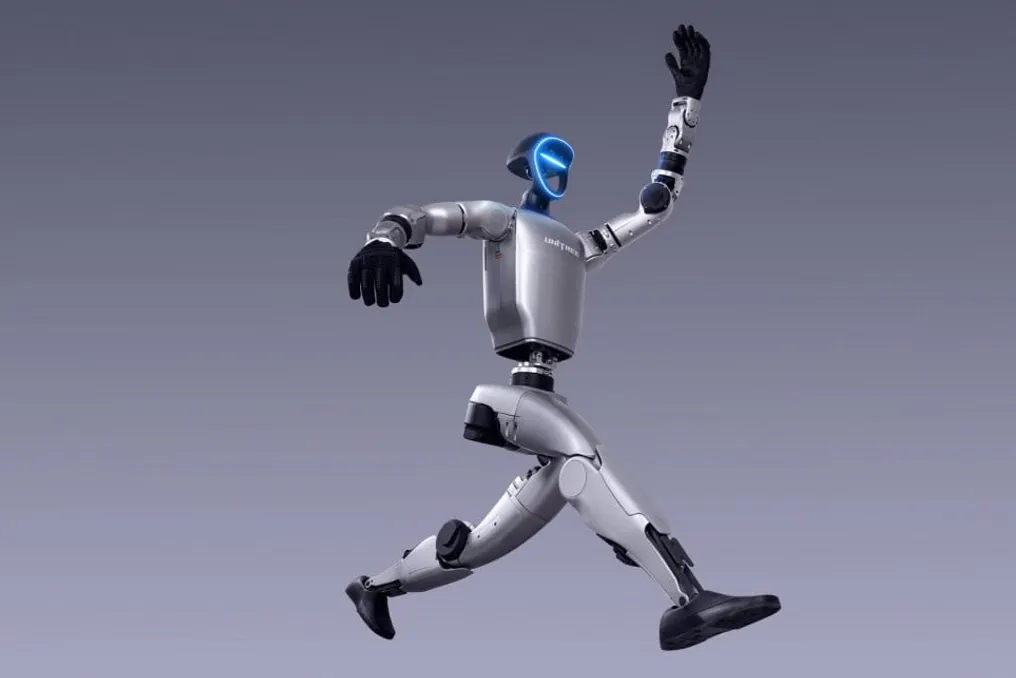
Chinese companies are implementing humanoids in real-world scenarios to collect data and develop machines capable of performing human tasks, marking an ambitious strategy by the country.
Focus on Embodied Intelligence
According to Bloomberg, current investment is concentrated on embodied intelligence, a technology that combines robotics and artificial intelligence to create equipment better suited to the physical environment. Examples include a humanoid robotic arm organizing snack packages on a shelf near Beijing, or workers recording simple actions, such as folding sheets or removing pillows from sofas, whose images will be used to refine the robots' AI systems.
Distinctions in the Chinese Strategy
This evolution signals a shift in focus for Chinese industry. After gaining attention with the martial arts movements of the Unitree Robotics G1 model, manufacturers have started prioritizing the machines' learning capacity. Giants like Alibaba and Xiaomi, along with sector startups, are creating embodied intelligence models that allow robots to acquire knowledge through physical experiences.
The Chinese approach differs from the American one, where companies use purchased data, simulations, and low-cost labor in countries like India and Vietnam. Chinese manufacturers, on the other hand, seek to place their own robots in authentic situations to generate self-learning.
Humanoids as a Solution to Labor Shortages
The presence of industrial robotics in China is already notable. Data cited by Bloomberg indicates that the country installed about 300,000 robots in 2024, compared to approximately 38,000 in the United States. Due to population aging, Beijing sees humanoids as a way to mitigate the impacts of a potential labor shortage. Barclays analysts project that such machines could cover up to 60% of a future personnel deficit.
Several initiatives are underway: the Ministry of Industry and Information Technology of China plans to introduce 10,000 humanoid robots into factories by the end of the year; investors have already allocated at least 100 billion yuan (equivalent to about 82 billion Brazilian reais) to the sector in 2025, surpassing the amount invested in the previous five years; furthermore, data collection centers are being established to train machines in domestic environments, stores, and assembly lines. Chinese companies intend to use robots in real contexts to accumulate millions of hours of learning experience.
Challenges and Technological Comparisons
Developing more sophisticated robots demands a vast amount of data. Unlike language models, these machines need to learn complex motor skills, such as handling delicate items or preventing cups from falling. Jacqueline Du, a Goldman Sachs analyst in Hong Kong, reported that leading companies have already achieved about 500,000 hours of collected data.
China has inaugurated 64 data collection centers and has 20 others under construction, replicating scenarios such as supermarkets, offices, factories, and residences. Gan Ruyi, head of algorithms at X Square Robot, emphasized that this is an area where the US does not have an advantage, highlighting that the Chinese capacity to organize workers and deploy machines on a large scale may be a distinctive factor.
In the United States, companies like Tesla, Figure AI, Apptronik, and Agility Robotics are also making progress with tests. Figure AI demonstrated the separation of nearly 60,000 packages in 50 hours of live transmission, achieving a speed close to that of a human worker. However, Chinese companies criticized this test for considering it overly controlled. Ai Wen, project director at Agibot, argued that the Figure demonstration still takes place in a laboratory environment, while Chinese robots are trained directly on production lines. Bloomberg concludes that the future of humanoids will depend on the ability to convert everyday experiences into learning for progressively more autonomous machines.