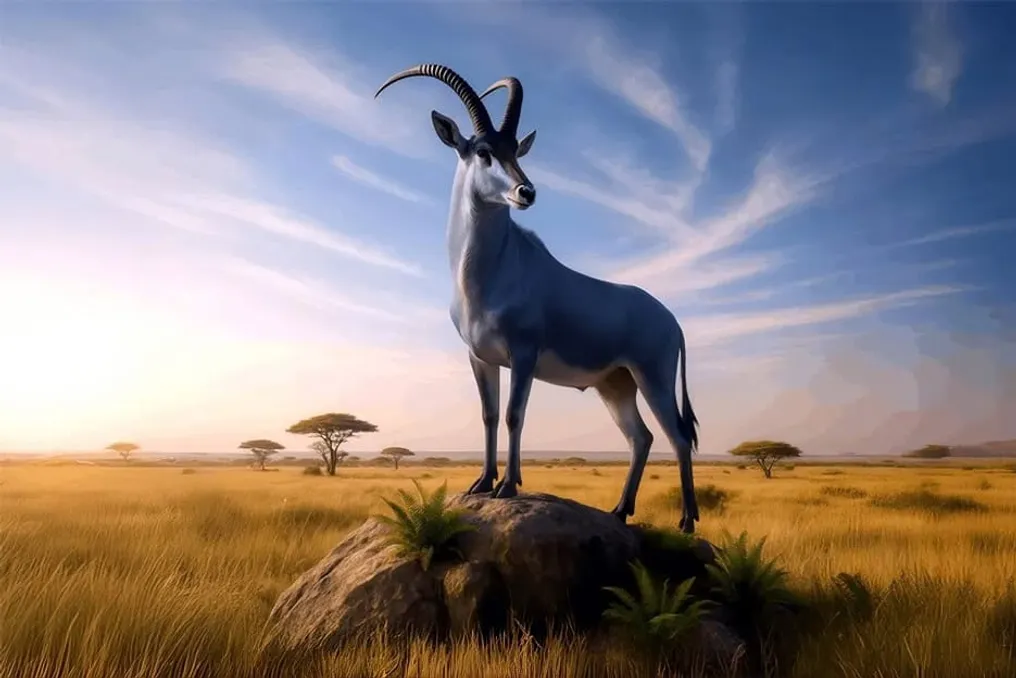
Paleogeneticists were able to sequence ancient DNA extracted from a sample discovered in Africa. This DNA was found in the tooth of a mountain redunca that lived in the southern part of the continent about 50 thousand years ago. The results of this study are presented in a scientific publication in the journal Quaternary Science Reviews.
Progress in paleobiology
Over the last decade and a half, paleobiologists have made significant progress in analyzing DNA preserved in the remains of ancient animals and humans. This progress was marked by Svante Pääbo being awarded the Nobel Prize in Physiology or Medicine in 2022. Studies demonstrate that under suitable conditions, such as permafrost, DNA can survive for over a million years.
Challenges with ancient African genomes
In regions with hot climates, DNA molecules are generally subject to rapid degradation. Because of this, very few ancient genomes from Africa older than ten thousand years have been known until now. Examples include data obtained from North Africa, where the DNA of several people who lived approximately 15–14 thousand years ago was successfully read. Furthermore, in 2024, researchers presented the oldest genome from South Africa, belonging to an individual who died about ten thousand years ago.
Study in South Africa
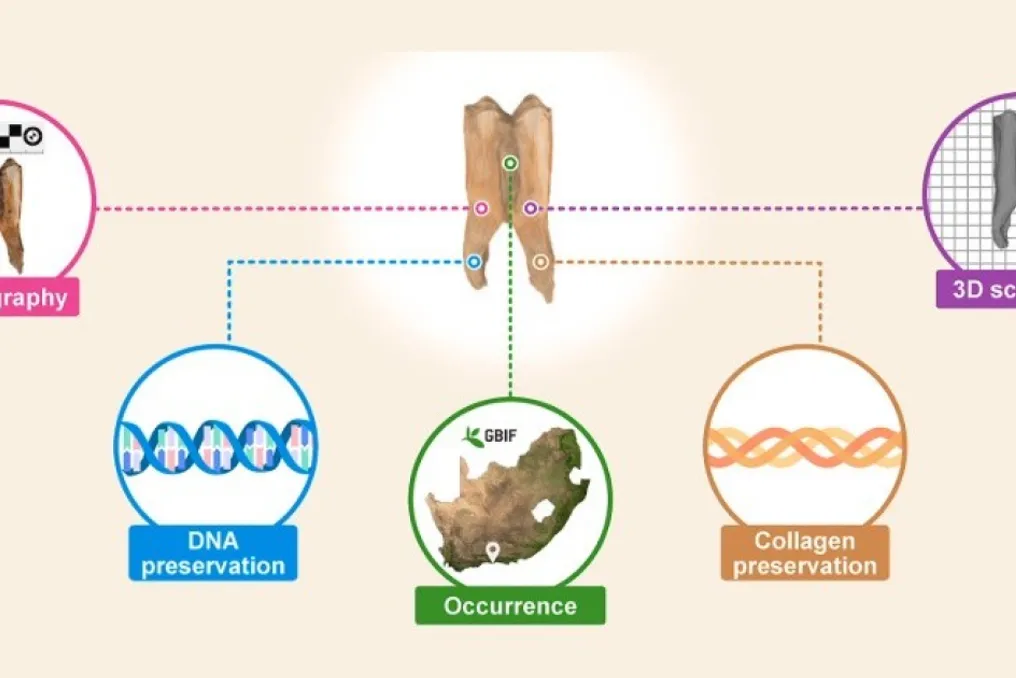
A team of scientists from Denmark, Canada, the USA, and South Africa, led by Elin Lorenzen from the University of Copenhagen, conducted a study aimed at examining the preservation of endogenous DNA and collagen in the bones and teeth of wild animals. These samples were extracted from six discovery sites in South Africa. A total of 320 samples were collected, which paleontologists classified as belonging to six species of ungulates inhabiting the late Pleistocene and Holocene. The oldest of these samples was approximately 110 thousand years old.
Sample Analysis Results
Researchers tested the DNA preservation in 144 samples and found that it was sufficient to determine the animal's species status in 65 cases. In 62 of these 65 cases, paleogeneticists confirmed the classification of species or genera made by paleontologists. However, in two cases, bones initially attributed to reduncas (Redunca sp.) turned out to be the remains of antelope (Pelea capreolus). A tooth from the Bumplaas cave was also studied: paleontologists assumed it belonged to a large redunca (R. arundinum), but paleogeneticists identified it as the remains of a mountain redunca (R. fulvorufula).
The Oldest African Genome
The last sample is particularly significant because, according to the scientists, its minimum age is 50 thousand years, making it the oldest African genome to date. In addition, the team successfully sequenced DNA from three other finds dating back to the late Pleistocene. These finds consisted of teeth from extinct buffalo Syncerus antiquus, found in Nelson Bay Cave. The age of two of these teeth was estimated at 21–23.5 thousand years, and the third at 12–14.1 thousand years. The remaining 61 samples with preserved DNA belong to the Holocene epoch, meaning their age does not exceed 11.7 thousand years (the average age was 3.1 thousand years).
Other Finds and Ancient Flora
Recent investigations have shown that in rare cases, Pleistocene period finds may contain not only DNA but also RNA. The oldest RNA was sequenced from the mummified tissues of the mammoth steppe yak Yuki, which died in the territory of modern Yakutia about 40 thousand years ago. Separate attention should be paid to data from Taiwan: paleontologists, after studying a fossilized vertebra aged 400–800 thousand years, concluded that large pythons, reaching almost four meters in length, inhabited Taiwan during the Middle Pleistocene. Pythons are currently not found on the island, and the largest modern local snakes rarely exceed three meters.