Despite more than twelve years having passed since the exposure of the 'PharmaGate' scandal, the pharmaceutical industry, which has aimed to slow down and weaken South Africa's intellectual property (IP) policy project, the country continues to face an urgent need for patent law reforms. These delays force citizens to pay exorbitant amounts for essential medicines.
The History of Reforms and PharmaGate
More than twelve years ago, a R6 million lobbying plan organized by the pharmaceutical sector under 'PharmaGate' was uncovered. This IP policy was initially intended to introduce critical public health safeguards into South Africa's patent system to ensure the accessibility and affordable cost of medications for all. Although this policy was adopted eight years later, in 2022, the Patent Act itself, which regulates the drug patenting process, had not been amended, representing the next planned step toward reform.
Every year of inaction results in people paying excessively high prices for life-saving drugs that are available elsewhere at significantly lower costs. When 'PharmaGate' was revealed, students were still studying the role of law and policy in protecting public health. The eight years required by the Department of Trade, Industry and Commerce (DTIC) to finalize and adopt the national IP policy were long. However, the lack of action on the Patent Act since then forces reform advocates to question: why are we still waiting, and was the government's response to 'PharmaGate' merely a show?
Promises and Actual Inaction
In 2014, the then Minister of Health, Aaron Motsoaledi, condemned 'PharmaGate', calling it a 'genocide plan', which indicated the government's serious concern for public health issues. Nevertheless, after the DTIC adopted the current IP policy, discussions began about introducing a bill for necessary amendments to the Patent Act, but no action followed. For many years, the DTIC reported to Parliament on the progress of this bill.
During his speech during the 2022 Budget Vote, Minister Ephraim Patel outlined several 'concrete measures' that were supposed to be implemented within the year. Specifically, he pledged to submit the Patents Amendment Bill to the Cabinet by October 2022, and subsequently introduce it in Parliament. At the end of 2025, the DTIC made another promise that the bill would be presented to Parliament. However, more than six months later in 2026, there are no signs that these promises have been kept or will be kept. In this situation, the ongoing delay itself becomes a political choice with real consequences for people's access to medicine.
Conflict of Interest and Health
Over the past twelve years, South Africa has faced several public health challenges that have highlighted the tension between commercial incentives and public need, demonstrating the importance of patent reforms. These include the HIV/AIDS epidemic, unequal access to COVID-19 vaccines, and the constant struggle for affordable insulin and tuberculosis drugs, as well as cuts to funding for health programs and research initiatives, which threaten to undermine decades of public health progress.
Examples clearly show: monopolies and market power restricted access to vital medical technologies when and where they were needed most. Consider the case of Trikafta—a life-changing drug for cystic fibrosis, a genetic disease affecting the lungs, pancreas, and other organs. Vertex Pharmaceuticals Inc patented Trikafta but failed to register it for sale in South Africa for years, denying people access. The government did not rectify the situation, forcing a cystic fibrosis patient, Cheri Nell, to apply for a compulsory license—a legal mechanism allowing another manufacturer to produce a generic version of Trikafta without permission from Vertex Pharmaceuticals Inc, thereby ensuring access to cheaper alternatives.
MSF and Treatment Action Campaign acted as amici curiae in this matter. In addition to presenting their experience in the campaign for access to medicine, they also sought to provide evidence that South Africa's socio-economic conditions demanded the availability of medicines.
Drug Price Reduction Mechanisms
Many governments have used the compulsory licensing mechanism to address drug access issues and significantly reduce their prices. For instance, after India granted a compulsory license for sorafenib tosylate, a cancer drug patented by Bayer, its price dropped by 97 percent—from over $5,500 USD per month to $175 per month.
In the Trikafta compulsory licensing case, MSF and Treatment Action Campaign served as amici curiae. However, instead of South Africa granting a compulsory license, Vertex settled the case out of court, covering the cost of the drug for no more than half of the cystic fibrosis patients in South Africa, while excluding low-income families, including those reliant on the state healthcare system, according to a New York Times report. Currently, Trikafta costs about R2.4 million per person annually, whereas the generic is available for approximately R199,000. But the generic will not appear in South Africa as long as Vertex patents are in effect, once again demonstrating how patents restrict people's access to more affordable and vital medicines.
In another example, South Africa purchased bedaquiline, a vital drug for treating drug-resistant tuberculosis, patented by Johnson & Johnson, at a price of about R5,400 per 6-month course per person. When cheaper generics became available in 2023 at a price of R2,131 per 6-month course, South Africa could not access them because it granted secondary patents to Johnson and Johnson. These secondary patents were rejected in other countries with public health-friendly laws, such as India, allowing people to access bedaquiline at an affordable price. If South Africa had applied stricter patentability criteria and allowed administrative challenges to weak patents, generic manufacturers could have entered the market sooner, and the price of bedaquiline could have dropped by approximately 40%, leading to significant savings for the public health system.
The Need for Patent Law Reform
Despite these vulnerabilities exploited by the private sector to strengthen its market control and increase profits, the government has taken no action. Patent law reform is not just an abstract legal exercise; it is a public health imperative. It determines the speed at which affordable medicines become available, how responsive our healthcare system is during crises, and whether the constitutional right to health is realized in practice.
If the Patent Act is not amended, history will repeat itself: during the next public health crisis, there will be outrage over our inability to access affordable life-saving medicines while pharmaceutical companies profit. We will again appeal for concessions from international bodies like the World Trade Organization. Our parliamentarians will again complain about the slowness of patent law reforms aligned with our policies. Once again, the right of people to health will be sidelined.
Therefore, we ask: is the delay merely administrative? Or are there forces behind the scenes influencing the pace and direction of reforms? Concerns that the industry is dictating how and when political and legal reforms take place are not unfounded. 'PharmaGate' exposed coordinated efforts to slow down reforms in favor of public interests in South Africa. More than ten years later, the strongest accusation is not that such efforts existed, but that they appear to have succeeded. While there is no evidence that such actions are happening today, the prolonged uncertainty inevitably breeds speculation and anxiety. Because, ultimately, we still have a system where corporate interests continue to be protected while people cannot access vital medicines.
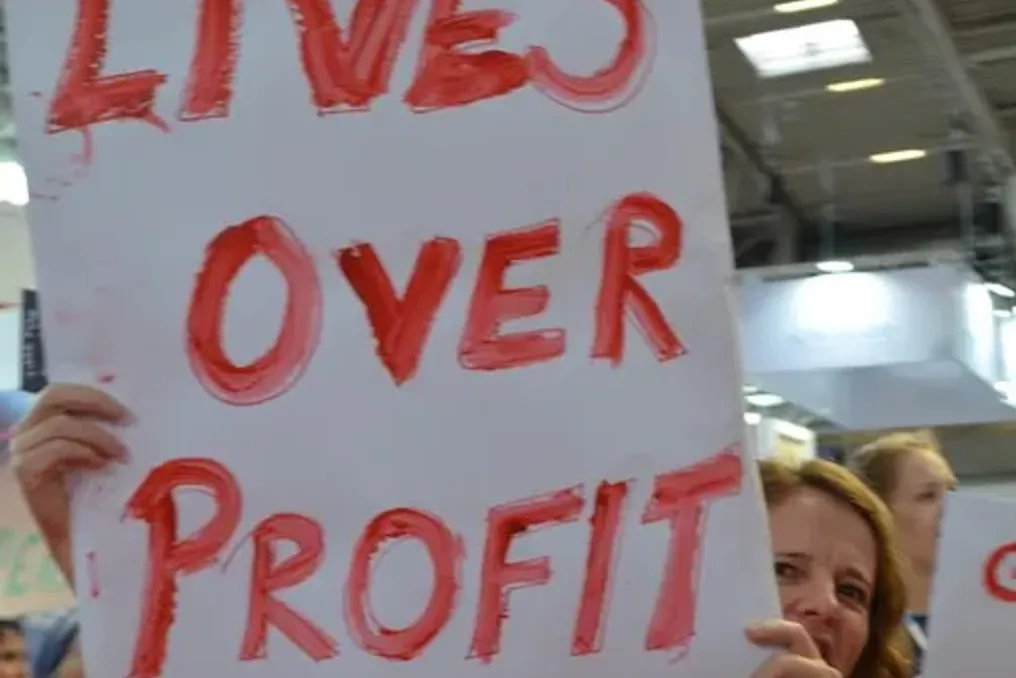
Our Constitution guarantees every person the right to access healthcare services. It is the government's responsibility to create and implement laws and policies that make this right a reality. Until now, the government has offered promises instead of concrete legislation. It is high time for our government to take seriously the right of the South African people to health. To do this, the government must fulfill its already made promises to introduce, pass, and implement the Patents Amendment Bill, ensuring that human lives are prioritized over corporate profit.