In Tehran, at the Arasbaran Culture Center, the film 'Sundays' will be screened this Sunday. This 2025 drama was directed by Spanish filmmaker Alaudy Ruiz de Azúa. Following the screening, a discussion with film critic Kurosh Jahad is scheduled.
Plot and Central Themes of the Film
The film presents a deep exploration of the search for belonging and spiritual refuge by a young woman. The action unfolds against the backdrop of the picturesque Basque Country, immersing the viewer in the psychological complexities of a teenager caught between rigid family expectations and a strong inner desire for a solitary life.
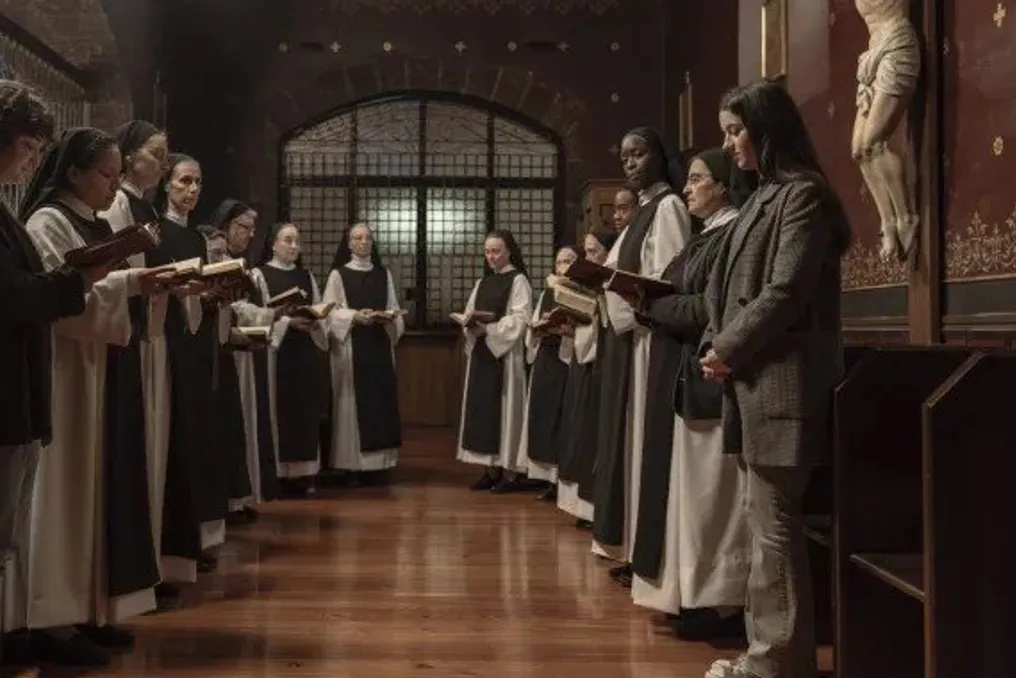
At the center of the narrative is seventeen-year-old Ainara, who feels a powerful calling to join a monastery during a religious pilgrimage. This yearning sets off a chain of events within her fractured family. Ainara's father, Inaki, a solitary man and restaurant owner, is portrayed as a detached figure, more preoccupied with his business than with his daughter's emotional state.
Family Conflicts
In contrast, Aunt Maite, an atheist cultural manager, acts as the voice of secular rationality. She is extremely outraged by Ainara's desire for 'professional distinction,' strongly advising her niece to embrace the experience of youth rather than retreating into a life of prayer and silence.
As Ainara embarks on her spiritual journey under the guidance of Father Chema, the tension between her daily life and divine aspirations mounts. The film masterfully conveys the friction within the Basque household: Maite's marriage to Pablo is in crisis, and Inaki's financial instability affects his view of Ainara's future.
The conflict peaks during a moment of teenage vulnerability when Ainara begins a romantic relationship with another choir member, Mikel. The subsequent family argument underscores the profound chasm between Ainara's inner world and how her family perceives her.
Tragedy and Ainara's Choice
The tragedy of the picture is amplified by the death of Ainara's grandmother, Maria Dolores. This loss triggers a burst of anger from Maite, who accuses Inaki of financial failures and his supposed indifference to his daughter. In a heartbreaking confrontation, Maite views Ainara's desire to become a nun not as a spiritual calling, but as a symptom of emotional trauma following her mother's death. The tension culminates in inheritance lawsuits and a devastating separation that seems irreparable.
Despite the family's pleas and the chaos in domestic life, Ainara chooses the monastery, taking vows to become a cloistered nun. Her decision is presented not as a simple escape, but as a definitive act of self-determination in a world where she felt unnoticed.
Film's International Recognition
The film has been a huge critical success, winning awards across Europe and Latin America. It debuted with a dominant victory at the 73rd International Film Festival of San Sebastián, receiving the Golden Shell alongside awards from Irizar Basque Film, Feroz Zinemaldia, FIPRESCI, and SIGNIS. Its recognition continued at the 40th Goya Awards, where it received awards for Best Film, Best Director, and Best Original Screenplay, while Patricia López Arnaiz and Nagore Aranburu were recognized for outstanding acting.
The film's success extended to the 13th Feroz Awards, 81st CEC Medals, and 5th Carmen Awards, solidifying Alaudy Ruiz de Azúa's status as a visionary director. Its international reach was further confirmed by nominations for Platino and Sur Awards, as well as Blanca Soroa's win for Best Actress at the 13th Platino Awards.