Trade on the African continent maintained momentum in the first half of 2026; however, companies expanding across Africa are facing obstacles related to fragmented payment systems, liquidity constraints, and foreign exchange issues.
Trade on the African continent maintained momentum in the first half of 2026; however, companies expanding across Africa are facing obstacles related to fragmented payment systems, liquidity constraints, and foreign exchange issues.
According to the global fintech company Verto, businesses are increasingly seeking markets beyond their domestic borders as the African Continental Free Trade Area (AfCFTA) opens up new prospects. Nevertheless, many long-standing financial barriers hindering seamless cross-border trade remain firmly in place.
Ola Oyetayo, CEO of Verto, noted that despite difficulties in moving funds between countries, business across Africa is showing growing confidence. He emphasized that trade between South Africa, Nigeria, Kenya, Tanzania, and the West African bloc continues to grow due to demand for expansion, and companies are actively seeking growth opportunities outside their home markets.
South Africa, being one of Africa's most developed financial markets, plays a key role as both a gateway to the continent and a bridge to international trading centers. Verto reported that one of the major shifts this year has been the diversification of trade corridors, with companies preferring to seek opportunities within Africa rather than relying solely on traditional global markets.
For South African firms, this creates chances to reach new customers, strengthen regional supply chains, and diversify raw material sources across the continent. However, companies are forced to operate in an increasingly complex operational environment that includes currency volatility, changing regulatory requirements, compliance obligations, and rising operating costs.
The company pointed out that these factors weigh particularly heavily on small and medium-sized enterprises, as delays in receiving payments and access to foreign currency directly affect working capital, supplier relationships, and long-term development plans. One of the clearest trends in the first half of the year was the divergence between trade ambitions and the actual execution of those deals.
Businesses may find attractive opportunities in neighboring markets, but transferring funds across African borders often proves more difficult than paying in financial centers outside the continent. Anthony Butch, Commercial Director at Verto, stated that liquidity remains one of the most serious problems for businesses. He explained that companies require deep access to emerging market currencies, multi-currency accounts, and a direct channel to currency networks. Without this, payments are delayed, and working capital is frozen.
Butch added that South African businesses face an additional complexity because they require reliable access to both African markets and major global financial centers. He noted that much of the infrastructure is built for one direction or the other, and it is this gap that generates most of the current difficulties for companies.
Despite these hurdles, Verto believes progress is being made through initiatives such as the Pan African Payment and Settlement System, as well as through continuous investment in digital payments, alternative settlement mechanisms, and financial technologies. The company observed that financial institutions, fintech companies, and regulators are increasingly aligning on the need to modernize the infrastructure supporting African trade, although the implementation of this process is still ongoing.
Looking ahead to the second half of 2026, Oyetayo predicts that the companies that can effectively move capital in both regional and global markets will reap the greatest benefits from expanded trade opportunities. He stressed that initiatives like PAPSS are a significant step, but currently, the pace is set by corridor operators, not policy. Verto concluded that African companies are no longer waiting for perfect conditions for trade, and those ready to overcome financial infrastructure challenges will be best positioned to capitalize on the continent's growing regional opportunities.
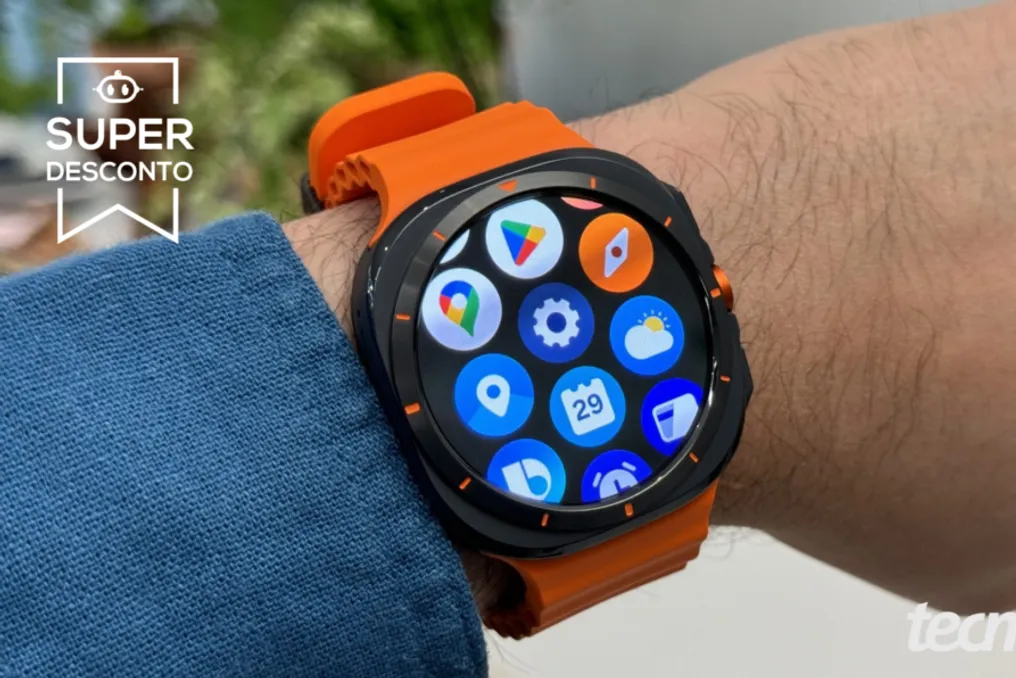
The Galaxy Watch Ultra is available on sale with a significant 65% discount off its original price of R$ 4,999. This top-tier Samsung watch, known for its robust build, long battery life, and advanced sensors powered by artificial intelligence, can be purchased for R$ 1,736 via Pix on Mercado Livre.
This advanced Samsung smartwatch incorporates the BioActive sensor and other components that provide various health data to the user. It is possible to monitor body composition through bioimpedance, track heart rate and SpO2 levels, in addition to performing electrocardiograms (ECG).
In addition to health functions, the Galaxy Watch Ultra supports tracking various sports activities, including specific modes for running and cycling. Integration with Galaxy AI allows for data analysis, offers personalized training suggestions, and even provides quick answers in messaging applications.
With a 590 mAh battery—whose capacity is expected to be higher in the Galaxy Watch Ultra 2, according to rumors—it guarantees up to 100 hours of autonomy when economy mode is active, eliminating the need for daily recharging. The device operates with the Exynos W100 processor, 2 GB of RAM, and 64 GB of storage for downloading apps from the Play Store.
Its structure features a 1.5-inch Super AMOLED screen with a brightness of up to 3,000 nits, ensuring clear visibility even under intense sunlight. The case is made of grade 4 titanium. For precise location and navigation, the watch has dual-frequency GPS (L1 + L5).
The gadget has IP68 and military MIL-STD-810H certifications, giving it resistance to extreme environments. It supports temperatures ranging from -20 ºC to 55 ºC and altitudes up to 9,000 meters, as specified by the manufacturer. Despite its 10 ATM water resistance, it is not recommended for deep diving or aquatic activities.
The opportunity to acquire the Galaxy Watch Ultra with a 65% discount for R$ 1,736 via Pix on Mercado Livre should be taken advantage of.
Xiaomi has expanded its presence in the competitive Chinese automotive market by introducing the new family of SUVs called Skynomad. This line, comprising the N70 and N90 models, represents the brand's entry into the extended-range electric vehicle (EREV) segment.
All vehicles in the Skynomad line will be equipped with a 76 kWh ternary NMC battery pack supplied by CALB. This battery set allows for travel of up to 505 km using only electric mode, according to the Chinese CLTC cycle. Furthermore, the total weight of these models is remarkably low, reaching only 400 kg.
This strategic change is considerable, given that Xiaomi previously focused exclusively on fully electric models. Now, the company has adopted the REEV (electric with range extender) architecture. This approach combines daily electric use with combustion support for longer journeys, a formula that has appealed to Chinese consumers by mitigating range anxiety. Rivals such as Li Auto, AITO, and Deepal have already succeeded with this same tactic.
It is important to note that the combustion engine does not directly drive the wheels; it functions solely as a generator to recharge the battery. This 1.5-liter engine, producing 150 hp and manufactured by Harbin Dongang, a subsidiary of Changan, results in fuel consumption ranging between 16.4 km/l and 15.9 km/l, depending on the SUV size. However, the mentioned 505 km refers to the CLTC cycle, which is more optimistic; under the stricter WLTC standard, the range drops to the 363 to 380 km range.
The Skynomad N70 features five seats, measures 4.96 meters in length, and has a wheelbase of 2.95 meters. It can be equipped with a rear engine of 282 hp or an all-wheel-drive system that raises the combined power to 416 hp. Previous regulatory records also indicated a more affordable entry version, utilizing a 52 kWh lithium iron phosphate (LFP) battery supplied by Sunwoda.
The top-of-the-line model, the N90, is a larger SUV, presenting a length of 5.28 meters and capacity for six passengers. It features all-wheel drive and the same combined power of 416 hp. In previews released by Xiaomi itself, the N90 was shown with an interior inspired by minivans and front seats with 180-degree swivel functionality.
This announcement comes at a strategic time for Xiaomi. The company closed the first half of 2026 with 185,055 units sold, representing a 17.2% increase compared to the same period last year, and maintains the ambition to sell 550,000 cars by the end of the year. The company expects the Skynomad series to be fundamental in achieving this goal. The official launch of the N90 is scheduled for August 21 during the Chengdu Auto Show, a prominent industry event in the country.
Trump Media & Technology Group announced on Thursday, the 16th, the launch of a new service aimed at the financial market. This tool will allow users to access in real time posts from high-reach profiles on Truth Social, including President Donald Trump's account.
The service, named Truth API, will be offered to institutional clients, such as high-frequency algorithmic trading firms, starting next month. The company's strategy aims to monetize the influence of the president's statements on a social network increasingly monitored by investors.
The company mentioned that some users have already pre-registered. The main objective is to reduce the time lag between a message being published and when it is received by financial operators. However, Trump Media did not specify the subscription cost nor detail the speed difference compared to standard access.
This initiative comes in a context where Donald Trump's posts on Truth Social have gained great importance for the markets. Since his return to the Presidency in 2025, the executive chief's statements on public policy issues have generated immediate responses in financial assets.
The company noted that investors needed to continuously follow the presidential account on the platform, as announcements regarding trade tariffs and international negotiations directly impacted stock and contract prices. One example cited was during the conflict between the United States and Iran, when the president's messages about peace dialogues affected oil futures behavior.
The new system mirrors a practice already established in the financial sector, where corporations pay for social media APIs to obtain data with a few milliseconds advantage over public access. Trump Media intends to extend this agility to market participants interested in the posts of prominent figures on Truth Social.
Donald Trump's account is the most followed on the platform, boasting 12.9 million users. According to data provided by the company itself, his sons, Donald Trump Jr. and Eric Trump, also have considerable audience on the network. Furthermore, the president holds about 41% of Trump Media shares through a revocable trust, according to FactSet records.
This launch constitutes another attempt by the company to diversify its business beyond the social network. Since its IPO in 2024, the company has explored other areas, such as a streaming platform, cryptocurrency reserves, and a pending agreement with a nuclear fusion company.
Despite this expansion, Trump Media faces significant financial challenges, accumulating substantial losses and seeking new revenue streams. Kevin McGurn, the company's interim president, stated that the Truth API has the potential to become a relevant recurring revenue source.
At the close of the day, Trump Media shares registered a 3% drop, trading at US$ 9.28. The stock shows a total depreciation of 77% since Trump resumed the presidency last year.