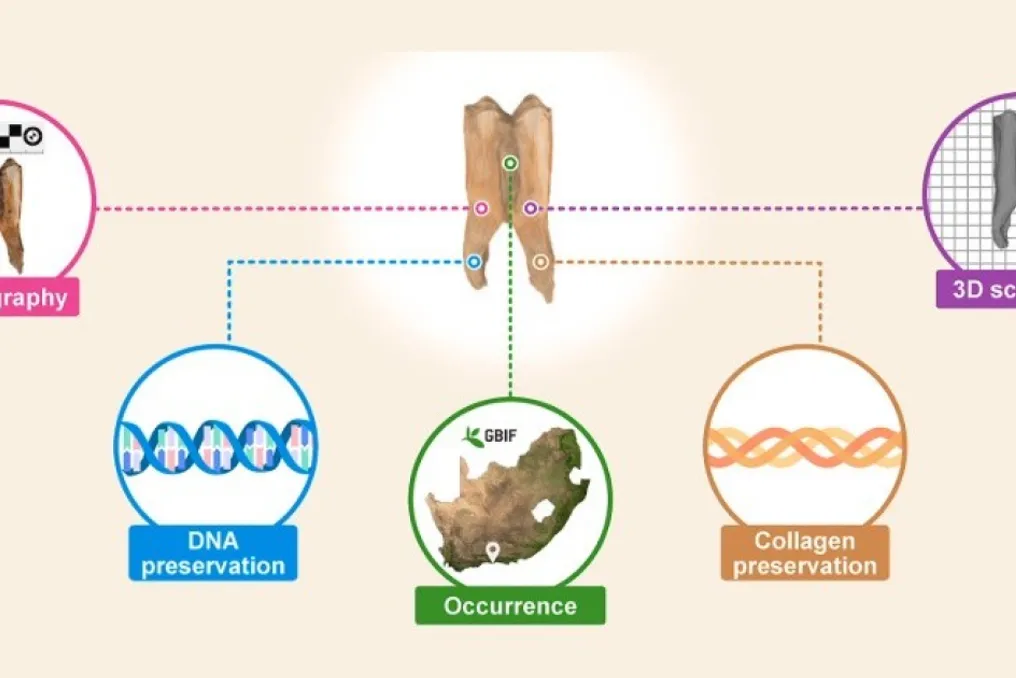
Researchers managed to identify DNA fragments dating back approximately 50,000 years in an antelope tooth located in southern Africa. This finding significantly contributes to expanding the understanding of the capacity for genetic material preservation in hot climates.
Analysis of African Fossils
The study involved analyzing over 300 teeth from animals that lived in the last 110,000 years. The results suggest that genetic traces can remain preserved in sub-Saharan Africa for a much longer period than previously estimated.
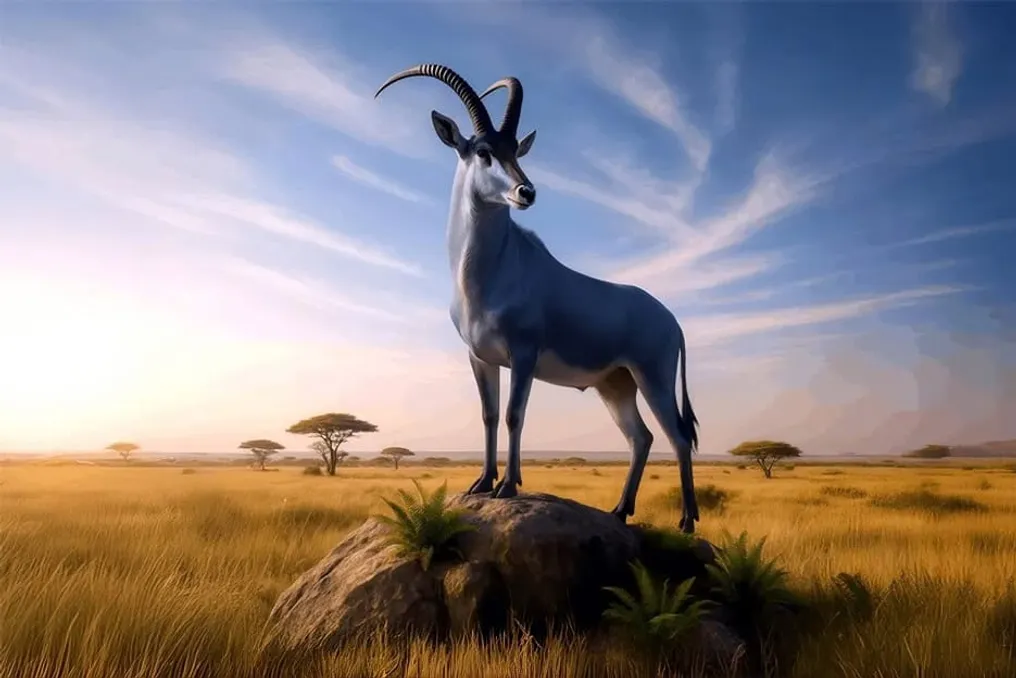
The investigation, published in the journal Quaternary Science Reviews, focused on bovine fossils and located the oldest material in a specimen of mountain reedbuck, a species of antelope that still exists on the African continent.
Revelations about African Past
The researchers evaluated bone remains of animals that inhabited the area at different past epochs, covering both the Holocene and Upper Pleistocene. Although many of the examined teeth did not have recoverable genetic material, some managed to retain small amounts of DNA.
The oldest fragment was obtained from a partial molar of an antelope of the species Redunca fulvorufula, found in Boomplaas Cave, in southern Africa. Additionally, DNA was identified in the remains of extinct long-horned buffalo, with estimated ages between 12,000 and 21,000 years.
This preservation was notable, given that tropical and subtropical environments generally promote DNA degradation over time. Previously, it was expected that the African climate would hinder the recovery of very ancient genetic material, especially when compared to cold or stable locations.
Scientific Caution Required
Despite the importance of the 50,000-year record, the scientists themselves warned that the result must be interpreted with caution. The antelope's genetic material showed a notable difference compared to other records found, and the fossil also presented signs of contamination by human DNA, which was removed during the analysis process.
According to Deon de Jager, a paleogenomics specialist at the University of Copenhagen and the study's first author, the discovery is relevant, but doubts remain about the exact limits of genetic preservation on the African continent. He emphasized that certain scenarios, such as deep caves with constant temperature and high-altitude areas, can create more favorable conditions for maintaining ancient DNA.
Implications for Evolutionary Research
Even in small quantities, the recovered DNA provides substantiation for scientists to investigate the evolutionary relationships between various species and populations. Researchers believe that future studies may provide data on lineages, gene flow, and possible interbreeding between animal groups.
The study also opens avenues for a better understanding of the evolutionary trajectory of African animals and, to some extent, human ancestors. However, recovering DNA from very ancient human species is still considered unlikely. Particularly difficult cases include Homo naledi, which disappeared about 240,000 years ago, and Paranthropus robustus, which lived approximately 1 million years ago. According to the researchers, African environmental conditions make locating preserved genetic material from these distant periods extremely complex.
Therefore, the discovery does not negate the challenges of paleogenetics on the continent, but signals that the time span available for studying African history may be more extensive than previously thought.