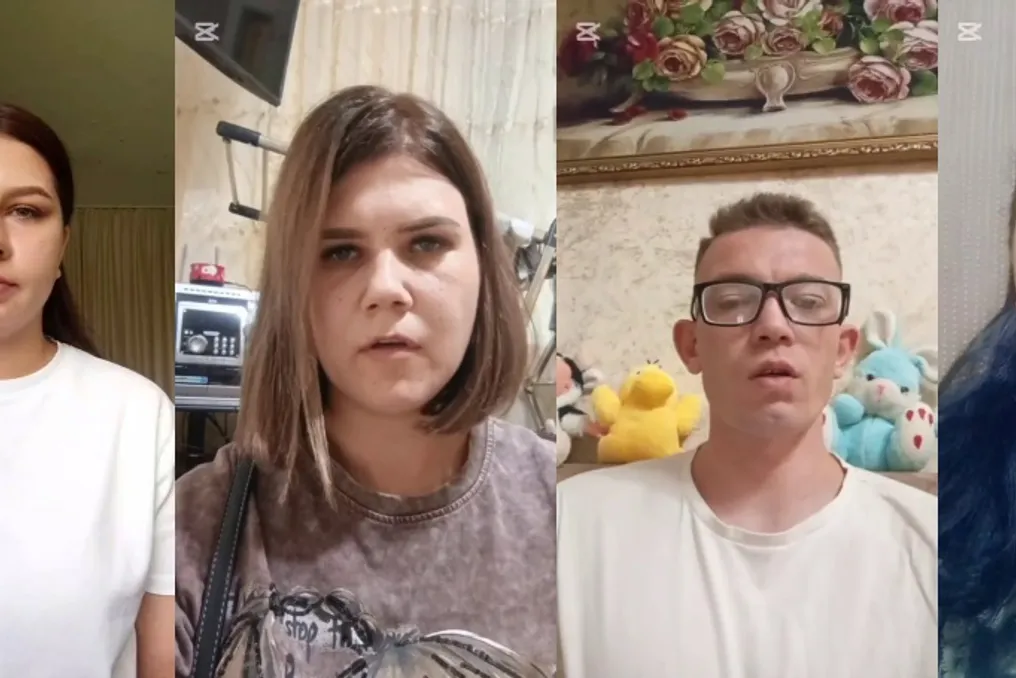
Video appeals from orphanage graduates are actively circulating on social media, raising concerns about housing documentation issues. A recent appeal was recorded by orphans who were allocated apartments before 2021.
Video appeals from orphanage graduates are actively circulating on social media, raising concerns about housing documentation issues. A recent appeal was recorded by orphans who were allocated apartments before 2021.
These young people are asking President Shavkat Mirziyoyev to assist in resolving an existing legislative gap that prevents them from owning their homes. According to the participants, the apartments were provided based on Cabinet of Ministers Decree No. 164. Despite many of them having lived in these apartments for 10–15 years, the revocation of this decree has left them in a legal predicament with no clear way out.
The participants point out that the new presidential decree No. PP-656, which provides for housing ownership for orphanage graduates, does not apply to them. Consequently, they continue to live in their apartments but remain legally tenants of the communal fund and cannot proceed with privatization.
In their video appeal, they emphasized that they are not requesting any additional benefits, but merely wish to gain the legal right to privatize the housing they have occupied for a long time. They stated that they aim to become full owners of their homes and ensure a secure future for their children.
The graduates reported that local khokimiyats are aware of the issue and are sending relevant requests to the Cabinet of Ministers. However, a regulatory solution for this category of citizens who received housing before 2021 has not yet been adopted. It is worth noting that this is not the first instance of such appeals; previously, Podrobno.uz covered the story of an orphanage graduate who could not obtain her entitled housing eight years after leaving and appealed to the president via a video message.
Despite the growing number of such video appeals on social media, relevant state structures have not yet issued public comments regarding the issues raised.
A Congolese woman who experienced sexual violence in her home country but was denied asylum in South Africa is taking legal action. Her story of abuse by soldiers in her country, followed by further sexual exploitation while fleeing to South Africa, resulted in her suffering not being recognized, which may help create a more gender-sensitive asylum system.
The Initiative for Strategic Litigation in Africa (ISLA) and Legal Human Rights Advocates (LHR) filed a lawsuit in the Gauteng High Court in Pretoria. The case concerns a woman from South Kivu who endured prolonged sexual violence by armed forces in the DRC, and subsequently suffered at the hands of border officials in various countries during her flight.
The woman arrived in South Africa seeking protection, but the asylum system deemed her testimony implausible. The region she fled has suffered from armed conflict and systematic sexual violence against civilians for over thirty years. LHR representatives explained that the woman did not flee by choice, but because staying was incompatible with life.
The victim of further sexual violence during her escape arrived in South Africa around 2006–2007. Since she did not speak English, she managed to reach the Department of Home Affairs in Durban, where she was advised to return until she found someone to assist with communication. She returned, told her story, repeated it later in an interview, and a third time years later before the Refugee Appeal Board. However, she was told she was implausible due to inconsistencies in her account.
LHR stated that penalizing her for inconsistency was a re-infliction of harm. The woman was detained at the Lindela Repatriation Centre after being arrested for illegal stay, and she lived for years with expired or unresolved documentation.
ISLA and LHR are asking the court to review and overturn the Refugee Appeal Board's decision to deny asylum. They argue that this decision failed to adequately assess the gender-based violence she suffered as persecution under the Refugee Act and applicable international law. These organizations also call on the court to investigate systemic failures by refugee officials in dealing with women seeking protection in South Africa after fleeing war and sexual violence.
According to ISLA and LHR, returning her to her country of origin is not merely an administrative decision but potentially a death sentence. They emphasized that her case is not unique and reveals structural flaws in the system: the lack of gender-sensitive consideration in asylum cases, the 'credibility trap' that punishes trauma survivors, and the inability to recognize gender-based violence as a form of persecution.
It was noted that the asylum system was designed around the paradigmatic refugee, who is implicitly a man fleeing persecution as an individual political actor, and this approach proves insufficient for considering claims of gender-based persecution.
Gender-based persecution, including sexual violence by armed actors in conflict settings, was recognized as a form of persecution under the Refugee Act. The Maputo Protocol, ratified by South Africa, obligated the state to 'protect women seeking asylum, refugees, and internally displaced persons from all forms of violence, including rape.'
LHR stated that South Africa did not apply these frameworks to her case, using a standard of credibility developed without considering her circumstances, which led to her exclusion.
Both organizations stated that her implausibility was not related to trauma affecting her narrative, but rather that she needed protection more, given what she had experienced and what might happen to her upon return.
Something significant happens weekly in KwaZulu-Natal when the March and March movement takes to the streets, staging a kind of theatrical performance. This phenomenon, dubbed the 'fourth mirror,' forces people to question their own identity, asking who they are when they believe no one is watching them.
This phenomenon demonstrates scenes where people are harassed for hiring immigrant domestic workers, where pregnant women are denied hospital admission, and where people decide in the moment who is considered human and who is not. More alarming is the possibility that the government, in responding to these events, might be looking into the same mirror and seeing the same reflection.
The situation at Addington Hospital in Durban has become disturbingly routine: members of March and March position themselves at the entrance, demanding identification before anyone can enter. In one instance, 77-year-old academic Crispin Hemson was pushed and denied entry after refusing to show documents. He was only able to get inside with police escort.
Such cases are not isolated. Pregnant women are refused admission in clinics, and a refugee with diabetes from Congo was prevented from receiving medication. People with legal documentation—asylum seekers, refugees, legally migrating individuals—are told they do not belong here. The group claims it enforces Section 17, asserting that state healthcare is intended for tax-paying South Africans. However, the Constitution guarantees healthcare to everyone on the territory under Section 27, not just citizens or taxpayers.
The most profound impression is made by the arrest of elderly grandmothers and their placement in police vans for hiring immigrant workers. Premier Thami Ntuli stated that business owners hiring foreigners without documents will face arrest. But where is the line drawn? Should a grandmother seeking home help be treated like a human trafficker? The South African Human Rights Commission has clearly stated that no member of the public has a legal or moral right to enforce immigration laws. Nevertheless, the police seem confused; in Hemson's case, officers allegedly told him they were acting only under the instruction of the Minister of Police.
The Constitution of South Africa is one of the world's most progressive, created on the ruins of apartheid to protect the human dignity of every individual. The United Nations reminds us that laws protect human dignity, they do not divide it. Yet, the situation appears different.
According to the European Statistical Service, 42,960 requests for international protection were submitted in EU countries for the first time in April. This figure shows an 11% decrease compared to April 2025 (when there were 48,465) and a 9% decrease relative to March (47,155).
Additionally, 9,145 subsequent applicants were registered, representing a 17% increase compared to April 2025 (7,835), but this is a 9% decrease compared to March 2026 (10,075).
Among the member states, Italy (9,710), France (8,645), Spain (8,350), and Germany (6,140) received the highest number of first-time asylum applicants. These four countries accounted for three-quarters of the total primary applicants in the EU.
In April 2026, the largest group of people seeking asylum were citizens of Venezuela (4,875 primary applicants). They were followed by Afghans (3,830), citizens of Bangladesh (2,630), and Sudanese (1,720).