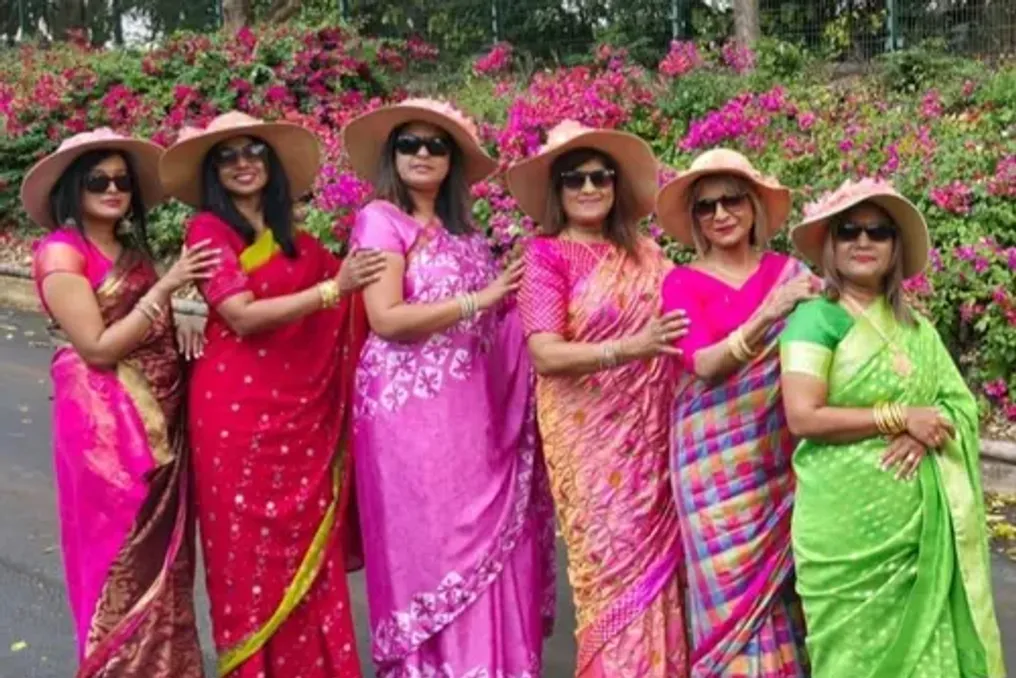
Across the world, the magnificent sari attracts attention, whether it is made from the finest Kanjipuram silk or simple handwoven cotton; it always demonstrates culture and status.
Cultural Expression in Politics
In a vibrant display of cultural confidence and social cohesion, parliamentarian Happy Huzwayo appeared in an elegant sari during the opening of the KwaZulu-Natal legislature in 2016 before His Majesty King Goodwill Zwelithini kaBhekuzulu. Her colleague, Shemin Takur Rajbanshi, dressed in a similar attire, noted: 'Traditional clothing is gaining popularity... It is social cohesion in action.'
The presence of Huzwayo and Rajbanshi, adorned in the graceful folds of this ancient garment, radiated dignity and inclusivity, embodying the broader vision of a unified South Africa promoted by Madiba. This moment showcased the unique ability of the sari to transcend differences.
History and Universality of the Sari
The sari remains the oldest continuously worn garment in human history, its style having changed little since the Indus Valley, Bengal, and Madurai around 5000 years ago. Six meters of luxurious fabric can be draped from modest to seductive.
The author recalls seeing photographs of the radiant Persis Hambatta in a sari on the cover of a magazine as Miss India 1965 in childhood. In the same year, she conquered the press at the Miss Universe contest in Miami, Florida. Hambatta later appeared in the classic film 'Bombay Raat Ki Baahon Mein' by Haji Ahmad Abbas in the author's birth year, 1968, where she sang the main song. The author regrets that she did not wear a sari as Lieutenant Deltaan Ilia in the film 'Star Trek' in 1979, where she famously shaved her head for the role.
Diversity of Styles and Tradition
The versatility of the sari is evident in the vast number of regional draping styles across India. For instance, the Andhra tradition accentuates the hips with the Nivi style, while the elegance of Bengal is represented by the box-pleat, and the Nauvari of Maharashtra, inspired by the dhoti, allows freedom of movement for dancers. Even marathon runners, such as the legendary 'Sari Aunty' Sita Singh from Chatsworth, who finished in New York, could move in this attire.
The sari stays securely in place thanks to clever tucks, requiring neither buttons nor pins, transforming any woman into a paragon of grace. This appeal was long noted at events like sari queen contests, which were once glamorous social occasions in Durban City Hall, Chatsworth, and other traditionally Indian areas. These contests demonstrated not only grace but also cultural pride.
Sari as a Symbol of Women's Strength
The sari served as a distinguished attire for pioneering women in South Africa. Professor Fatima Mir, a renowned scholar, writer, and anti-apartheid activist, rarely appeared in public without it; her presence was a whirlwind of intellect and determination. Advocate Zubi Sidat, founder of the Women's Cultural Circle and one of the first Indian lawyers in Durban, carried herself with unwavering dignity in her beautiful saris. Dr. Frené Ginwala, a key figure in the liberation struggle and the first female speaker of the South African National Assembly, also embodied strength in this garment. The author recalls her mother, Lutchammammu Alimal Naidu, who could stop a crowd just by walking past.
The Indo-origin politician born in Italy, Sonia Gandhi, was a constant icon in handwoven cotton saris, her calm demeanor reflecting the quiet power of this garment. Sakuntalai Povalingan, a well-known local director of an Indian girls' school in Durban, wore the sari as a symbol of authority and elegance.
Daily Wear and Unity
Once, the sari was everyday wear for most Indian women in South Africa. Mothers wore it while carrying baskets, using the pleats for everything: from wiping tears to carrying vegetables and receiving blessings in the temple. It transcended religious boundaries, proudly worn by Hindus, Christians, Parsis, and Muslims, challenging narrow prejudices.
Today, the sari continues to foster unity. The 'Sari Stroll', initiated by Kamlesh Gunden and others on Durban beach since 2010, turns the Golden Mile into a sea of color. Women from all walks of life walk together in bright saris, singing and laughing, building bridges. The annual event is an act of nation-building in fabric, celebrating diversity, raising awareness about women's issues, and marking important milestones. Gunden's vision transforms the stroll into a powerful statement: 'There are no racial lines or divisions... (the event) celebrates the strength of women.'
Everyone is invited to the next 'Sari Stroll' on August 2nd at the Durban amphitheater. By wearing a sari or supporting those who do, one can join this celebration of fashion and cultural history and make a personal statement that unites the world more than it divides it. Within its graceful folds lies the possibility of walking together, dissolving artificial barriers of race, class, faith, ethnicity, and nationality. The appeal is exceptional. The invitation is open.