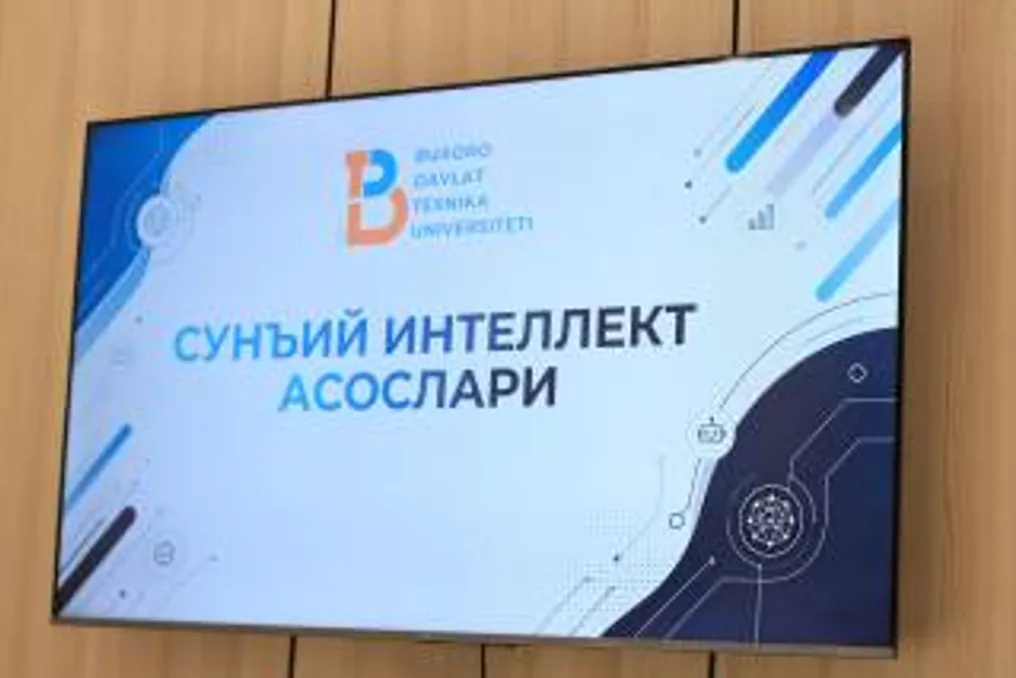
To improve public administration in the Bukhara region in accordance with modern requirements, accelerate digital transformation processes, and widely implement artificial intelligence technologies, another important step has been taken.
Training for Leaders
Educational courses on artificial intelligence and digitalization have started at the Regional Administration's Digital Management Center for consultants of city and district heads. In line with the state leader's directive, special departments dedicated to the development of artificial intelligence have been established in the structures of all ministries and departments.
Goals of AI Implementation
These departments have received clear tasks to find solutions using artificial intelligence in areas such as increasing work efficiency and service quality, reducing excessive costs, 'hidden' economy, and bureaucracy.
Content of Educational Programs
Deputy heads of cities and districts also participate in these courses in a remote format, familiarizing themselves with the latest knowledge and experience in the field of digital governance. This contributes to the implementation of digital reforms in the regions based on a unified approach and the effective application of modern technologies in the management system.
Within the educational program, participants are provided with detailed information on the theoretical foundations of artificial intelligence technologies, their application possibilities in the activities of state institutions, enterprises, and organizations, as well as methods for rational and safe use of generative artificial intelligence tools and the functional capabilities of the 'Digital Village' information system. Additionally, practical classes have been organized aimed at bringing digital services closer to the population, strengthening the data-driven decision-making approach, and improving the quality of public services.
The Significance of AI for Development
Today, artificial intelligence is becoming one of the most important drivers of the global economy and public administration. Therefore, strengthening the knowledge and skills of specialists working in local government bodies is of great importance for the further development of the digital government system, prompt consideration of citizens' appeals, and improving management efficiency.
The courses held in Bukhara not only improve the qualifications of specialists but also contribute to the formation of a culture of digital thinking, the widespread application of innovative approaches, and the consistent implementation of the digital development strategy of New Uzbekistan. In conclusion, it should be noted that digital technologies and artificial intelligence are the foundation of future progress, and the initiatives being implemented in the Bukhara region in this direction lay an important foundation for creating convenient, fast, and transparent public services for the population, turning Bukhara into one of the centers of innovation and digital solutions.