Activist Sonam Wangchuk has lost over 9 kilograms since the start of his indefinite fast, and doctors warn that he may soon enter a potentially 'critical' phase related to organ damage, as his fast reaches day 19.
Activist Sonam Wangchuk has lost over 9 kilograms since the start of his indefinite fast, and doctors warn that he may soon enter a potentially 'critical' phase related to organ damage, as his fast reaches day 19.
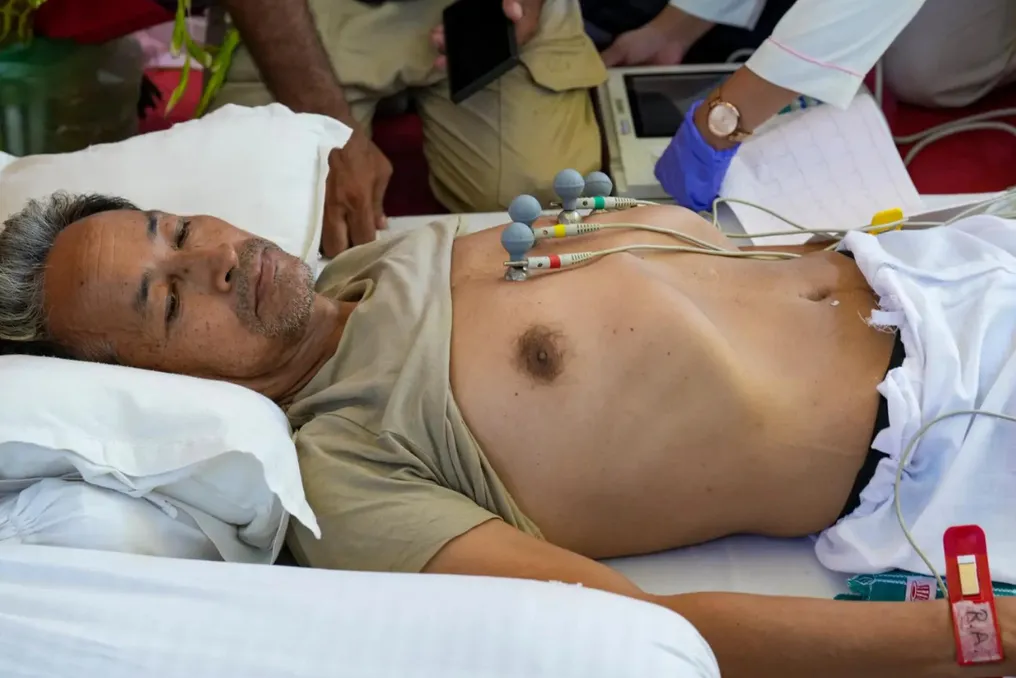
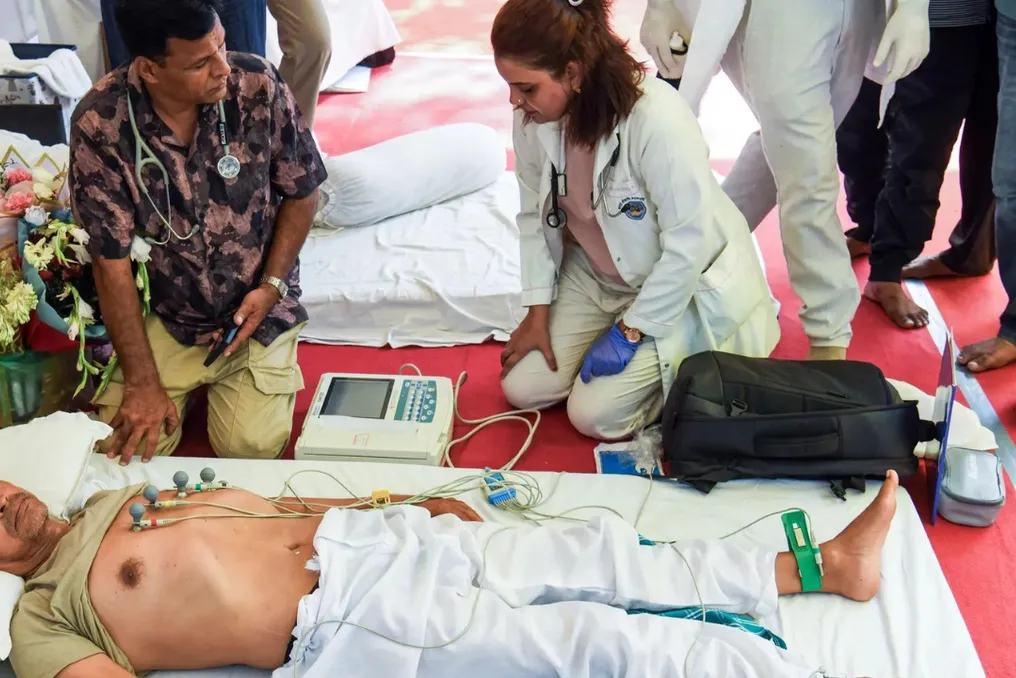
Doctor Satish Lambe provided an update on Wangchuk's condition, noting that the activist remains mentally alert and is currently medically stable. Nevertheless, he warned that doctors are closely monitoring for signs of possible deterioration in his condition.
Lambe reported that on the 19th day of fasting, Wangchuk's total weight exceeded 9 kilograms. His blood sugar level is 80 mg/dL, and his pulse is 72 beats per minute. Blood pressure readings are 105/61 mmHg while lying down and 101/65 mmHg while sitting. Hydration level is assessed as satisfactory, and mental state is alert. The activist's current weight is 56.9 kg.
Explaining the medical issues, Lambe added that the second stage of fasting is characterized by elevated uric acid levels, which indicates muscle breakdown and consumption, causing the rise in blood uric acid. They are now facing a potential third stage, which can cause concern due to organ involvement; for this, a 'watch and wait' approach is necessary. Medical staff maintains round-the-clock vigilance.
Despite repeated calls from political leaders, supporters, and even legal intervention requesting him to stop the fast, Wangchuk has refused to halt the protest. He stated that stopping it without a response from the government would send the wrong signal.
He emphasized: 'If I eat, what message will be sent? The message to the government will be that accountability is unnecessary. Protesters sit down and leave...'
In a video message published on the 18th day of the fast, Wangchuk mentioned receiving thousands of messages urging him to stop fasting, and that several high-ranking politicians personally contacted him. To reassure his supporters, he noted that the medical examinations conducted so far have not revealed any immediate danger. He stated: 'My condition is not such that I will die in two or four days. Many medical tests have been done, and the results are quite normal for an 18-day fast. An ECG was also done, and it is not bad. I can continue for many more days.'
Acknowledging weakness and muscle loss, Wangchuk insisted that his heart and other vital functions remain stable. Instead of asking people to focus on his fast, Wangchuk called on supporters to support the 'Chalo Sansad' march proposed by the Cockroach Janta Party, which will take place on July 20, the day the Monsoon Parliament Session opens.
Sonam Wangchuk stated on Tuesday that although he is in poor but not critical condition, his indefinite hunger strike against alleged irregularities in the NEET examinations and material leaks has entered its nineteenth day.
In a video message published on X, Wangchuk urged people to join the planned march to Parliament on July 20th instead of asking him to stop fasting. He noted that thousands of people sent him messages requesting him to end the fast and eat. Many senior leaders contacted him, some warmly, others insistently, and some even filed petitions in court demanding forced feeding.
Wangchuk emphasized that even if he ends the fast, nothing will change, and the only signal the government will receive is the absence of a need for accountability. He added that people organize protests and then simply leave.
Despite his declining health, Wangchuk asserted that he is capable of continuing the fast for 'a few more days' and reported that his heart and circulatory system are functioning normally. He specified that after numerous medical examinations conducted over the 18 days of fasting, the results were quite normal, including a recent ECG that showed no problems. Acknowledging weakness and muscle loss, he insisted on the good function of his heart and internal organs.
Instead of asking him to stop fasting, he appealed to everyone to take a small step: to participate in a mass demonstration on July 20th to send a clear message to the government. These statements came amid remarks by Abhijit Dipu, founder of the Cockroach Janata Party, who claimed that Wangchuk was losing muscle mass and experiencing 'unbearable pain,' and also reported that the activist had lost 8.5 kg since the start of the fast.
Earlier, a petition was filed in the Delhi High Court demanding that Wangchuk be forcibly fed and transferred to a government hospital. According to this petition, Wangchuk's condition had significantly worsened, and if he continued fasting, he could lose his life within two days, prompting the court to intervene immediately as saving his life was paramount.
Previously, several opposition leaders had appealed to Wangchuk to end his indefinite hunger strike at Jantarkhand in Delhi. The CJP protest at Jantarkhand began on June 20th and aims to demand the resignation of Union Education Minister Dharmendra Pradhan due to alleged irregularities in the NEET and other examinations. The organization announced a march to Parliament for July 20th.
Climate activist and educator Sonam Wangchuk stated on Friday that his hunger has stabilized after thirteen days of abstaining from food. He also emphasized that his constitutional right to peaceful protest should not be violated by attempts to remove him from the protest site.
Wangchuk is undertaking an indefinite fast at Jantkar Mantar in support of the protest by the Cockroach Janta Party (CJP). This party demands the resignation of Education Minister Dharmendra Pradhan due to alleged irregularities in examinations. The protest entered its twenty-first day on Friday.
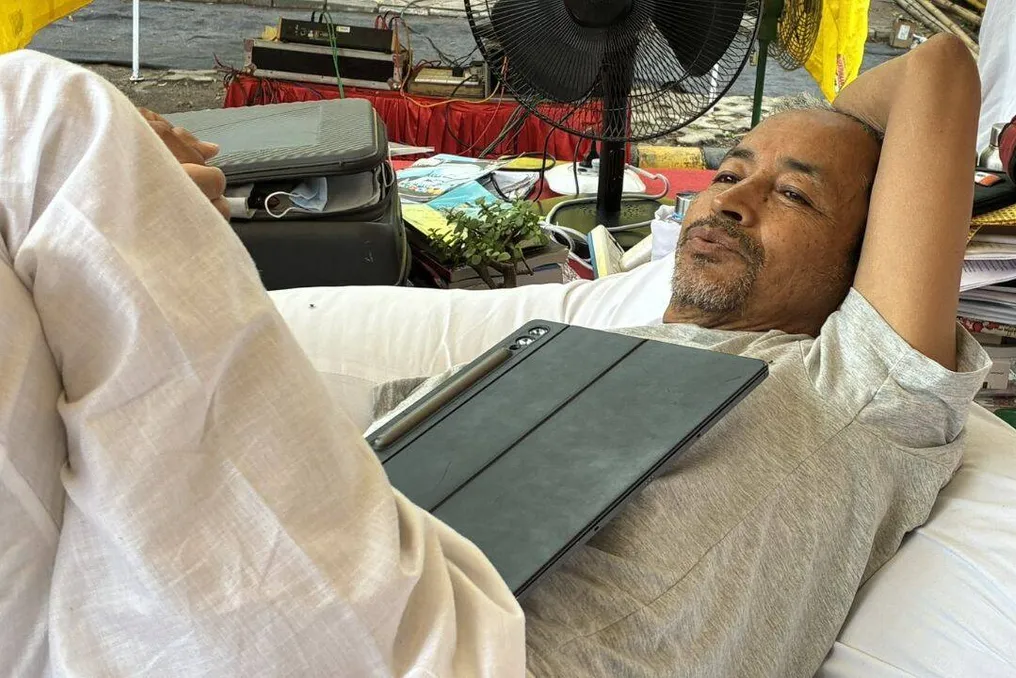
Speaking to journalists, Wangchuk noted that he is managing the prolonged fast. He reported feeling normal on the thirteenth day, and his appetite has stabilized. He admitted that the first few days are difficult due to the body's adaptation to fasting, and although he feels some fatigue, he is generally fine.
He shared that he has lost both fat and muscle mass but remains energetic. Wangchuk added that his bones are beginning to show, but he continues to feel vigorous. When asked about possible government intervention if his health deteriorates, he insisted that he is participating in the protest voluntarily and there is no basis for his removal.
He stressed that any removal would be a violation of his rights. Wangchuk reminded that they are conducting a peaceful protest, and the state of democracy and the world is under close scrutiny. He stated that the right to peaceful protest is enshrined in Article 19, and he hopes it will be respected.
Wangchuk continued his fast in support of students demanding accountability regarding education. He also called on the Centre to resolve pending issues concerning Ladakh, noting that the Monsoon Session is an appropriate time for a final decision on these matters.
Referring to student suicides linked to the cancellation of the NEET-UG exam in May, Wangchuk explained that the goal of the protest is to prevent such tragedies in the future. He mentioned that 20 students committed suicide, and he fears the number could rise to 40 or 80 next year.
He also suggested that accepting the resignation of the Education Minister would help the government restore youth trust. Wangchuk believes that the current anger among young people could have negative political consequences, and therefore, the resignation must occur before Parliament convenes.
CJP representative Ashutosh Ranka reported that Wangchuk has lost about 7.5 kg since the start of the fast, and that his blood sugar levels have remained consistently low. However, Ranka also noted that Wangchuk's energy is declining over time, and he is experiencing significant weakness while walking and difficulty speaking, which is a worsening situation. The CJP medical team is monitoring him, and they hope for a prompt response from the government.
Ranka reiterated his organization's demands, including the resignation of Pradhan and compensation of 1 crore rupees to the families of students who allegedly committed suicide. He added that the government has not initiated a dialogue with the protesters, and if there is no response, CJP will proceed with the planned march to Parliament on July 20. The protest began on June 20 due to alleged examination irregularities, and Wangchuk joined the action on June 28 and has been fasting since then.
Sonam Wangchuk's hunger strike at Jantar Mantar in Delhi entered its ninth day on Monday, raising renewed concerns among his supporters regarding his health condition.
The latest information was posted by Abhijit Dipke, founder of the 'Cockroach Janta Party' (CJP), who shared a message on X stating: 'Ninth day of the hunger strike @Wangchuk66'. This protest aims to demand accountability within India's education system and action against Union Education Minister Dharmendra Pradhan.
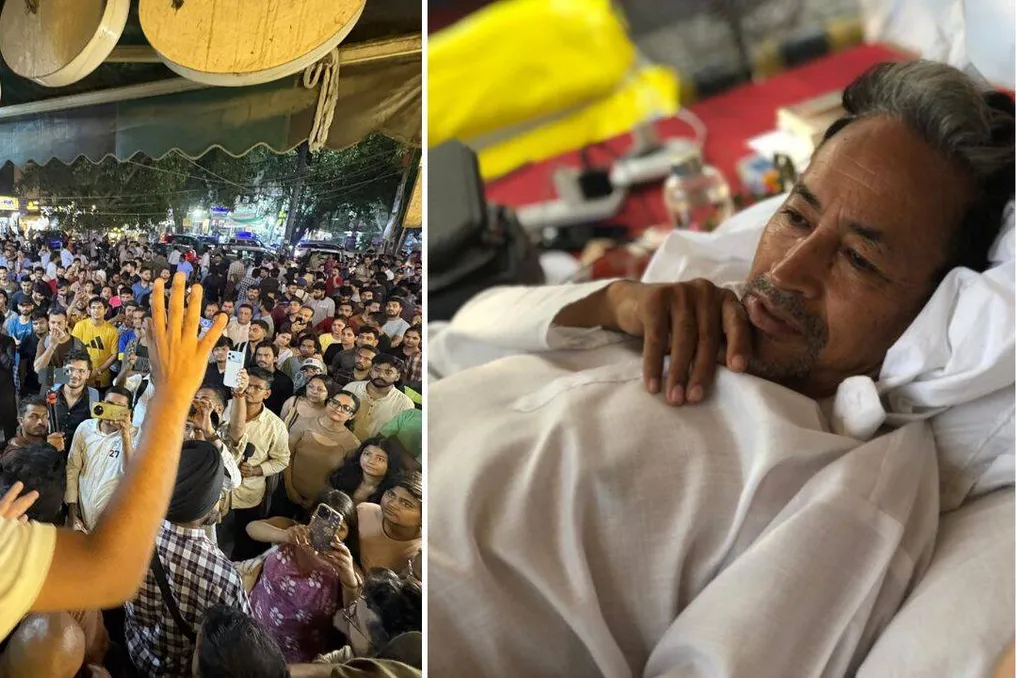
The day before, marking the eighth day of fasting, Wangchuk shared a health update on X, writing: 'Still alive.' He reported that about 7,000 people gathered at Jantar Mantar during the day, and leaders of various social and political movements expressed their support for the ongoing action.
In the same post, Wangchuk suggested that the growing number of online critics indicates the movement's effectiveness. He wrote that 'an obvious indicator of how effective this movement is can be seen in the number of trolls in the comments below. Over these years, I have seen that this number is directly proportional to the influence. I will be so sad and depressed the day they disappear. Thank you, my success counter, for your work.'
In recent days, the hunger strike has received support from opposition leaders, activists, and civil society members, and demonstrators continue to gather at Jantar Mantar in solidarity with Wangchuk's demands. As of now, the Union government has not provided an official response to either Wangchuk's latest remarks or the ongoing hunger strike.