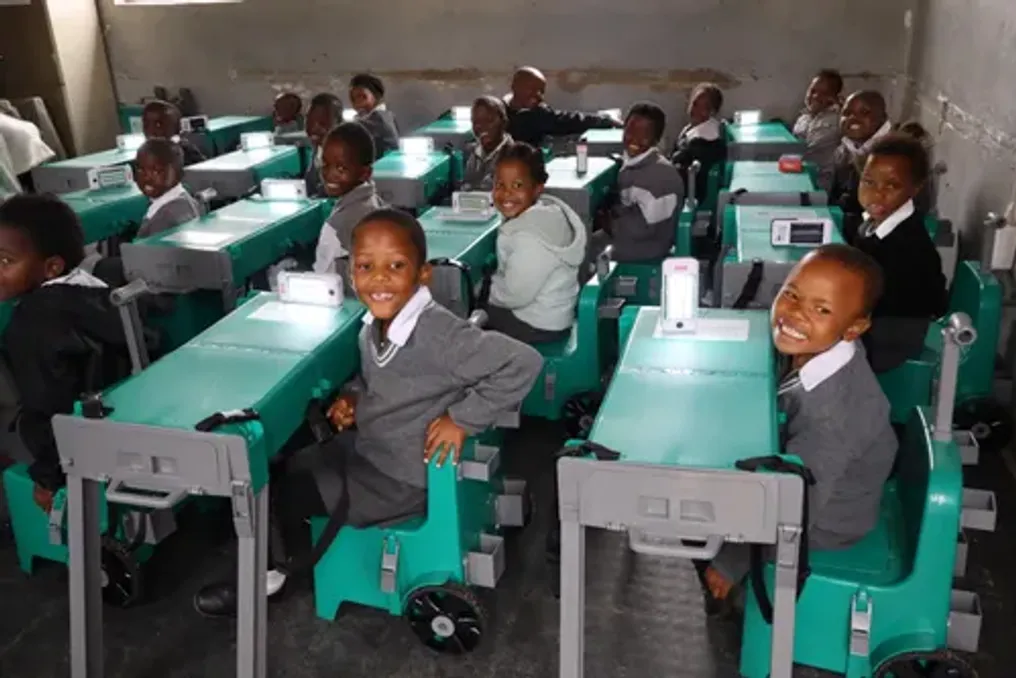
For thousands of children in South Africa, the school day often begins without one of the most basic tools for learning—a suitable desk. Organizations emphasize the impact that classroom furniture has on student engagement.
Scale of the Furniture Problem
According to data from the Department of Basic Education, presented in a written response to the National Council of Provinces (NCOP) Question 341 of April 23, 2025, 10,669 schools nationwide reported a shortage of furniture, with a total required volume amounting to 2,324,695 units.
As of the third quarter of the 2024/25 financial year, 837,649 units had been delivered to 5,309 schools. This covers 36% of the total identified deficit and 44.4% of the target for 2024/25.
Impact on Students
The lack of furniture means that many classrooms continue to operate without sufficient equipment, creating conditions where it is difficult for children to find a comfortable place to sit, write, and participate in lessons. Thousands of students face these issues due to delays in the supply of school furniture in South Africa.
Results of the MiDesk Global Program
The MiDesk Global monitoring and evaluation program demonstrated how providing students with proper desks can improve the classroom environment. Although these findings are based on program data rather than a national survey, MiDesk Global noted that the trends observed in participating schools were consistent.
The program found that 100% of participating schools reported improved concentration and comfort in the classroom after receiving desks. Furthermore, 90% reported strengthened attendance and improved math performance, while 70% noted improvements in writing skills.
Program representatives stated: 'Although these results are based on program monitoring and not a national study, they confirm what teachers constantly tell us—when children have the right learning environment, they can participate in class better.'
Regional Differences in the Crisis
The national picture shows that the furniture crisis is unevenly distributed across the country. The KwaZulu-Natal province has the largest backlog, with 4,243 schools reporting shortages and requiring 480,523 units. By the third quarter of 2024/25, 169,283 units had been delivered, accounting for 35.2% of the identified need.
The Limpopo province is also facing significant difficulties: 1,565 schools reported deficits, requiring 402,713 units. By the third quarter of 2024/25, 30,650 units had been delivered to the province, corresponding to 7.6% of the identified need.
In Gauteng, 1,103 schools need furniture, requiring 400,135 units. However, 251,935 units have been delivered to this province, reaching 63% of the stated requirement.
The Western Cape became the only province to effectively clear its backlog, receiving 127,346 units against a stated need of 127,500.
Improving Supplies and Challenges
Data from the Department of Basic Education indicates an improvement in supplies in Free State, Limpopo, and Mpumalanga after procurement difficulties eased. Previously, delays were linked to the absence of provincial furniture contracts.
MiDesk Global concluded that their program experience showed that a desk is more than just classroom furniture; it is part of creating a supportive educational environment where children can participate and interact better. Since over two million units of furniture are still needed nationwide, ensuring every student has access to a proper place to learn remains a serious challenge for the South African education system.