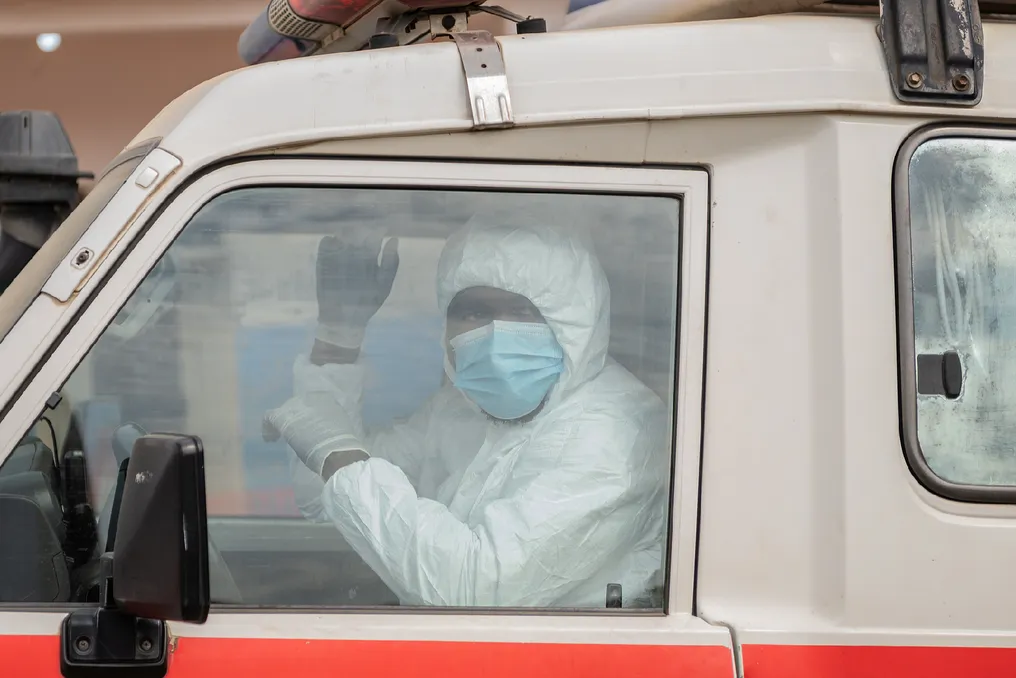
The World Health Organization (WHO) issued a warning on Tuesday that the Ebola outbreak in the Democratic Republic of Congo is developing at the fastest rate, recording nearly 2,000 confirmed cases and over 700 deaths.
The World Health Organization (WHO) issued a warning on Tuesday that the Ebola outbreak in the Democratic Republic of Congo is developing at the fastest rate, recording nearly 2,000 confirmed cases and over 700 deaths.
The global body strongly urged the international community not to relax vigilance, noting the confirmation of over 80 new cases. The Bundibugyo strain outbreak, declared two months ago, reached 1,926 confirmed cases and 702 deaths across five provinces as of July 11, making it the third largest Ebola outbreak in history.
The Executive Director of the WHO's Emergency Programme, Chikwe Ihekweazu, noted that one of the most alarming aspects is that about 80% of new infections are occurring through 'unknown transmission chains.' This means they are not among the identified contacts tracked by health authorities.
He added that many recent fatalities occurred in communities where patients never reached medical facilities, raising concerns that the true scale of the outbreak could be two to four times higher than officially reported figures.
The outbreak remains concentrated in the Ituri province, where about 95% of new cases are registered, but the virus has recently spread to neighboring Haut-Uele and Tshopo provinces. Ihekweazu compared the situation's development to a rapidly spreading fire, stating: 'Something is fueling the fire at its heart, and it is simultaneously expanding.'
Currently, there is no approved treatment for the Bundibugyo Ebola strain, although several experimental methods are undergoing clinical trials. The WHO emphasized that early supportive care significantly improves survival chances and stressed the need for earlier patient detection to reduce community transmission. Furthermore, the organization called for sustained international assistance, warning that closer global cooperation serves the interests of every country.
Extensive reforms are underway in the Tashkent region aimed at improving the quality and efficiency of medical services, as well as organizing primary health care in accordance with modern requirements and digitizing the industry.
In accordance with the President's decree, 10 billion soums were allocated from local budget funds. Based on the Yangiyul Medical Association, the Yangiyul City Health Department was established. It includes a central hospital with 435 beds and two family polyclinics capable of serving up to 1350 patients per day.
According to Feruza Rakhmatullaeva, Deputy Head of the Tashkent Region Health Department, these efforts have resulted in the creation of comfortable waiting areas for patients and the organization of modern reception desks based on the Turkish model in medical institutions. Places for people with disabilities and elderly citizens have been installed, wards have been renovated to meet sanitary standards, and special sanitary rooms for people with disabilities have been created. Furthermore, the building lighting system has been completely updated, ensuring more comfortable conditions for patients.
In addition, under the '90 Days of Change in Medicine' project, work was carried out across all medical institutions in the region on five target and eighteen sustainable directions, opening up new opportunities for both medical workers and the population. Special attention is paid to the digitalization of the sector. Specifically, patients have been given the option to book appointments with doctors independently through info kiosks in polyclinics, as well as online appointment booking.
The full implementation of the 'Electronic Prescription' and 'Reimbursement' systems ensures transparency in medical services. Paperwork in family polyclinics has noticeably decreased. The digitalization of all areas and medical documents helps eliminate bureaucratic obstacles, reduce human error, and prevent corruption risks. Significant steps have also been taken to strengthen the material and technical base of medical institutions.
This year, 270 computer complexes worth 1.7 billion soums were delivered to city and district medical associations from local budget funds. Additionally, another 551 computer complex and hardware and communication equipment worth 8 billion soums were purchased and transferred to the institutions.
Currently, local computer networks have been introduced in 264 medical institutions in the region, and a unified digital medical information system has been fully launched. To constantly monitor the quality of medical services and respond promptly to citizens' appeals, the region has equipped 103 call centers with modern communication equipment. 868 million soums were allocated for this, and the 'Digital Healthcare Center' – 'Situational Center' – has been commissioned.
As a result of these reforms, the quality, openness, and convenience of medical services in the Tashkent region are constantly growing, contributing to the provision of modern, fast, and high-quality medical care to every citizen.
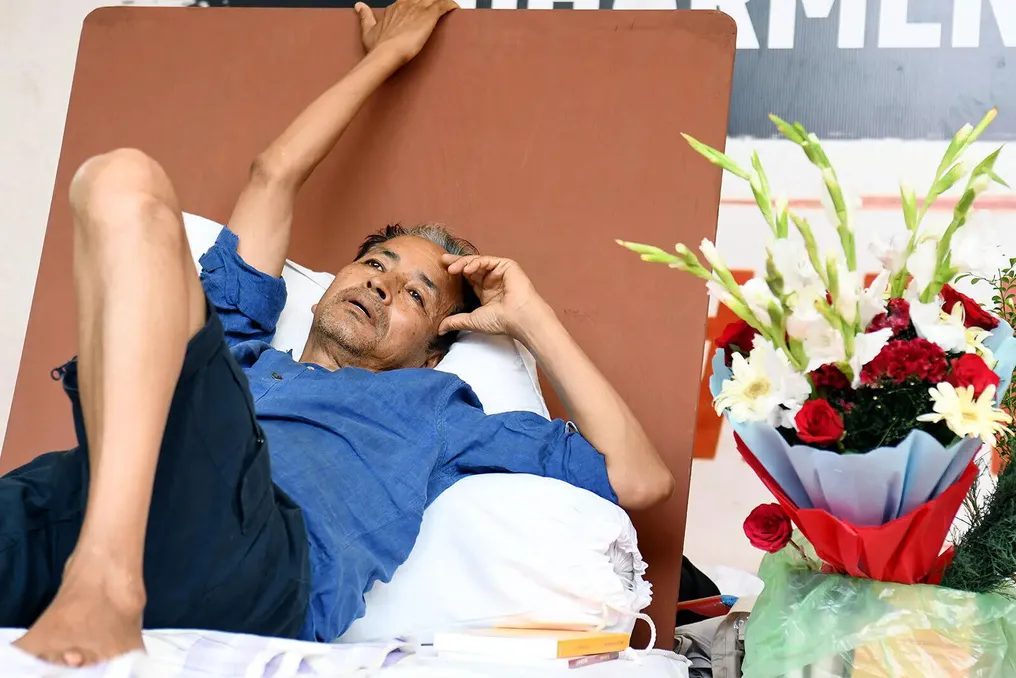
The Delhi High Court on Thursday demanded that both the Central Government and the state government, both led by the Bharatiya Janata Party (BJP), ensure regular monitoring of Sonam Wangchuk's deteriorating health. He is in his nineteenth day of an indefinite fast, which he began to protest alleged irregularities in the NEET medical examination.
Considering the petition regarding the activist's declining health, the court emphasized that 'life is precious' and asked both administrations to provide medical assistance to the Ladakh resident if necessary. The bench, comprising Chief Justice Devendra Kumar Upadhyay and Judge Tejas Karia, questioned Solicitor General Tushar Mehta about the health monitoring mechanism. Mehta informed the court that Wangchuk undergoes daily medical check-ups, and his health parameters are regularly reported.
Doctors warn that Wangchuk may soon enter a potentially 'critical' phase related to organ damage. It is reported that since the start of the fast, Wangchuk has lost over 9 kilograms. Dr. Satish Lambha provided an update on the activist's condition, noting that he remains conscious and is currently medically stable, but doctors are closely monitoring for signs of potential deterioration.
Lambha stated that after nineteen days of fasting, the total weight loss exceeded 9 kilograms. His blood sugar level was 80 mg/dL, and his pulse was 72 beats per minute. Blood pressure while lying down was 105/61 mmHg, and while sitting, it was 101/65 mmHg. Hydration level is assessed as satisfactory, and he maintains mental clarity. His current weight is 56.9 kg.
Explaining the medical issues, Dr. Lambha added that the second stage is associated with elevated uric acid levels, indicating muscle breakdown and catabolism, which caused the rise in blood uric acid. They are now facing a potential third stage, which could cause concern due to organ involvement; this requires a 'wait and watch' approach. Doctors maintain round-the-clock vigilance.
A few days before the court ruling, Wangchuk stated that he was 'not well, but not that bad.' In a video clip published on X, he called on people to join a planned march to Parliament on July 20th instead of asking him to end his fast. He noted that many senior leaders had met with him; some showed affection, others insisted, and some even approached the court requesting forced feeding.
Wangchuk stressed two points. Firstly, he asked what would change even if he stopped fasting and what signal that would send. He added that the only signal the government would receive is the lack of need for accountability. Secondly, he assured that his condition was not such that he would die in 24 days. He underwent numerous medical tests, and the results for a person fasting for 18 days were quite normal. He also had an ECG, which showed good results. Therefore, he can continue for a few more days. He acknowledged weakness and muscle mass loss but stated that his heart and major systems are still functioning well.
Instead of simply asking him to stop fasting, he appealed to everyone to take a small step: to come out in large groups on July 20th to send a clear message to the government. Meanwhile, Abhijit Dipke, founder of the Cockroach Janata Party, claimed that Wangchuk was losing muscle mass and experiencing 'unbearable pain,' adding that the activist had lost 8.5 kg since the start of the fast.
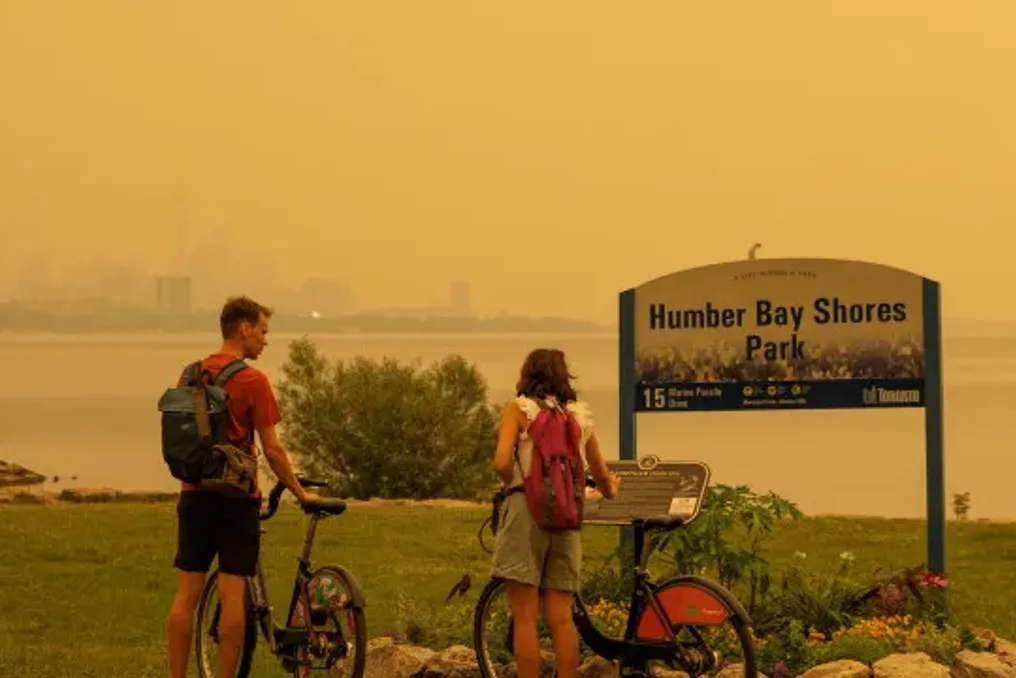
Residents of Toronto were advised to stay indoors due to poor air quality caused by smoke. A similar decline in air quality was also observed in the eastern United States.
According to data collected by the company IQAir, Toronto ranked as the second most polluted metropolis in the world at 9:15 PM EDT (equivalent to 10:15 PM in Lisbon), trailing only Kinshasa. The city had been the most polluted for much of the day.
Armen Araradian, an IQAir representative, informed AFP that wildfires are the main factor in the increase in pollution in Toronto, although above-average temperatures also contribute to the problem. Several fire hotspots are active hundreds of kilometers away, in northwestern Ontario province, where Toronto is located. The smoke generated by these fires was carried by the wind and reached the metropolis on Tuesday night.
Canadian authorities issued an orange alert and requested that the population remain indoors. Authorities emphasized that everyone's health was at risk, advising people to limit time outdoors and reschedule or cancel sports activities and outdoor events. As a result, pools and the area designated for the football match between Argentina and England were closed.
Several American states also faced this deterioration in air quality, including Pennsylvania, New York, Connecticut, Massachusetts, Maine, and New Hampshire. The recent worsening of the situation in Canada, related to the fires, coincides with a heatwave that has affected the western US since the weekend and extended to the East Coast and Canada. In the US, over 90 million people were notified about heat alerts on Wednesday.
According to the latest official Canadian statistics, this year's wildfire season has been less drastic compared to the record years of 2023 and 2025. However, this year, 1.9 million hectares have already been burned across the vast Canadian territory, an area comparable to Slovenia. In contrast, approximately 18 million hectares were consumed in Canada in 2023.