The 2026 World Cup is being characterized not only by the large number of participating teams but also by a transformation in how teams prepare for matches. For the first time, all 48 teams that competed in the tournament accessed FIFA AI Pro, an artificial intelligence (AI) tool created by Lenovo in collaboration with FIFA to provide advanced tactical analyses to all delegates.
Democratization of Performance Analysis
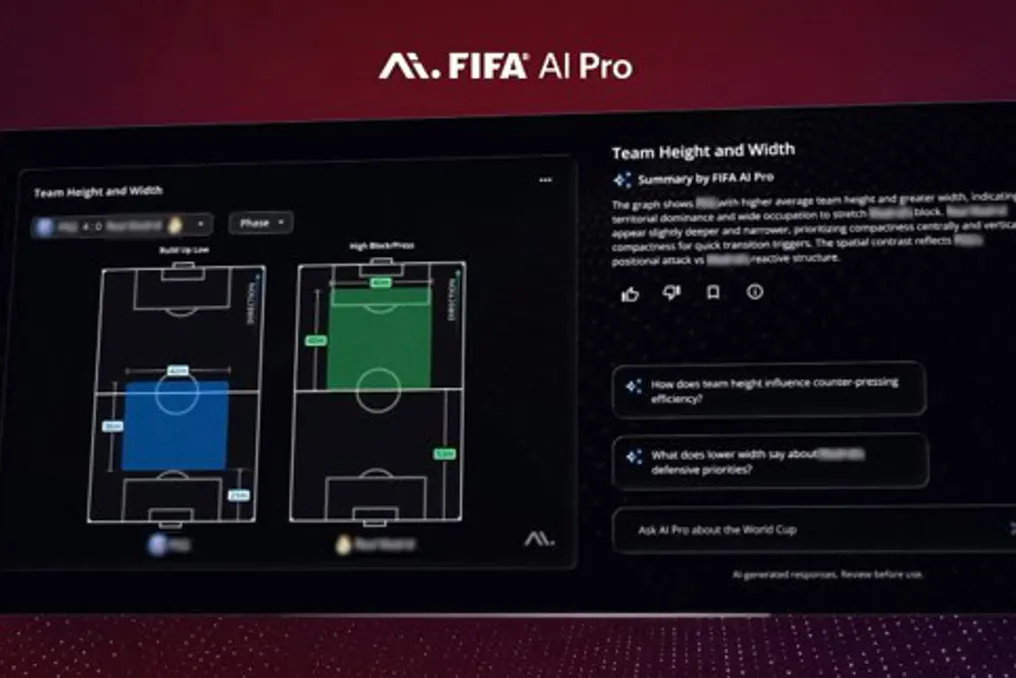
According to reports from the involved organizations, this system collects and processes millions of data points and over two thousand metrics, generating reports, graphs, animations, and other useful resources for coaches and technical committees in preparing for confrontations. Lenovo explains that FIFA AI Pro was designed to expand access to high-level analyses, something that was previously limited, especially to federations with greater financial power.
Developed on Lenovo's xIQ agent platform and utilizing the Lenovo AI Factory infrastructure, the system is classified by the company as a Knowledge Super Agent. It orchestrates several AI agents capable of examining vast amounts of information, analyzing over two thousand indicators, and generating insights in minutes. The purpose, according to Lenovo, is to ensure that new teams or those with smaller budgets have access to the same level of tactical preparation as the major powers of global football.
Surprising Results at the World Cup
The implementation of FIFA AI Pro occurred in a World Cup edition marked by unexpected outcomes. Among them, Cape Verde concluded its participation without suffering defeats in regular time. The team drew with Spain in the opening match and was eliminated only in extra time against Argentina in the round of 16. Another newcomer, Curaçao, drew with Ecuador. The Democratic Republic of Congo recorded draws against Colombia and Portugal, while Ghana managed to draw with England. In contrast, Germany, the four-time champion, was eliminated after losing to Paraguay.
Lenovo emphasizes that, despite these results being the result of multiple factors, all teams had access to the same analysis platform during the championship.
Data and Video Automation
For Arsène Wenger, FIFA's Director of Global Football Development, the incorporation of FIFA AI Pro signals a change in the routine work of analysts and coaches before matches. He stated that the success of FIFA AI Pro at the 2026 World Cup inaugurates a new phase in game analysis and preparation. By automating the search, organization, and interpretation of huge volumes of data and video content, football experts can dedicate less time to manual research or video editing, focusing on the essential: obtaining performance insights, defining tactical decisions, and supporting teams in achieving a competitive advantage.
Lenovo informed that the platform was built in partnership with football analysts and employs FIFA's Football Language, a specific model created to understand the terms, concepts, and relationships inherent to the sport. The company assures that the system can interpret synonyms, answer queries in different languages, and handle hierarchical concepts related to football. In addition to answering questions, the AI performs real-time calculations, interprets multiple metrics simultaneously, and uses contextual reasoning to deliver more detailed analyses, adjusting between fast and in-depth processing modes as needed.
Visual Resources and Technological Leveling
According to Lenovo, FIFA AI Pro goes beyond simple text generation. The platform provides contextual analyses complemented by visual resources, such as graphs, specific football widgets, clips from official World Cup broadcasts, and three-dimensional reconstructions of plays. These materials allow for the visualization of every play from different angles and positions on the field, adding more elements to the technical evaluation.
Ken Wong, Executive Vice President and President of Lenovo's Solutions & Services Group (SSG), highlighted that FIFA AI Pro materializes the company's strategy to increase access to AI. He stated: