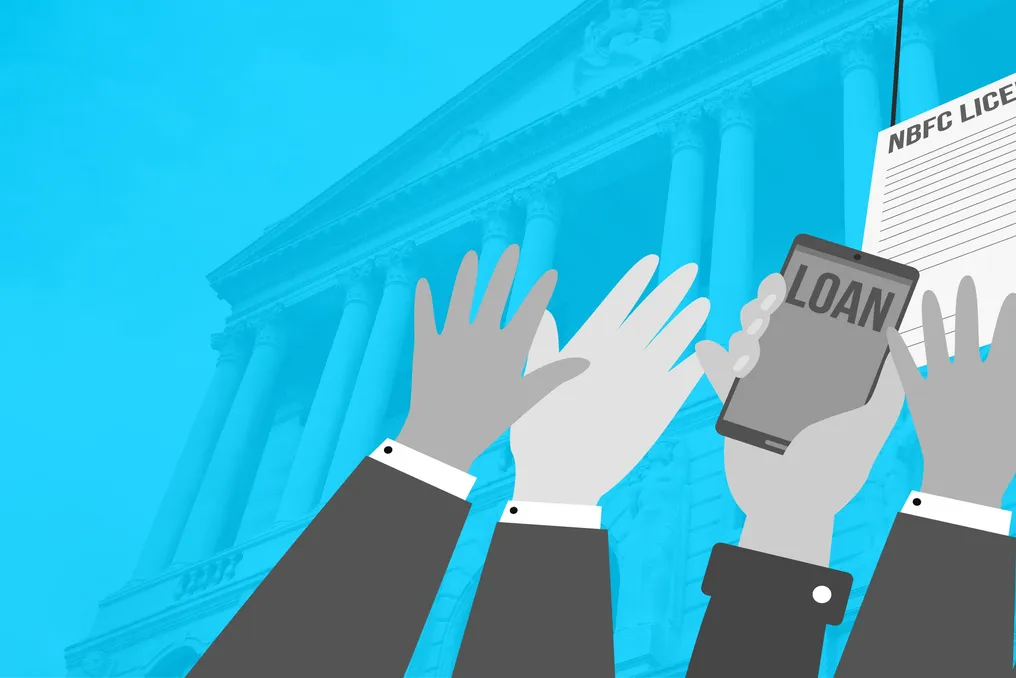
Over the last decade, India has built one of the most advanced digital public infrastructures for financial operations. However, the next decade will be defined not just by the digitization of loan issuance, but by the implementation of an intelligent approach to lending. Artificial intelligence has the potential to fundamentally change credit eligibility criteria, risk assessment methods, and the speed at which financial opportunities reach millions of Indians.
Similar stories
Popular
Changing the Lending Economy
This goes beyond simple automation. AI is changing the lending economy by reducing the costs of borrower assessment. This allows lenders to responsibly serve client segments that were previously difficult to assess.
India's credit history is entering a new phase. A more interesting shift is understanding who will finally gain access to this history. A significant number of creditworthy Indians remain outside the formal system because traditional scoring models lack sufficient data to assess them. This is precisely the problem that AI-based lending aims to solve.
Updating Underwriting Criteria
Traditional underwriting was designed for salaried employees in the formal economy and relied on documents such as payslips, bank statements, and credit bureau scores. This system works well for people with a credit history but is almost intentionally unsuitable for everyone else, including self-employed individuals, gig workers, and first-generation entrepreneurs.
AI-based underwriting uses a different approach. It analyzes alternative data, such as digital payment transactions, GST reports, bank statements, and utility payments, transforming daily digital footprints into dynamic risk profiles.
Infrastructure and Its Development
The infrastructure to support this transition is already ready and rapidly scaling. The Reserve Bank of India's Account Aggregator framework enables secure, consent-based exchange of financial data, reducing documentation requirements and shortening loan processing times. As of December 2025, the ecosystem has facilitated the exchange of over 2.6 billion financial accounts, of which more than 252 million are linked to users, reflecting rapid adoption while leaving significant potential for further penetration.
A unified lending interface does the same for loan applications: by December 2025, it supported 64 lenders, including 41 banks and 23 Non-Banking Financial Companies (NBFCs), up from 36 a year earlier. This interface utilizes over 136 data services—from digitized land records to satellite imagery—across a dozen different loan origination processes.
Combined with near-universal digital identity and payment infrastructure, AI models can now paint a picture of a borrower's financial behavior in real time. The results are already visible in the underwriting economy: loan decisions that once took days are now made in minutes. This shift is reflected in real life: a first-generation female entrepreneur can take another step in developing her business, and a gig worker can finally finance a used scooter to increase their earnings.
Expanding the Lending Market
The expansion of lending in India is no longer limited to increasing loans for existing borrowers; it is attracting entirely new categories of borrowers into the formal system, changing their financial possibilities.
The participation of women in formal lending clearly demonstrates this shift. According to the joint report by TransUnion CIBIL–NITI Aayog (WEP), published in April 2026, credit penetration among women nearly doubled between 2017 and 2025, rising from 19% to 36%. Women now hold a credit portfolio worth 76 lakh crore rupees—26% of the total system credit volume, a 4.8 times increase from 2017.
Behind this growth is a very specific type of borrower. A woman running a home tailoring workshop or a small food business often lacks collateral and cannot provide a payslip to the bank. However, she has a constant stream of UPI receipts from customers, GST reports if her business is formalized, and a track record of timely repayment of small loans. AI-based underwriting can interpret this information and provide working capital loans that a traditional checklist-based process might reject.
Gig work tells a similar story, but on a much larger scale. According to NITI Aayog and the Economic Survey 2025–26, the gig economy workforce in India grew by 55%, from 7.7 million workers in FY21 to 12 million in FY25. Nevertheless, income volatility kept many gig workers outside the formal credit system because their earnings do not resemble the fixed monthly salary that traditional underwriting models are designed to assess.
The very data that banks historically ignored—daily income, trip or delivery completion records, and transaction history—is exactly what AI models are designed to analyze. In practice, this allows a courier to finance a scooter that doubles their daily trips, or a taxi driver to refinance an old car loan at a better rate, as platform income is recognized as proof of repayment ability, not just a bank balance.
Geography is also changing in a similar direction. The demand for credit is no longer concentrated in India's megacities. Small towns and semi-urban markets are opening up to formal lending for the first time, often through local language apps and minimal documentation processes secured by Aadhaar-based eKYC and Account Aggregator consent flows. For a borrower applying for the first time in a Tier III city, this can mean the difference between weeks of visiting banks and paperwork versus receiving a loan decision on a smartphone within minutes, based on data the borrower has already chosen to share.
Collectively, these are the segments where AI-based underwriting has the greatest potential. First-time borrowers may have little formal documentation, but they are becoming increasingly rich in digital behavioral data. Fintech lending research elsewhere has given this cohort the name 'invisible primes'—borrowers who truly deserve credit but do not appear in traditional bureau-based ratings.
AI is not just speeding up application processing; it is making previously invisible borrowers visible to the credit system. By doing so, it opens doors that were previously closed, whether it is a first loan, a larger loan, or financing under fairer terms than might otherwise be possible.
Beyond Application Approval
Underwriting is the most obvious use case, but it is far from the only one. The RBI's main KYC guidelines consider video-based customer identification (V-CIP) legally equivalent to in-person interaction, provided established standards are met. This framework requires V-CIP systems to include facial liveness and spoofing detection technologies and explicitly permits and encourages the use of AI to enhance the reliability of these checks.
The same level of AI is applied to combating document fraud: Optical Character Recognition (OCR) and forensic image models detect altered PAN or Aadhaar scans, fake payslips, and synthetic identities created to pass verification against one database but not cross-verification.
As deepfake attempts have increased, this level of detection has become as crucial for secure lending as the credit scoring model itself.
Post-Loan Monitoring
The role of AI does not end with disbursement. Early warning systems now track transaction patterns, GST reports, and the repayment behavior of a live borrower for signs of stress—declining account balances, failed payments, sudden drop in turnover—long before the loan is traditionally flagged as risky. Indian banks and NBFCs are already using such systems in operation.
The advantage is clear: a lender who sees mounting stress has the opportunity to restructure the loan or tighten the credit line before it becomes a Non-Performing Asset (NPA), instead of discovering the problem only when the account becomes delinquent.
At the other end of the loan lifecycle, AI changes the debt collection process. Instead of contacting every delinquent borrower with the same call or SMS, lenders use models that predict which borrower is likely to pay with a gentle reminder, who needs a phone call, and whom to hand over to a collections agent—tailoring the contact method and time to the borrower, rather than working from a static list.
When executed correctly, this is also fairer to borrowers: someone who missed a payment due to a late client payment will be treated differently than someone who has gone missing.
The same data that determines loan approval is increasingly determining its cost. Risk-based pricing—charging a lower rate to a less risky borrower instead of applying a fixed rate to an entire product category—has always been a lending theory; AI makes it practical on the scale of millions of small loans because it can price each file individually, rather than sorting borrowers into several broad groups.
Future Directions: Agentic AI
The next stage of AI development in lending will move beyond decision support and into autonomous workflow orchestration. AI agents will increasingly handle document collection, identity verification, comparison of lender policies, application preparation, approval coordination, customer communication, and internal system updates, while humans focus on exceptions and oversight. For lenders, this promises reduced operational costs, faster turnaround times, and a more stable customer experience.
The Main Challenge Ahead
AI-based lending is not a separate, futuristic chapter in India's lending growth story. It is rapidly becoming the mechanism through which the next phase of growth will be realized.
Key credit indicators point to a healthy pace of market expansion. The deep transformation explains why. More women, more first-time borrowers, and more self-employed and gig workers are entering the formal credit ecosystem because lenders can finally assess and price the risk for people that the traditional system could not.
The real opportunity is not just about making lending faster or more efficient. It is about redefining who gets access to credit in India. AI can transform lending at scale only if it is built on trust, prioritizing data privacy, explainable decision-making, and strong regulatory alignment at its core. If the industry implements these fundamental principles correctly, AI-based lending will not only accelerate India's credit growth but also bring millions of underserved yet creditworthy Indians into the formal financial system.
Concluding Thought
India's next credit revolution will be measured not by the speed of loan approvals, but by the number of previously invisible borrowers who become visible to the formal financial system. AI is not just accelerating lending—it has the potential to democratize access to credit while keeping trust and responsible lending at the forefront.
When submitting resumes and tailoring documents for different opportunities, candidates may notice that the responses received are often similar. An investigation conducted by Stanford University suggests that this similarity may not be a coincidence.
Algorithmic monoculture in recruitment
The researchers analyzed millions of applications and concluded that various companies may employ artificial intelligence systems that replicate the same acceptance and rejection criteria. The research, titled Algorithmic Monocultures in Hiring, examined about 4 million applications submitted by over 3.4 million individuals to 156 companies across 11 economic sectors.
A crucial factor identified was that all these organizations were using algorithms provided by the same vendor. This detail allowed for the identification of the phenomenon known as 'algorithmic monoculture,' a term inspired by agriculture, where vast areas are dedicated to a single type of crop. When many companies adopt similar tools, the probability increases that they will evaluate applicants following essentially the same logic, which applies to both successes and failures inherent in the models.
Repeated rejection patterns
Another relevant finding concerns similar candidate profiles. According to the study, individuals with analogous characteristics tend to receive consistent evaluations, even when competing for positions at different corporations. The primary results reveal that approximately 10% of candidates participating in four selection processes are rejected in all of them. Additionally, about 4% of those who apply for ten positions suffer ten consecutive rejections.
The rejections occur more frequently than expected in independently made decisions. It is notable that many resumes are eliminated before even being reviewed by a human recruiter. To confirm whether this behavior was random, the researchers compared the data with a theoretical baseline and previous studies on recruitment without algorithmic centralization, demonstrating that successive rejections reflect a common pattern across different selection processes.
Application strategies
According to the simulations conducted, continuing to submit resumes is still advantageous. The study points out that increasing the volume of applications improves the chances of obtaining an opportunity, although this benefit decreases when companies use identical systems. In a scenario where decisions are autonomous, about ten applications would be sufficient to achieve a high probability of receiving at least one positive recommendation. However, when processes are mediated by centralized platforms, this number rises to approximately 25 applications to ensure a 99.9% probability.
The authors also issued a warning about the concentration of the technology market focused on recruitment. Since few vendors serve many companies, any existing biases or limitations can spread rapidly. Furthermore, the lack of transparency in these platforms hinders independent research and complicates the understanding of how such tools impact employment access, especially since, for many candidates, this entire process occurs without them knowing that an algorithm performed the initial resume screening.