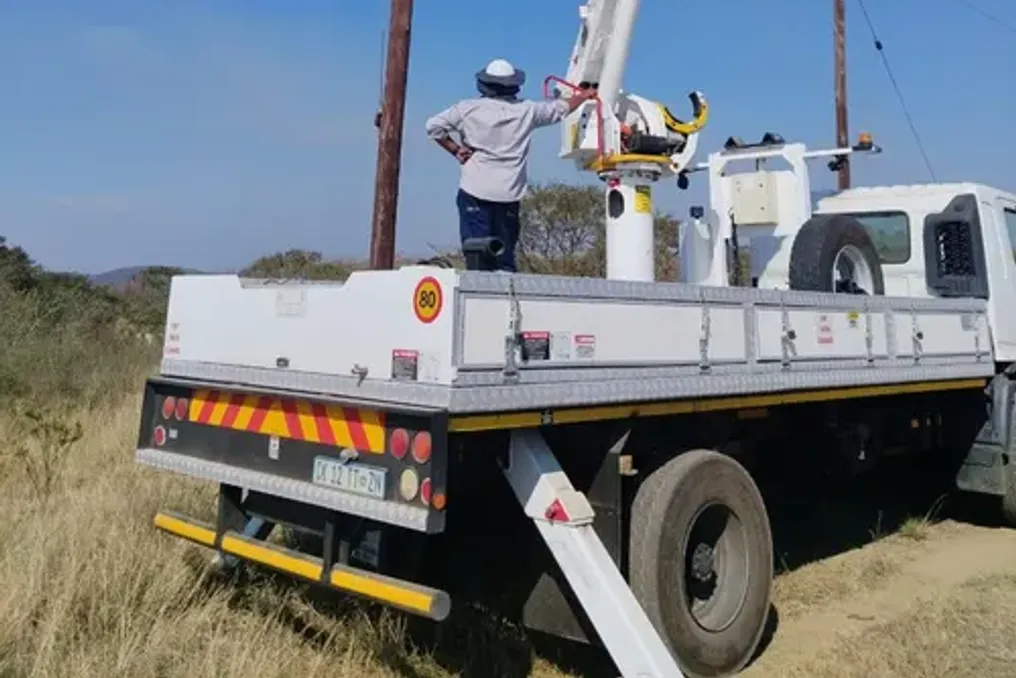
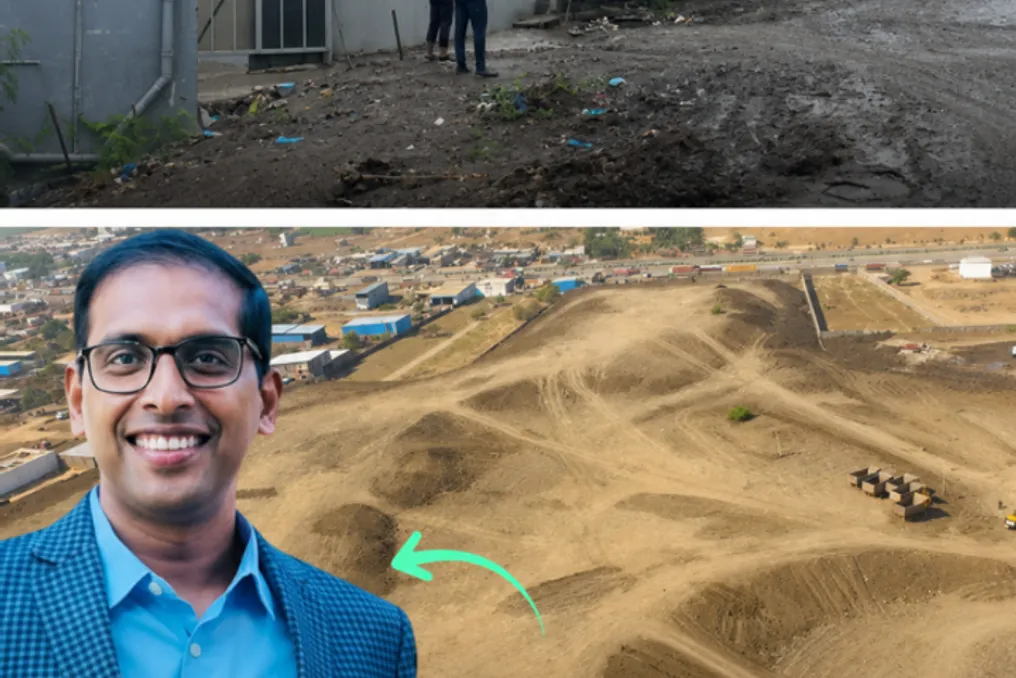
Eskom technicians conducted an operation to dismantle an illegally installed transformer in the Lion Park area, near Pietermaritzburg, on Wednesday. The company's arrival was met by residents who blocked the MR477 road with trash, including burning tires, broken bottles, and large tree branches.
Disconnection Operation
The state energy company Eskom, which received an order to disconnect from the High Court of Pietermaritzburg, acted accompanied by well-armed police and private security guards. The goal of the operation was to remove transformers and cables that the community used to steal about 14 million rand per year.
Some residents who woke up early in the morning to prevent this operation claim that the police shot them with rubber bullets during the protests. The operation began with a technical meeting between Eskom and the police at the company's offices in Mkhondeni, after which a convoy of vehicles headed to the disconnection site.
Stance of Eskom and Residents
Eskom stated that it disconnected electricity that had been connected to more than 1400 households over the past 12 years. An Eskom representative, Dadevabo Mbele, expressed hope for no resistance, noting that he does not believe thieves would want to continue stealing, nor does he think that KZN residents possess such behavior. He emphasized that Eskom's task is to recoup the costs of energy generation, as the company is not commercial.
Eskom made it clear that any resistance would not stop the operation, and residents understood that they would be without electricity for cooking and using heaters in cold winter weather for some time. Other residents complained that this would deprive them of watching the World Cup semi-final between England and Argentina on Wednesday evening.
Land Use Issues and Proposals
Modern homes relying on illegally connected electricity are built on land that was transferred to the Azibuye Emasisweni Amaqhamu Public Trust after legal expropriation from various farmers. Residents reported that since the settlement began on this land around 2018, they have applied for grid connections and even collected money to pay Eskom.
However, Mbele refuted this, stating that Eskom could not connect electricity to houses built on land that had not yet been rezoned as residential. She explained that the land is zoned as agricultural, not residential, and therefore Eskom had not interacted with the trust. Mbele reported that Eskom offered the trust the option of bulk supply as a viable alternative while the trust handled rezoning.
The proposed bulk supply involved connecting all residents to one meter, and residents would have to contribute monthly to pay the common bill through the trust. Mbele added that Eskom presented information to the court regarding numerous interactions with the trust, and the trust is aware of the proposed bulk supply solution.
Legal Proceedings and Counterarguments
Nevertheless, some residents rejected the bulk supply, fearing paying one price regardless of how much energy they consumed. Eskom's Manager of Industry and Stakeholder Relations, Joyce Zingosi, reported that Eskom received an urgent application from a group calling themselves the residents of Lion Park on June 4. Zingosi noted that Eskom intended to object to this ruling, and on June 5, 2026, the Pietermaritzburg High Court dismissed the case and awarded costs to Eskom.
The trust chairman, Mlungisi Khanyezi, stated that Eskom gave the trust too short a period to appeal the disconnection application. He reported that they tried to convince Eskom to connect the residents, but the company only connected about five houses and closed the channel last year, providing them with court orders on Monday, which was one day's notice. Khanyezi stated that his lawyers are preparing documents in the High Court to stop this chaos.
Khanyezi insists that the land status is irrelevant to Eskom, as they are the landowners, and Eskom should provide electricity if permitted by the landowners. He also noted that in the court documents, the trust's lawyers told the court that Eskom did not give the trust permission to object to the disconnection application. Khanyezi stressed that he is not against removing illegal connections but demands immediate provision of legal connections to the people.
Residents' Stories
One woman, seen throwing stones onto the road to block the Eskom and police convoy, said she was heading to work as a nurse around 5 am when she learned about the impending disconnection. She returned home to change out of her uniform and joined the protesters who were already blocking the road.
Sinokule Mthembu recounted that after many years of living without electricity, she acquired transformers and cables and found electricians to illegally connect to the Eskom network. She questioned how one could remain without electricity while being a voter in South Africa and possessing human rights. Her main concern was that she would not be able to prepare bottled milk for her baby. Mthembu added that they had repeatedly applied for electricity and even paid money, and if politicians do not help them, then they do not need to involve them in local elections.