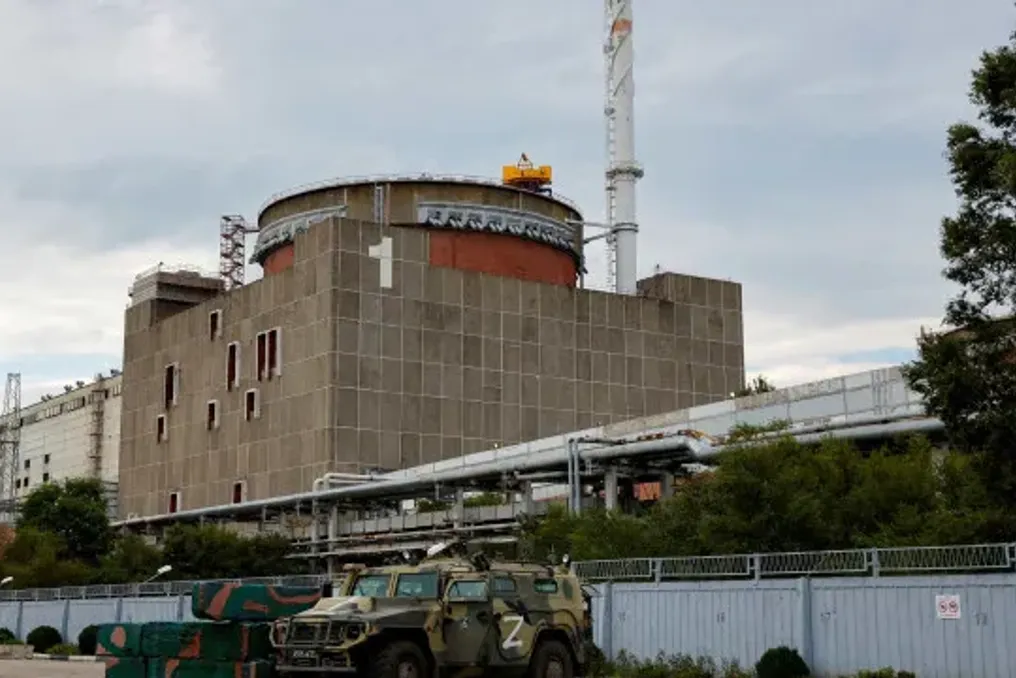
Due to the loss of external power supply, the Zaporizhzhia nuclear power plant began operating using diesel generators to meet its internal operational needs, according to the Ukrainian company responsible for the country's nuclear power plants.
Nuclear Safety Risks
The disconnection of the overhead transmission line occurred that afternoon, although Energoatom did not specify the reasons. The company warned that any failure in the external power supply constitutes a threat to both nuclear and radiological safety, as a reliable electricity supply is crucial for the safe operation of the plant and for the cooling systems of the nuclear fuel.
Conditions for Safe Operation
In a statement, it was affirmed that the only way to ensure the safe functioning of the Zaporizhzhia nuclear power plant is its rapid return to the full control of Ukraine and its sole legitimate operator, JSC Energoatom, which has the capacity to keep the plant running stably and safely, in compliance with international nuclear safety standards.
Status of Transmission Lines
According to the Ukrainian agency Ukrinform, the Dniprovska transmission line, considered vital for the safety of the Zaporizhzhia nuclear power plant, has been repaired. However, it cannot yet be reactivated because the substation suffered considerable damage due to frequent bombings in the region.
Context of Current Conflicts
On the same day, Russian attacks on Ukraine resulted in at least five deaths, while Ukrainian bombings targeting Russia and territories occupied by Moscow caused ten fatalities, according to official data from both countries. This new wave of attacks comes one day after the largest Russian drone and missile bombardment against Kyiv since the start of the invasion in February 2022, which led to at least 30 deaths and about a hundred injured in the Ukrainian capital.
Ukraine has intensified its attacks against Russian territory and areas under Moscow's occupation, justifying this action as retaliation for the Russian bombardments that occur almost daily since the beginning of the war. Following the large-scale attacks on Kyiv on Wednesday night into Thursday, Ukraine promised to retaliate 'in kind,' while Russia declared its intention to continue the bombing campaign.
History of the War
Russia launched the invasion of Ukraine on February 24, 2022, alleging the need to protect pro-Russian separatist minorities in the east and to 'denazify' the neighboring country, independent since 1991 after the dissolution of the former Soviet Union. Russia argues that Ukraine has moved away from Moscow's sphere of influence and has drawn closer to Europe and the West.
The conflict in Ukraine has already resulted in tens of thousands of deaths on both sides. In recent months, the situation has been marked by massive Russian air attacks on Ukrainian cities and infrastructure, while Kyiv's forces have focused their attacks on targets within Russian territory near the border and on the Crimean Peninsula, illegally annexed in 2014.
Russian Diplomatic Position
Diplomatically, Russia has so far rejected any prolonged truce. To end the conflict, Moscow demands that Ukraine cede at least four regions—Donetsk, Luhansk, Kherson, and Zaporizhzhia—in addition to the Crimean Peninsula, annexed in 2014, and permanently renounce joining NATO (North Atlantic Treaty Organization, Western defense bloc).