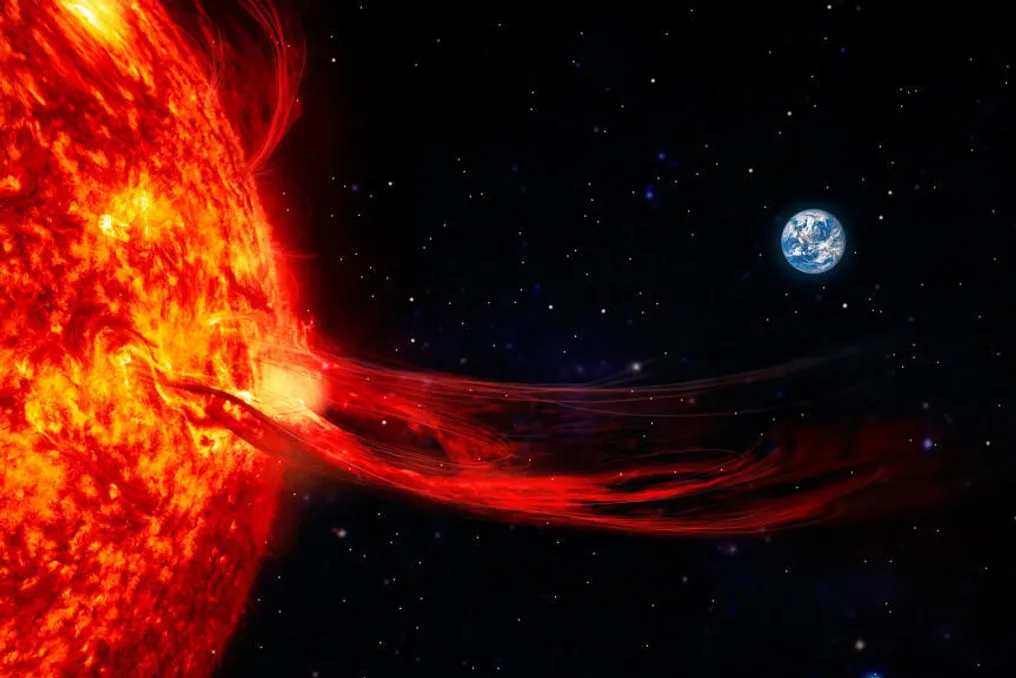
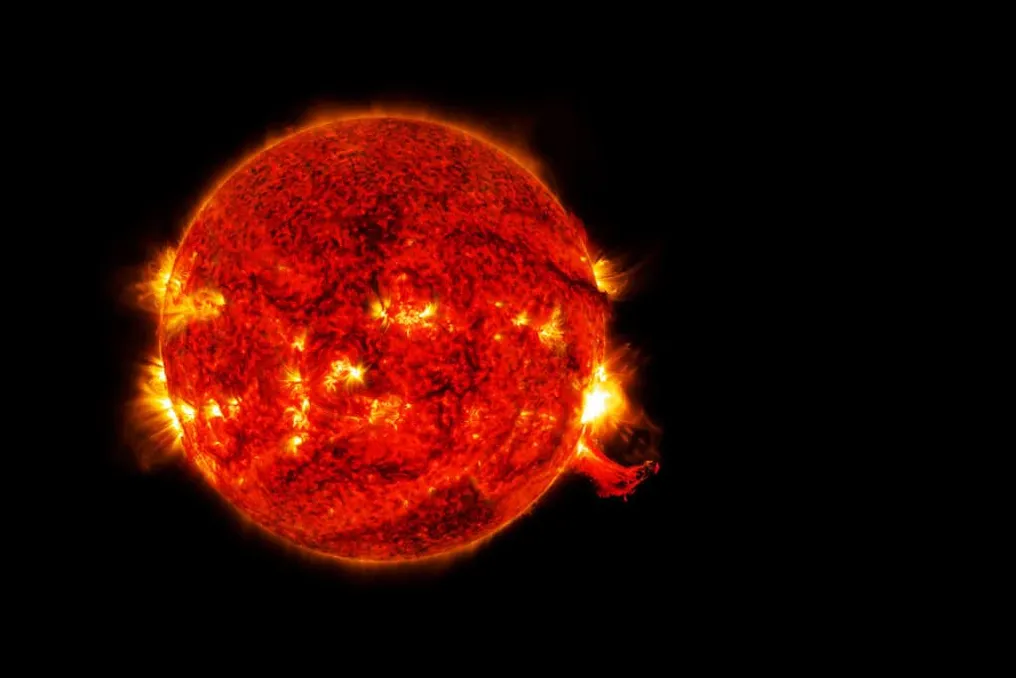
The Sun has become active again, rapidly releasing a series of flares that are being closely monitored by scientists. As a result, stronger and more noticeable polar lights may appear in the coming days.
Series of Solar Flares
According to Space.com, this series of events is unusual due to its speed. In less than 24 hours, the Sun released an X1.1 class flare and more than ten M-class flares. Some of these explosions were accompanied by Coronal Mass Ejections (CMEs)—large clouds of particles sent into space.
Situation Analysis
Solar activity physicist Tamita Skov described the situation as a 'solar automatic,' which helps to understand the atypical pace of flares occurring almost sequentially. She stated that more than five solar storms are heading towards Earth, and at least three of them are capable of causing visible auroras.
Impact of Coronal Mass Ejections
Forecasts indicate that these ejections will arrive between July 2nd and 3rd. The impact could range from G1 to G2 level geomagnetic storms. NOAA confirms that at least one such CME is already headed toward the planet, while others are still under analysis.
Expected consequences include:
- increased geomagnetic activity on Earth
- possibility of auroras appearing in more southern regions
- weak or moderate storms (G1 and G2)
- variability in intensity depending on the CME's magnetic field
However, the complete accuracy of forecasts is not guaranteed, as the Sun's behavior can change the scenario.
Sky Watching Forecast
If everything proceeds according to forecasts, the aurora may appear further south than usual, including northern areas of the United States, such as New York and Idaho. However, clear and dark skies are critically important. It is also noted that the brightness of the auroras depends on the interaction between the CME and the Earth's magnetic field, and this 'coupling' can be strong or weak.
Despite this, an alert has been issued. The arrival of several solar ejections simultaneously increases the interest of sky observers.
Earth's Climatic Phase
Due to this rhythm of the Sun, Earth is entering a period of heightened attention to space weather. Although this phenomenon is not rare, observing such a number of consecutive flares does not happen daily. We must continue to monitor developments and look at the sky if you are in the Northern Hemisphere, as the sky might present an unexpected spectacle.