The plant Opuntia stricta, known as prickly pear, has represented losses for livestock farmers in the arid and semi-arid regions of Kenya for decades. The British brought this invasive species to the colony during the colonial era as a decorative hedge, and it began to spread rapidly, displacing local vegetation, degrading pastures, and threatening the livelihoods of thousands of families dependent on livestock.
Threat to Pastures and Livestock
Despite its vibrant appearance, the fruits of the prickly pear are one of the most destructive invasive species in Kenya. Wild animals such as elephants, giraffes, and goats feed on these fruits, unintentionally dispersing thousands of seeds through their excrement. When the rains come, the seeds germinate quickly, allowing the cactus to occupy more and more territory at an astonishing rate.
Sharon Bundi from the Laikipia Permaculture Centre notes that 'the germination rate is extremely high,' and after the rains begin, the seeds establish very quickly, making the plant extremely difficult to control. Furthermore, the cactus accumulates a large amount of water, allowing it to survive long dry periods, competing with other plants for limited moisture and nutrients in the soil.
Dangers to Animals
For pastoralist communities, every new patch of cactus means a loss of pasture. Dense, thorny thickets replace nutritious grass, forcing herders to travel further in search of feed. However, the greatest danger often comes from tiny, hair-like spines called glochids found inside the fruit. These glochids get stuck in the mouths and digestive systems of livestock, causing painful ulcers, infections, malnutrition, and, in severe cases, death, leading to the gradual destruction of family livelihoods.
Goats are particularly vulnerable because they greedily eat the fruits despite the danger. Bundi explains that 'when goats eat the fruits, their mouth becomes painful and swollen. Eventually, they cannot feed normally because both their mouth and stomach are affected.' For families whose lives revolve around livestock, the loss of even a few animals can mean the loss of food, income, and financial stability.
Japan Saruni, a herder from Koiji, personally witnessed this devastation. He reported that the invasive prickly pear took much of his livestock, leaving the family with significant financial losses. According to Saruni, many animals are injured trying to eat the cactus fruits; the tiny spines penetrate their mouths, making every bite painful. Others suffer serious eye injuries while trying to reach the fruits among the thorny leaves, and some eventually lose their sight.
Turning a Threat into a Resource
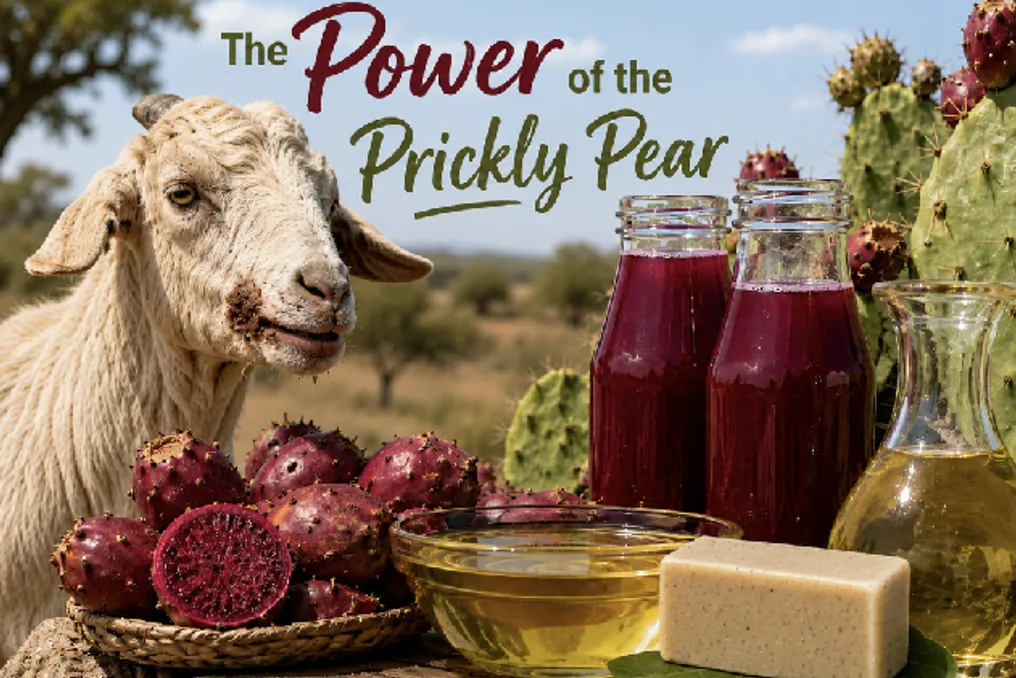
Instead of viewing the cactus solely as a problem, the Laikipia Permaculture Centre (LPC) applied a circular economy approach, ensuring that every part of the plant is used for productive purposes. The fruits are processed into prickly pear juice, jam, and wine, developed in collaboration with the University of Nairobi. The seeds undergo cold pressing to yield premium cosmetic oil, and the remaining seed pulp is used as nutritious feed for livestock. The fruit peels are dried into a natural dye powder, and the cactus leaves are fed into biodigesters to produce methane for cooking.
The residual nutrient-rich slurry is applied as organic fertilizer to kitchen gardens, improving soil fertility and household food production. Bundi emphasizes: 'Essentially, we don't throw anything away from the cactus. Every part of the plant has value.' To ensure product safety, the centre collaborates closely with the Kenya Bureau of Standards and research institutions to guarantee that all products meet national quality standards.
Restoring Livelihoods
In addition to producing value-added products, this initiative creates new economic opportunities for communities that traditionally relied almost entirely on animal husbandry. Residents now earn money by harvesting cactus fruits, supplying raw materials, and participating in processing and value addition. The long-term goal is to establish community-owned processing centers, allowing local residents to retain most of the profits.
Bundi explains that 'if income only comes from livestock, communities become very vulnerable during droughts. By creating enterprises around cactus, honey, aloe, and other natural resources, families have multiple ways to earn a living.' The project also works with communities on mechanically removing the cactus while simultaneously introducing biological control using cochineal insects, which naturally weaken the invasive plant. After clearing, the degraded land is sown with pasture grasses, moringa, and *Aloe secundiflora*. Aloe is processed into soap, lotions, and cosmetic products, while moringa provides both nutritional and commercial value. These efforts together restore ecosystems and create additional sources of income.
Climate Resilience Model
The environmental benefits of the project extend beyond combating the cactus. Biogas reduces reliance on firewood, organic fertilizer improves soil health, and restored vegetation reduces erosion, enhances water retention, and promotes livestock health. Although Opuntia stricta remains difficult to eradicate due to its easy regenerative capacity and continued spread via wild animals, the Laikipia Permaculture Centre demonstrates that environmental problems can become economic opportunities.
By combining ecological restoration, renewable energy, scientific innovation, and community entrepreneurship, this initiative offers a practical model for enhancing climate change resilience in Kenya's arid regions and beyond. For years, Opuntia stricta symbolized loss: lost pastures, dying livestock, shrinking incomes, and degrading landscapes. Today, thanks to the innovations of the Laikipia Permaculture Centre and the determination of local communities, the same cactus produces juice, jam, cosmetic oil, livestock feed, renewable energy, organic fertilizer, and new sources of livelihood. Bundi concludes: 'What was once a thorn in the side of pastoralist communities is becoming a symbol of resilience and innovation.' In Kenya's arid regions, communities are proving that when life gives you a cactus, it can be much more than just an invasive plant: it can be hope.