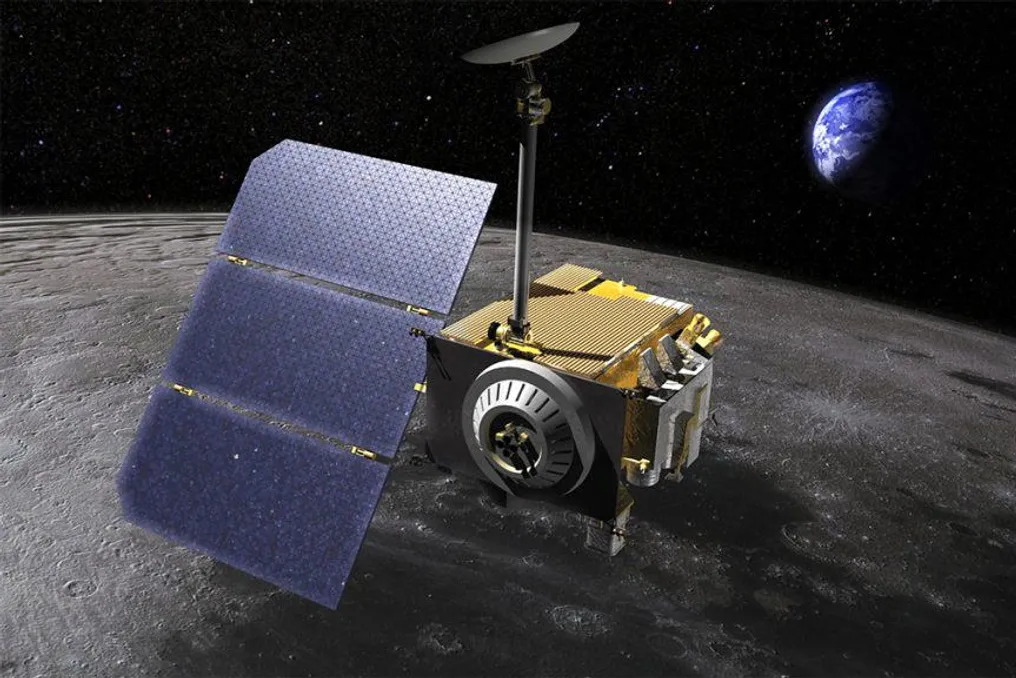
In 2009, NASA began detailed investigation of the lunar surface with the launch of the Lunar Reconnaissance Orbiter (LRO). The LRO mission aimed to identify potential landing sites, natural resources, and notable features, such as lava tubes. Currently, the spacecraft has mapped a large part of the lunar surface, excluding the polar areas which remain deeply shadowed.
Detection of Danuri in 2024
In 2024, the LRO captured images of an object resembling a 'surfboard' moving rapidly around the celestial body's orbit. This object is the Danuri spacecraft, which was launched by South Korea in August 2022. It is the country's first lunar orbiter, whose mission includes developing and testing technologies, such as space internet, in addition to creating a topographic map of the lunar surface.
Objectives of the Korean Mission
According to the Korea Aerospace Research Institute (KARI), responsible for the mission, the work performed by the Danuri satellite will assist in selecting future landing sites and identifying valuable resources, such as uranium, helium-3, silicon, aluminum, and water ice.
Instruments and Technological Collaboration
The South Korean orbiter is equipped with various instruments, including a spectrometer, a magnetometer, and several cameras. One of these cameras, called Shadowcam, has the capability to photograph the obscured polar regions that the LRO cannot map. It is relevant to note that this specific instrument for capturing dark areas at the lunar poles was developed by NASA.
Detailed Orbital Encounters
In March 2024, the two orbiters crossed trajectories at a combined speed of 11,500 km/h. Three distinct orbits were observed, allowing the LRO to record Danuri in accelerated motion. The vertical distance between the two vehicles varied during each pass. In the first image, the LRO was five kilometers above the Korean spacecraft, requiring the NASA orbiter to adjust its aiming angle to 43 degrees below standard. In the second orbit, the separation was smaller, only four kilometers. In the third and final orbit, the distance was eight kilometers, at which point the LRO was directed at a 60-degree angle.
Mutual Recording in Orbit
This was not the first visual recording between the two bodies in lunar orbit. In April 2023, using the ShadowCam, it was Danuri that captured the LRO, when it was 18 kilometers above the American satellite.