A Horse Powertrain has launched the D20 Methanol, a powertrain designed for extended-range electric vehicles (REEV). This system uses 100% methanol to generate energy and recharge the battery, achieving an efficiency of 47%.
A Horse Powertrain has launched the D20 Methanol, a powertrain designed for extended-range electric vehicles (REEV). This system uses 100% methanol to generate energy and recharge the battery, achieving an efficiency of 47%.
This unit combines an internal combustion engine with axial flux electric motors, a technology typically associated with supercars. It was created to comply with both Chinese emission regulations and the European Euro 7 standard. The development is the result of collaboration between the Renault Group and Geely.
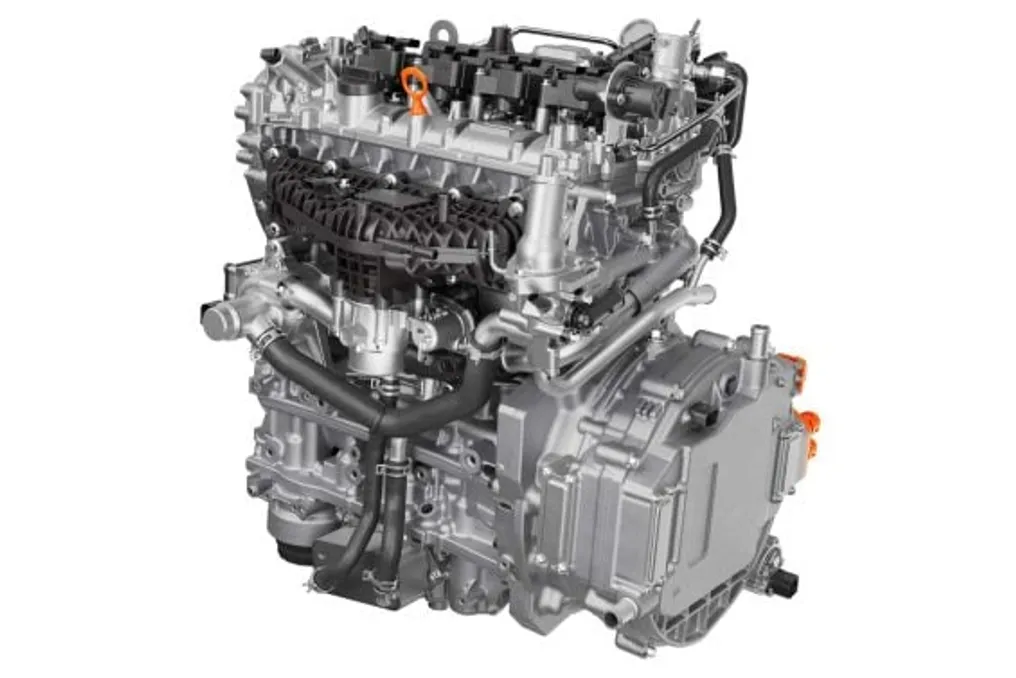
Unlike traditional hybrids, in an REEV, the internal combustion engine acts solely as a generator, supplying electricity to charge the battery when necessary, without directly driving the wheels. The D20 features a four-cylinder, 2.0 turbo engine fueled exclusively by methanol and is capable of initiating combustion even at temperatures as low as -35°C.
The complete package, including the power electronics, generator, and engine, weighs approximately 170 kg and generates up to 143 hp (equivalent to 105 kW). A significant innovation lies in the generator's architecture, which connects the axial flux motors directly to the combustion engine's crankshaft.
While radial flux motors use a cylindrical arrangement where the rotor and stator are stacked around an axis, the axial design organizes these components as overlapping discs, giving it a 'pancake' shape. This configuration results in a much more compact package. According to the company, this solution is 46% shorter on the axial axis and offers 63% more power per volume compared to an equivalent radial motor, aided by a silicon carbide (SiC) module.
The coreless design allows two rotors to rotate around a single stator. This technology is similar to that used in hybrid supercars, such as the Ferrari 296 GTB and the Lamborghini Temerario, but here it is applied aiming for compactness and efficiency, rather than primarily performance. The system can convert 47% of the fuel's energy into electricity, and the electric motors operate with an efficiency of 96.4%. In practice, about 2.1 kWh of methanol is needed to produce 1 kWh of electricity, allowing a 40 kWh battery to be fully charged using only 19.6 liters of fuel.
The high efficiency is also driven by a 240 mJ high-energy ignition, which allows operation with extremely lean methanol mixtures, thereby increasing overall efficiency and reducing emissions. Fortune Zhao, Chief Technology Officer at Horse Powertrain, stated that the D20 Methanol consolidates several innovations into a dense and compact unit, representing one of the first applications of axial flux motors in mass-production automotive systems.
Although the company has not yet specified which markets or models will adopt this engine, there are expectations that it will be targeted towards brands affiliated with Geely itself, which has already promoted the use of methanol in taxi fleets in China.
The companies Hyundai and Kia have registered a patent for an embedded wind energy generation system, designed to increase the efficiency of various types of vehicles, including electric, hybrid, and combustion engine models.
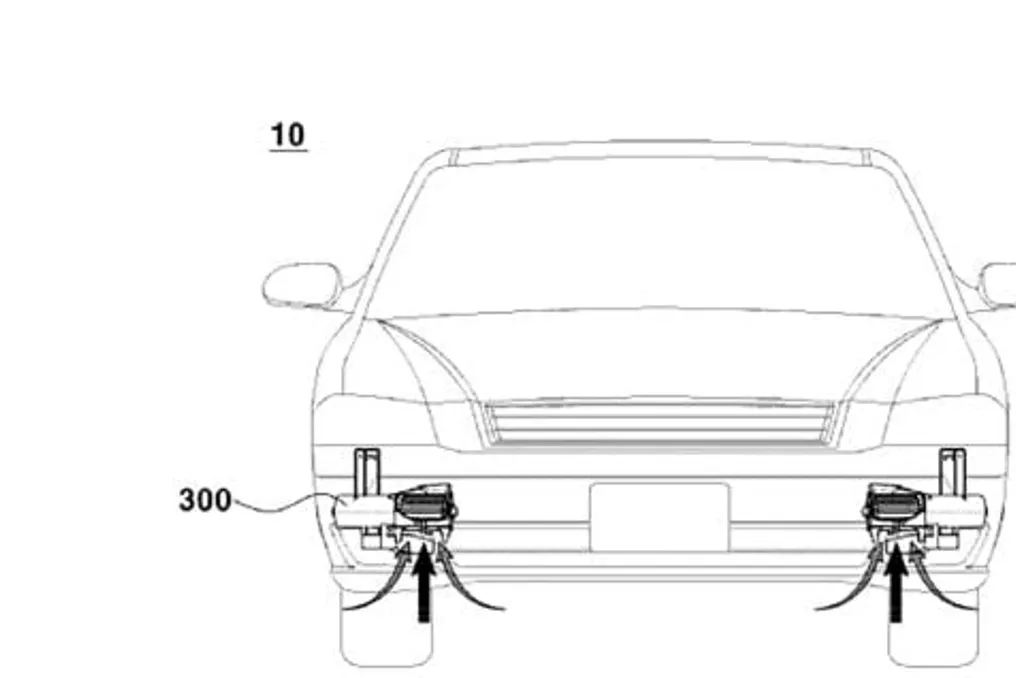
As revealed by the CarBuzz website, this new technology uses the airflow captured by the front grille to produce electricity under specific circumstances. It is important to note that the system is not intended to fully recharge the battery during travel.
The mechanism consists of a small generator positioned behind movable vanes installed in the front grille. Air is directed through a channel to this generating unit and subsequently expelled from the bottom or rear of the vehicle. If power generation becomes disadvantageous, the vanes close to reduce aerodynamic drag.
This concept demonstrates greater effectiveness at lower speeds. At high speeds, air resistance would require more energy to move the vehicle than the generator could recover. However, in urban environments, during deceleration, downhill driving, or even when the car is stationary in favorable winds, the system can generate additional electricity, complementing what is obtained from regenerative braking.
Although applicable to 100% electric vehicles, the proposal suggests that the solution will bring greater benefits to hybrid vehicles. In these cases, the generated energy would help maintain the battery charge, enhancing the use of the electric motor and allowing the combustion engine to operate longer within its peak efficiency range before being shut down in favor of electric driving.
For cars that use only combustion, the generator would be capable of supplying part of the alternator's function, powering the 12-volt systems and thus reducing the mechanical demand on the engine.
Hyundai and Kia did not specify the equipment's power or confirm plans for large-scale production. Furthermore, registering a patent does not guarantee commercial use, as manufacturers frequently register solutions to protect their intellectual property. There is also the consideration that small generators have limited practical efficiency, and energy destined for the battery suffers conversion losses throughout the electrical circuit.
This initiative reflects a continuous interest in efficiency improvements, even outside the purely electric sector. In markets such as the United States, where many consumers still prefer to keep gasoline cars in circulation, any advancement that reduces consumption helps maintain the relevance of these older technologies. The registration demonstrates that Hyundai and Kia are seeking incremental gains in addition to major bets on electrification.