Dubai's luxury real estate market continues to set new records: a villa in the Emirates Hills area was leased for a record 17 million dirhams (equivalent to 4.6 million US dollars), becoming the most expensive property ever rented in the emirate.
Dubai's luxury real estate market continues to set new records: a villa in the Emirates Hills area was leased for a record 17 million dirhams (equivalent to 4.6 million US dollars), becoming the most expensive property ever rented in the emirate.
Leanne King, an experienced veteran in luxury real estate and construction development based in Dubai, oversaw the concept, renovation, and management of this villa project with her team. The annual lease was secured for the seven-bedroom villa known as 'The Palace,' located on 'Billionaire Row' in Emirates Hills.
According to Leanne, this success is the result of an uncompromising commitment to craftsmanship, attention to detail, and creating a unique home in Dubai. She emphasized that it was not just a brokerage deal, but a project developed over years. 'I was deeply involved in the renovation, development, and management of the project, ensuring that every finish, every material, and every detail reflected the highest possible standard. With my team, we didn't just renovate the villa—we created a masterpiece,' she stated.
Leanne reported that she turned down several offers, including bids up to 15 million dirhams for a multi-year lease, because they did not align with her vision or the emotional connection she desired for the property. She explained that it was not only about money, but also about finding the right resident who would appreciate the craftsmanship, timeless design, unique antiques, and history of the home. 'When this person appeared, everything else became history.'
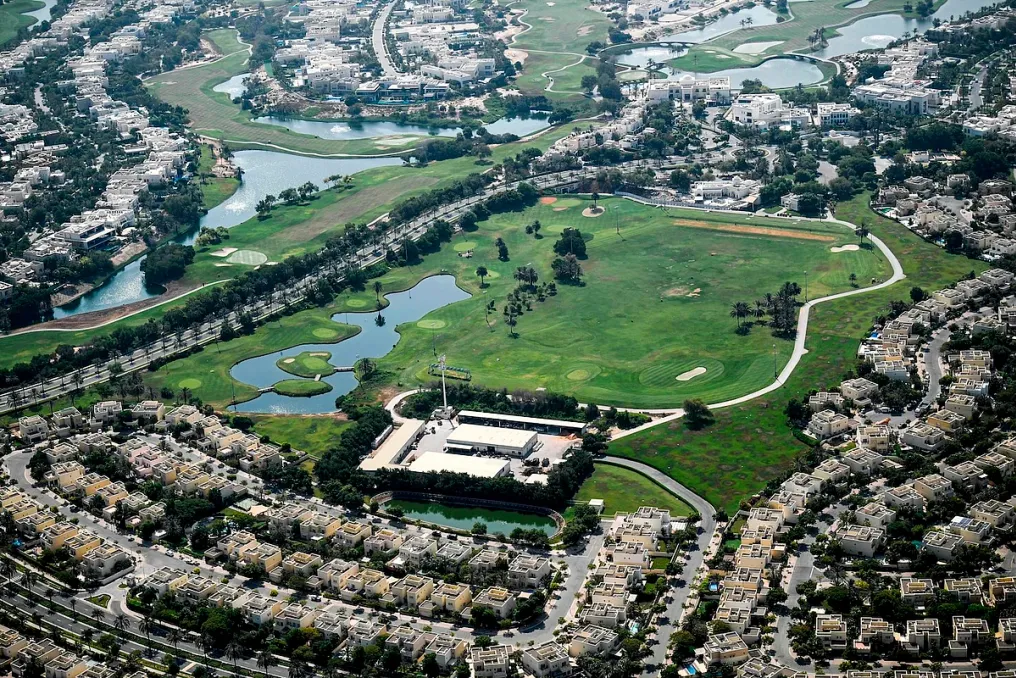
'The Palace' in Emirates Hills surpassed the previous record set by a duplex penthouse in Burj Khalifa, which was previously leased for 12 million dirhams annually this year. Emirates Hills, also known as 'Dubai's Beverly Hills,' has cemented its status as one of the most exclusive addresses in the emirate, where many wealthy individuals reside from both the UAE and around the world.
Leanne believes that this deal reflects a broader philosophy that has defined her career in Dubai's luxury real estate and construction industry. She asserts that they are not just buying properties; they are acquiring, building, renovating, and developing masterpieces that redefine the concept of luxury and ultimately set records. Every project is executed with a passion, precision, and obsession with quality that cannot be replicated.
She added that this record once again demonstrates Dubai's position as one of the leading global destinations for luxury real estate, where exceptional homes continue to attract discerning buyers and renters from all over the world. In her words, luxury today is defined not only by price but also by vision, execution, and the ability to create something unique.
Leanne also believes that this achievement strengthens Dubai's growing position as a global benchmark for ultra-premium real estate. She noted that despite global challenges, Dubai continues to attract those seeking excellence, stability, and a world-class lifestyle. She expressed pride in being part of this process, emphasizing that the deal shows why the UAE continues to lead globally by providing people like her the opportunity to dream big and create without limits.
In conclusion, the industry veteran stated that this achievement belongs to her team, who dedicated countless hours to creating something outstanding. She concluded that if one truly believes in their vision, surrounds themselves with the right people, and refuses to compromise on quality, anything is possible.
The real estate market on Dubai's waterfront has established itself as one of the most successful stories in the emirate's property sector. The growing gap between supply and demand is pushing prices to record levels, strengthening the appeal of sea-side living as both a lifestyle and a long-term investment, according to a study.
According to the report 'The Future of Seafront Being,' prepared by White Paper Media Consulting for Shamal Holding, waterfront housing in Dubai cost 90 percent more in 2021 than comparable properties inland. This difference increased to 128 percent by the first quarter of 2026, as buyers competed for the limited number of coastal homes. The report also notes that prime waterfront real estate in the emirate has grown by over 140 percent in the last five years, significantly outpacing the overall housing market.
The main reason for this premium pricing is a classic supply and demand imbalance. As developable coastal land becomes increasingly scarce, a sharp reduction in the number of elite waterfront homes is expected: from 4,261 units in 2026 to only 848 by 2031, according to the White Paper Media study. Meanwhile, demand continues to rise due to population growth, the influx of wealthy individuals, and Dubai's growing reputation as a global hub for wealth and investment.
The strength of the market was evident in 2025, when a record 68 homes valued over $25 million were sold in Dubai. The total value of transactions in the luxury segment reached $9.05 billion, which is 27.7 percent more than in 2024. Four out of the city's five most successful districts in the fourth quarter of 2025 were coastal communities, accounting for 79 transactions, and 55.6 percent of all homes in Dubai sold during the period for over $10 million were located in coastal areas.
The appeal of living by the water goes far beyond simple capital appreciation. A YouGov survey showed that 82 percent of UAE residents are considering moving to a sea or marina-side home within the next two to three years, and 93 percent stated they are willing to pay a premium for waterfront living. Almost all respondents—99 percent—believe that proximity to water increases the long-term value of real estate.
The concept is also transforming in the eyes of developers. Abdullah Bin Habtoor, CEO of Shamal Holding, noted that Dubai's connection to the sea extends beyond location and ownership, encompassing daily well-being and community building. He stated: 'We believe that Seafront Being is an evolution of waterfront living, from simply residing by the water to experiencing the waterfront as an integral part of daily life, work, recreation, well-being, and belonging.' He added: 'At Shamal, we view this as a design responsibility, not just a locational advantage.'
Survey results indicate that buyers are increasingly viewing waterfront homes as an investment in a lifestyle, rather than merely a luxury item. Among those surveyed, 96 percent stated that proximity to water influences their daily decisions, from exercise to choosing leisure spots, while 88 percent believe that living near the sea improves both mental and physical health.
Shehzad Jamal, Strategy and Consulting Partner at Knight Frank Mena, believes that this appeal reflects broader shifts in the demands of affluent buyers. He noted: 'Demand for coastal property has sharply increased.' Buyers are increasingly seeking complete lifestyle ecosystems, not just individual residences. Jamal emphasized: 'Affluent buyers are no longer just buying a house by the water; they are buying a lifestyle.'
Jamal also reported that the market for prime waterfront real estate in Dubai continues to command a significant premium, with top-tier waterfront properties attracting an average premium of about 68 percent. He predicts: 'The next phase of growth will be defined not so much by volume, but by quality, differentiation, and experience.' Buyers, he said, are increasingly prioritizing privacy, direct beach access, wellness amenities, and low-rise development, rather than just scale.
Urban planning expert Dr. Houla Al Kaabi from the UAE University believes that waterfront properties play a unique role in urban development strategies. She noted that 'waterfronts often function as high-value anchors for real estate and tourism.' However, she warned that the success of such areas depends on much more than just elite homes, insisting that 'connectivity relies on public access to the shore, integrated transport links, and active ground-floor use.'
The aspect of well-being is becoming as important a driver of sector growth. The White Paper Media report found that 91 percent of UAE residents feel noticeably relaxed near the water, and a third described the emotional impact as profound. Sunset walks, visits to marinas, and dining by the sea have been listed among the most valuable experiences associated with coastal living, which respondents linked to stress reduction, strengthening community ties, and improving quality of life.
For architect Stephen Denier, Director of Global Design Practice at U+A, the appeal is rooted in humanity's age-old connection to coastal areas. He argues that successful projects must create a meaningful interaction with the coast, not just offer views. Denier stressed that the waterfront is a natural public resource that can be utilized, and that coastal communities should encourage interaction, recreation, and a sense of belonging.
Landscape architect Duncan Denley, founder of Desert INK, believes the industry is gradually shifting from landmark projects to more people-centric places. He asserts: 'Belonging, not buildings, defines successful coastal communities.' Denley highlighted that daily interaction with the coast is often more important than the view, pointing to the role of beaches, trails, and waterfront amenities in creating livable communities.
From an architectural perspective, Dr. George Kachami from the American University of Dubai believes that successful coastal design harmonizes with nature. He posits that buildings should enhance the sensory experience of water, wind, light, and open space to support well-being and emotional balance, rather than competing with the sea.
Binhabtoor believes these trends will become even more important as coastal land becomes scarcer. The study found that 48 percent of respondents now consider proximity to the sea the most important sign of modern luxury, surpassing prestige and design trends. As Dubai expands its beaches, marinas, parks, and public promenades, access to the sea is increasingly viewed not just as a premium amenity, but as a cornerstone of quality of life and long-term value, making waterfront property one of Dubai's most sought-after assets.