Trading cryptocurrency using leverage has become very popular in recent years. However, this concept can seem complex for beginners. This guide aims to explain as simply as possible what leverage is, how it functions in the crypto sphere, and when it should be used and when it should be avoided.
Definition of Leverage in Crypto Trading
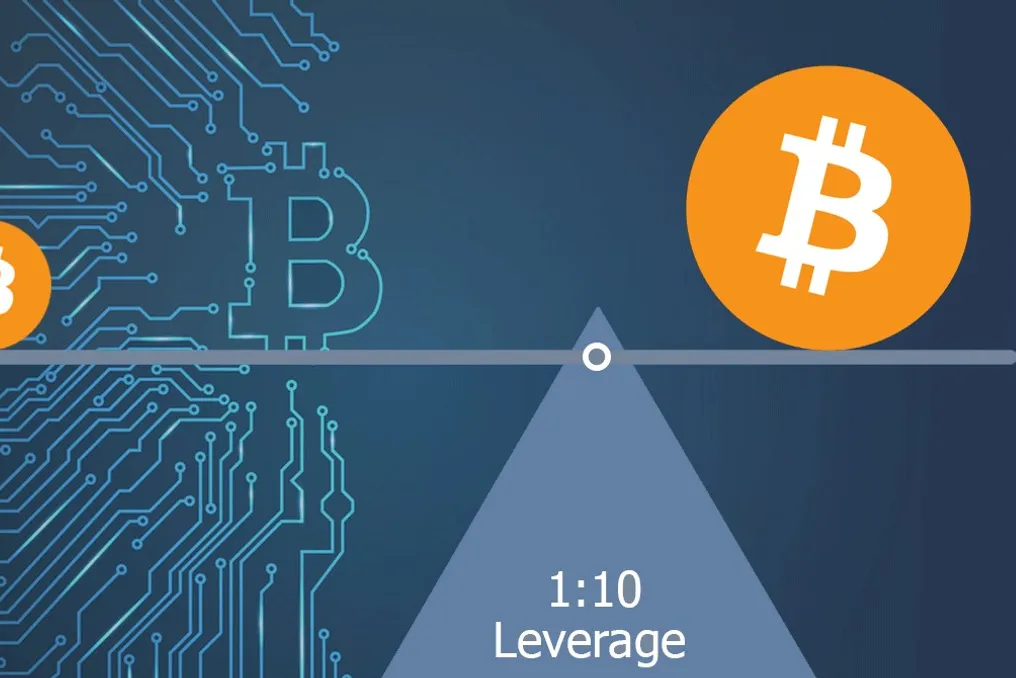
Essentially, leverage in crypto trading is the practice of using borrowed funds to increase your buying or selling power. This can be viewed as a temporary loan taken from an exchange. Thanks to these borrowed funds, you can execute trades with a much larger asset volume than what you actually own.
In standard spot crypto trading, if you have $1000, you buy Bitcoin worth $1000. If the price of Bitcoin increases by 10%, you earn $100. When using crypto leverage, you can use those same $1000 as collateral to open a $10,000 position (10x leverage). With such a larger trade size, if the price of Bitcoin rises by the same 10%, your profit will be $1000. Nevertheless, higher profit potential comes with increased risks.
How Leverage Works
To understand how leverage works in crypto, you need to grasp the lending model from the exchange to the user. Exchanges that provide funds for leveraged trading are commercial entities, so they do not do it for free. They require collateral, called Margin, to ensure they do not incur losses if your trade fails.
Understanding Types of Margin
Margin is essentially the crypto assets you deposit as collateral to open a large position. There are two types of margin, and it is important to know both. The first is Initial Margin, which represents the minimum amount of equity required to open a leveraged position. The second type is Maintenance Margin, which is the minimum capital that must remain in your account to keep the position open. If your account balance drops below this threshold due to market losses, you risk a margin call.
Multiplicative Effect and Position Types
Leverage is expressed as a coefficient, which is the multiplicative effect. It shows how many times your initial capital is multiplied. When you see 5x, it means you are trading $5 for every dollar. At 10x, you are trading an amount 10 times greater than your starting amount. 100x leverage is usually limited to Bitcoin trading, where a $100 deposit can open a $10,000 position. A very high multiplier has a dual effect: while huge profits can be made, the risks are also great.
100x leverage implies that any move against you of 1% will lead to the loss of 100% of your collateral. Furthermore, only some leading platforms for high-leverage crypto margin trading, such as MEXC, offer such a multiplier.
Leveraged cryptocurrency trading is available not only in a bull market; it can also be used in a bear market. This is where long and short positions come into play. In a long position (Longing), you borrow funds to buy an asset hoping its price will rise, and then sell it back, repay the loan, and receive the difference. In a short position (Shorting), you take an asset, such as BTC, and sell it on the spot market. If the price falls, you repurchase it at a lower price, deliver the BTC to the lender, and keep the profit.
Risk Management: Isolated vs. Cross Margin
A key aspect of leveraged trading is risk management in different modes. Most platforms offer two modes. In Isolated Margin mode, the risk is limited to a specific trade; if that trade fails, you only lose the percentage allocated to that position. In Cross Margin mode, your entire account balance is used as collateral. While this prevents liquidation during short-term price drops, a more significant decline can automatically empty your wallet.
Different Types of Crypto Leverage
There are several ways to approach crypto leverage trading. Depending on the chosen exchange, you can trade various instruments. Crypto margin trading is the most common form, where you borrow funds directly from the exchange or other users to buy more spot crypto. This is often used for short-term speculation and involves daily interest payments on the borrowed amount.
Cryptocurrency futures and perpetual contracts are used to buy or sell an asset at a specific price at a given future time. In the crypto sphere, perpetual swaps offer additional advantages because they have no expiration date and are tied to the true price of Bitcoin or Ethereum via a funding rate. Options give you the right (but not the obligation) to buy or sell at a specific price. Although this is more typical of traditional finance, options are also available in the crypto sphere. CFDs (Contracts for Difference) are simply betting on price changes, where you never own the underlying currency.
What is Liquidation in Crypto Trading?
Liquidation means the end of the game in leveraged cryptocurrency trading. Since exchanges are businesses, they cannot assume all the trader's risks. When an exchange detects that your trade is losing money and has reached the depletion point of the Initial Margin, it automatically closes your position. This closure is called liquidation. Upon receiving a liquidation notification, you understand that you have lost 100% of the collateral you allocated to that trade. Exchanges do this to protect their own funds from losses on your position and to prevent you from having a negative balance.
Spot Trading vs. Leverage
If you do not want to risk the risks associated with leveraged trading, you can engage in spot trading. While using leverage, you borrow to trade large volumes, whereas in spot trading, you directly buy or sell the crypto asset at current prices. The main differences between these methods are as follows: beginners are recommended to start with spot trading, while leverage is suitable for experienced traders willing to accept the associated risks.
Step-by-Step Guide to Leveraged Trading
After understanding the principle of leverage, let's look at how to trade it on an exchange, such as Binance. You need to choose a reliable exchange with high liquidity to avoid scam candles that cause liquidations. Then, you need to deposit collateral (USDT or BTC) into the Futures or Margin account. Next, select the margin mode and the desired leverage level, with beginners advised to start with small values, such as 2x or 3x, avoiding promises of 100x. It is crucial to set a stop-loss to automatically close the trade upon reaching an acceptable loss. You must also constantly monitor the trade and adjust the stop-loss to a profit zone if the result is positive. It should be noted that maintaining an open trade may require paying a fee every 8 hours.
Pros and Cons of Trading Bitcoin with Leverage
Advantages include the ability to earn huge profits from small price fluctuations (1-2%) and using a small capital to access large trade sizes. Additionally, BTC holders can use leverage for short selling to hedge their portfolio during a market crash. Disadvantages include the high volatility of crypto leverage, where one small market move can zero out the balance. Also, the stressful state of watching a leveraged position and the need to master complex concepts such as funding rates, mark prices, and liquidation prices require a steep learning curve.
Conclusion for Beginner Traders
Beginner traders are strongly advised to approach leveraged trading with extreme caution. The process should only begin when you have a proven trading strategy and a disciplined approach to risk management. Crypto leverage is a tool for professional growth, not a get-rich-quick scheme. If you are just starting, stick to spot trading until you understand market cycles. When moving to leverage, start with 2x and always use a stop-loss to minimize risks.