Information can be compared to food, making it crucial to make conscious choices about what is consumed. The flow of content on social media is often described as a bag of chips: highly addictive, but nutritionally poor.
Information can be compared to food, making it crucial to make conscious choices about what is consumed. The flow of content on social media is often described as a bag of chips: highly addictive, but nutritionally poor.
Historically, obtaining food was a constant challenge. Consuming meals rich in fat or sugar was a rare and advantageous event, as it allowed for greater energy reserves in times of uncertainty. Individuals predisposed to high-calorie diets were more likely to survive and pass on their genes.
With the end of the hunter-gatherer lifestyle, humanity gained access to almost unlimited calorie sources. However, the human body, maintaining an ancient biological manual, tends to retain excess weight, which can lead to serious health problems, turning an old advantage into a risk.
Hank Green, a science communicator, suggests using the history of food as a parallel for how we consume content. In prehistory, information was also scarce and vital; a rustle of leaves could warn of a predator, requiring the individual to rapidly process data such as the size, distance, and direction of the danger.
The development of complex societies and the social brain hypothesis indicate that communication between people drove cognitive evolution. Access to knowledge was facilitated by the invention of writing about five thousand years ago, but, like food, this knowledge was initially restricted to a literate elite. The printing press in the 15th century and mass media in the 20th century helped democratize this access.
Currently, this extreme ease has created a new dilemma. In Brazil, there are 272 million mobile phones in use, leading to studies linking intense smartphone and social media use to problems such as anxiety, depression, and difficulty concentrating. We evolved to cope with scarcity, but now we face the challenges of hyperabundance.
Until the 1980s, the Brazilian diet was mainly composed of minimally processed foods. Around that time, ultra-processed products began to dominate supermarkets. These items use basic raw materials (such as corn or soy) to create artificial ingredients, such as modified starch and hydrogenated fat, which are then mixed with additives to give them pleasant color, flavor, and texture.
These additives make the products 'hyper-palatable,' causing a cerebral imbalance that prevents satiety with small amounts. Furthermore, they are poor in nutrients and fiber, resulting in a quick feeling of hunger. This process is not accidental; companies create increasingly attractive flavors to activate the brain's desire centers, making natural food seem less appetizing.
Large technology companies, such as Google, Meta, and ByteDance (owner of TikTok), followed a similar path, testing formulas to deliver information in the most irresistible way possible. Currently, short videos combined with sophisticated algorithms represent the peak of attention capture.
Scrolling through TikTok is analogous to eating chips: it provides immediate pleasure but rarely offers the essential 'nutrients' for understanding the world, which would be knowledge acquired in formal settings like schools or universities. The term 'brain rot' reflects this superficiality.
It is important to note that occasional consumption of light content is harmless. The problem arises when this content becomes the primary source of information or nourishment. Adopting healthy habits requires more than just willpower, involving psychological, social, and economic factors, since not everyone has the means to cook at home.
Just as quality food demands time and investment, valuable informational content also requires dedication. Consuming 'offline' material, away from constant notifications, has become an indicator of mental health. Although the solution requires public policies, such as platform regulation and access to healthy food, daily reflection on what is consumed in the feed is fundamental for making more conscious decisions.
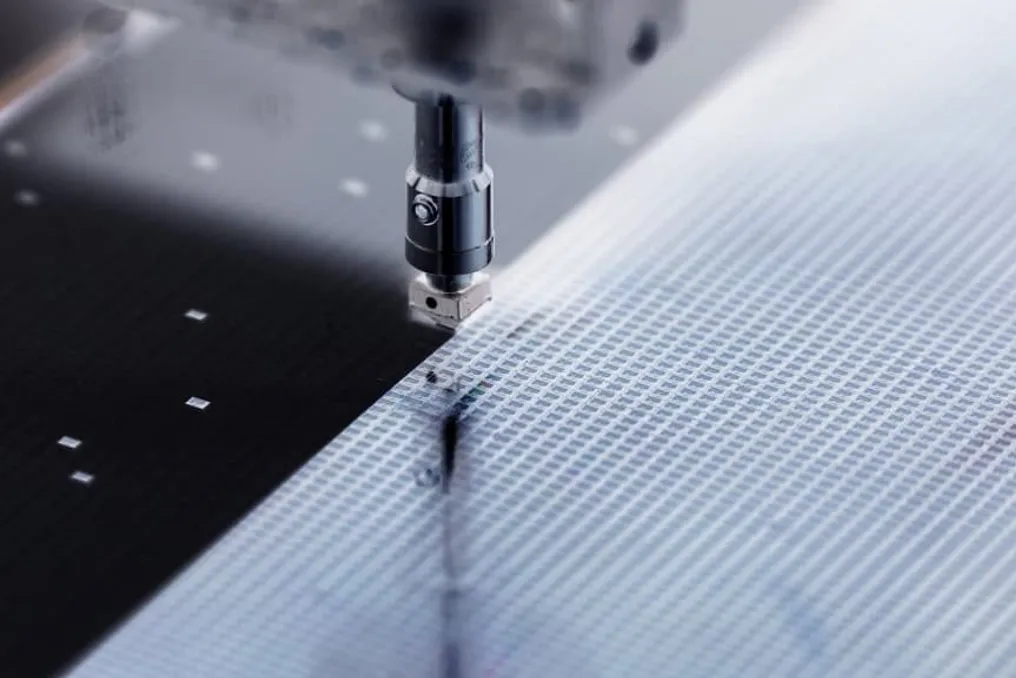
Apple is examining the possibility of acquiring specialized chip companies to enhance its artificial intelligence processing capabilities. This move comes due to obstacles encountered with the components currently used in its AI servers, seeking alternatives to keep pace with the rapid evolution of large artificial intelligence models.
According to Reuters reports, Apple has initiated contact with chip startups and discussed potential acquisitions with financial institutions, although no negotiation has been formally confirmed by the company. The company's AI servers use internally developed chips based on the M2 Ultra, but these present performance limitations, as reported by The Information. Furthermore, the project named 'Baltra,' intended for a new generation of processors, has been postponed.
Among the goals set by Apple are the purchase of companies focused on AI chips, increasing its internal processing capacity, reducing dependence on external solutions, and preparing new functionalities based on artificial intelligence.
During the development process of a new version of Siri, Apple conducted tests using the Gemini models, provided by Google, on its servers. However, the Mac-based chips proved incapable of managing the larger models, forcing part of the operation to be transferred to Nvidia chips hosted on a Google cloud infrastructure. This scenario illustrates one of the challenges the company faces in competing for advanced AI resources.
Even while avoiding major acquisitions, Apple purchased Q.ai, an Israeli AI technology company focused on audio, in January. As of March 28, the company held $45.57 billion in cash (equivalent to about R$ 246 billion). Additionally, an agreement was announced with Broadcom, valued at over $30 billion (approximately R$ 162 billion), regarding chip supply.
iOS 27 beta is a preliminary version of Apple's operating system, intended to allow enthusiasts to test features in advance. This process functions as a collaborative testing environment, where user feedback helps the company refine tools and detect flaws before the final release.
Since it is a software under development, the iOS beta version may present instability, higher battery consumption, and compatibility issues with third-party software. For this reason, caution is recommended, avoiding use on primary devices and always ensuring a complete backup before starting the installation.
There are five fundamental points that must be evaluated before installing the iOS 27 beta. Firstly, regarding stability and bugs, the testing system may cause unexpected crashes, interface failures, and sudden restarts. Furthermore, essential functions, such as calls and data, may fail, leaving the user without signal or notifications.
Performance also varies; early beta versions tend to be less stable, while intermediate builds are usually more reliable. However, full fluidity and good autonomy are only guaranteed with the arrival of the final version.
Secondly, battery life often deteriorates in the initial phases of the beta, draining power quickly even during simple activities. Since the platform is not yet fully optimized with the new updates, it is advisable to keep a portable charger accessible.
Thirdly, app and service compatibility may be compromised. Third-party software may stop working, show errors, or lose important features after installing the iOS 27 beta on the iPhone. This affects everything from banking services and two-factor authenticators (2FA) to VPN connections and productivity tools. This instability stems from developers still adapting the code to the new operating system, so it is prudent to check if essential applications already offer basic support before updating.
In the fourth point, although the public beta of iOS 27 incorporates new security features, it may contain unpatched vulnerabilities. Such temporary flaws make personal data and sensitive files more susceptible to intrusions. Finally, the fifth point concerns the laboratory nature of the test: installing the iOS 27 beta requires accepting the possibility of bugs and unexpected application closures, making it suitable only for users who handle such occurrences well. It is vital to perform a complete backup to iCloud or a computer before starting.
The primary guideline is never to use the testing system on the main or professional iPhone, but rather on a dedicated secondary device. It is also suggested to wait for the public beta builds released mid-cycle to achieve greater stability.
To download the iOS 27 beta, first, perform a full backup of the iPhone to preserve data in case of the need to revert the system. After creating the backup, follow these steps: access beta.apple.com via the iPhone's Safari and log in with your Apple ID; click 'Enroll' to join the Apple Beta Software Program and accept the terms; on the iPhone, go to 'Settings', then 'General', and select 'Software Update'; tap 'Beta Updates' and select 'Public Beta Version of iOS 27'; finally, return to the previous screen and select 'Download and Install' or 'Update Overnight' to finalize the update.
iPhone models compatible with the iOS 27 beta include several series, such as iPhone SE (2nd Generation and later), iPhone 11, iPhone 12, iPhone 13, iPhone 14, iPhone 15, iPhone 16, iPhone 17, as well as the iPhone Air.
Installing the iOS 27 beta does not void the iPhone warranty, as Apple officially sanctions these tests. However, when seeking authorized technical assistance, professionals may request that the device be reverted to the stable version before any repair. Factory support is only at risk if alternative methods or unauthorized files are used for installation. To prevent problems, the update must occur exclusively through the official Apple channel, and backup data must be kept up to date.
iOS 27 focuses on integrating artificial intelligence and enhancing the visual usability. Key innovations include Siri with generative AI, which understands long conversational contexts and executes tasks across multiple apps simultaneously; the 'Liquid Glass' visual, which gives a translucent effect to menus and Control Center, allowing opacity and tone adjustment; customizable screens with flexible widget sizes and greater wallpaper alignment precision; the ability to capture video images, extracting high-quality static frames; a smart Gallery that uses image recognition to classify media and speed up searches; and dynamic Safari, which generates real-time text summaries via AI and improves extension management.
Is it possible to revert the iOS 27 beta installation? Yes, it is feasible to return to the previous stable version by restoring the system using a computer. Since this process formats the device, it is necessary to restore a backup made before participating in the testing program. If this old backup is unavailable, the iPhone will need to be set up from scratch, as backups made in the beta version are not compatible with older systems.
Anthropic conducted a comprehensive analysis of over 300,000 anonymous conversations and concluded that the Claude chatbot modifies the tone of its responses according to the language in which it is being used. This study demonstrates that the model can adopt different conversational nuances, varying between more cautious, direct, friendly, or detailed stances, depending on the language.
In the specific case of Portuguese, the model exhibits a notable inclination to provide more technical and task-execution-focused answers. Based on over 15,000 interactions, Anthropic's analysis identified small positive trends related to Rigor, Execution, Caution, and Depth. The observed patterns include the ability to enhance and correct details even without explicit request, offering complementary information or paths, and incorporating creative elements or additional context into its outputs.
To measure the disparities between languages, researchers structured Claude's behavior across four main axes. The Deference or Caution axis assesses whether the model tends to validate the user's ideas or adopts a more prudent stance, issuing warnings about risks and limitations. The Sympathy or Rigor axis compares warmer responses with those that prioritize accuracy, factual correctness, and transparency. The Depth or Conciseness axis determines whether the chatbot prefers to elaborate extensive explanations or maintain brief and objective answers. Finally, Frankness or Execution observes whether Claude acknowledges its limitations or focuses on delivering a ready and confident solution.
The research highlights that the perception of quality can change drastically; for example, two people requesting feedback on the same business plan, one in Hindi and the other in Russian, may have distinct impressions due to the values expressed by Claude in each evaluation. Furthermore, the results may vary between different versions of the model, such as Opus 4.7, which tends to be more rigorous and cautious compared to other iterations.
When compared with other languages, the distinctions become more evident. English was classified as more cautious and depth-oriented, showing a tendency to challenge incorrect premises and request more proof. Hindi showed the highest propensity for sympathy, generating lighter, encouraging, and humorous responses. Arabic was associated more with deference and conciseness, using more polished language adapted to the interlocutor's emotional state. Russian stood out for its rigor, providing more analytical and direct answers. Dutch demonstrated a greater tendency toward frankness, admitting limitations more frequently, while Indonesian proved to be more focused on execution, prioritizing task completion.
Anthropic does not yet have a definitive explanation for the origin of these variations. One possible cause pointed out is the existence of smaller or more concentrated databases of certain types of text for some languages. Another factor considered is the influence of cultural adaptation and the reflection of the intrinsic characteristics of these languages. However, the company emphasizes that the study does not distinguish regional variations within the same language, such as Portuguese spoken in Brazil or Portugal, which reflects local customs. The company plans to continue monitoring these changes, aiming in the future to identify correlations between value profiles and problematic behaviors. It is relevant to mention that in previous research, Claude had already shown less willingness to assist in criminal schemes or be complacent with users' questionable conduct.