Automakers and importers have issued warnings about the real risk of mechanical problems in imported and older vehicles due to the change in gasoline composition to E32 (32% ethanol), determined by the National Energy Policy Council (CNPE).
Automakers and importers have issued warnings about the real risk of mechanical problems in imported and older vehicles due to the change in gasoline composition to E32 (32% ethanol), determined by the National Energy Policy Council (CNPE).
Both Anfavea, the manufacturers' association, and Abeifa, the importers' association, strongly criticized the government decision released on Tuesday (14). Both entities questioned the absence of 'specific and conclusive technical studies' on durability, pointing to a concrete danger of mechanical damage to the national fleet.
According to these associations, the tests conducted by the government to approve E32 focused only on short-term metrics, such as performance, emissions, and drivability, neglecting crucial factors like material degradation and component longevity.
Marcelo de Godoy, president of Abeifa, expressed concern, stating that 'we run the risk of seeing broken cars on the streets because of this increase.' Importing companies are urgently working with their international headquarters to adjust and adapt engines to the new Brazilian reality, which contains almost a third of alcohol in the gasoline.
The federal government tries to justify the measure by claiming that validation tests conducted in 2025 (when the blend reached 30%) already had a tolerance margin of two percentage points upwards, which would allow for 32%. However, this acceleration of the change has strong political and economic motivations, aiming to reduce dependence on fossil fuels and protect the economy from fluctuations in the price of a barrel of oil, in addition to meeting the goals of the Future Fuel program, which establishes up to 35% ethanol in gasoline by 2030.
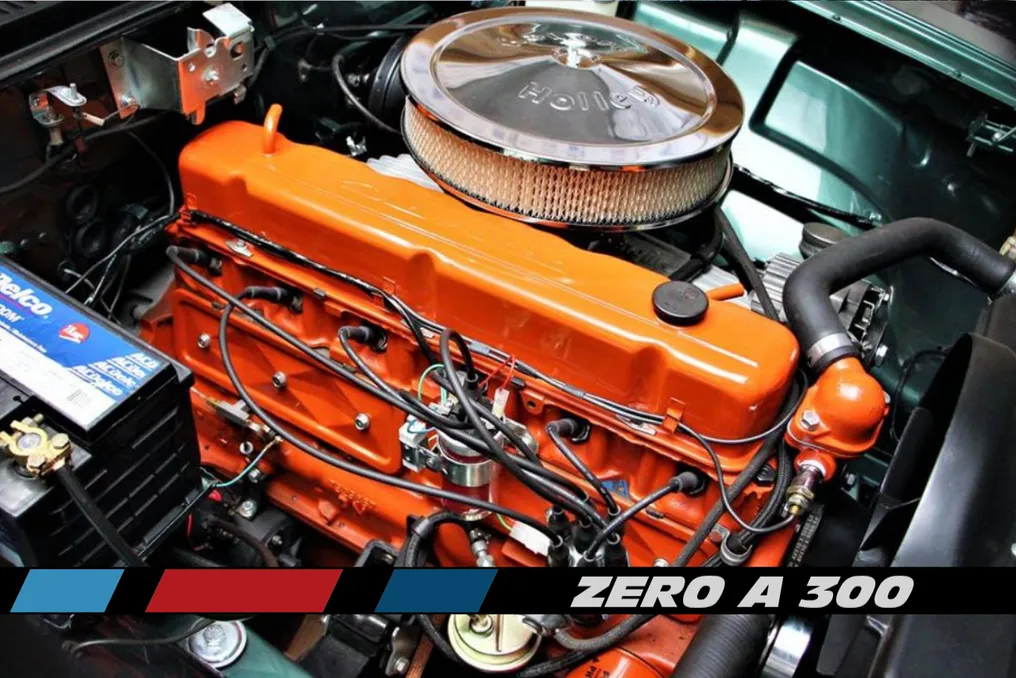
For owners of flex-fuel cars, the immediate impact is financial, as the higher proportion of ethanol decreases the fuel's calorific power, resulting in lower autonomy. However, the scenario is critical for owners of imported vehicles without flex calibration or classics with old fuel systems, such as carburetors and diaphragm mechanical pumps. The corrosive nature of ethanol and its high affinity for atmospheric water can accelerate the wear of hoses, gaskets, seals, and metal parts.
In other news, the new season of The Grand Tour, successor to Top Gear, is scheduled to premiere on September 4th. The show, created by Jeremy Clarkson, James May, and Richard Hammond and known for its sharp humor on the BBC, will return with Thomas Holland and James Engelsman, from the Throttle House channel, and Francis Bourgeois. The new cycle was announced with the motto 'Same show, new knobs,' indicating the intention to replicate the relaxed atmosphere of previous seasons.
Alfa Romeo also revealed a teaser of its new SUV, which will be built on the STLA Medium platform, similar to the one used by the Jeep Compass and Peugeot 3008. Although its exact positioning in the line is not defined, there are speculations that it could be a successor to the Tonale or situated between the Tonale and the future Stelvio, which will use the STLA Large platform in 2028. The automaker informed that the new SUV will feature hybrid powertrain options (mild and full) and an all-electric version.
In the car segment, the Honda Fit RS Mugen, which was discontinued in Brazil in 2021, received updates in its fourth generation launched in Japan in 2020. The RS Mugen version gained a more aggressive front bumper, exclusive 17-inch wheels, and a new rear diffuser. Furthermore, Mugen developed a shock absorber kit in partnership with Yamaha, designed to reduce chassis vibrations when driving at the limit, promising greater smoothness and solidity, despite the vehicle maintaining a 1.5 hybrid engine of 123 hp.
In the motorcycle sector, Abraciclo reported the Chinese manufacturer Shineray to the Ministry of Justice at the end of 2025. The complaint alleged that Shineray motorcycles were exceeding legal limits for air and noise pollution, being sold without equipment such as catalysts and canisters. Independent tests conducted by Marelli confirmed the initial reports, showing that models like the SHI 150 emit 18 times more carbon monoxide than permitted.
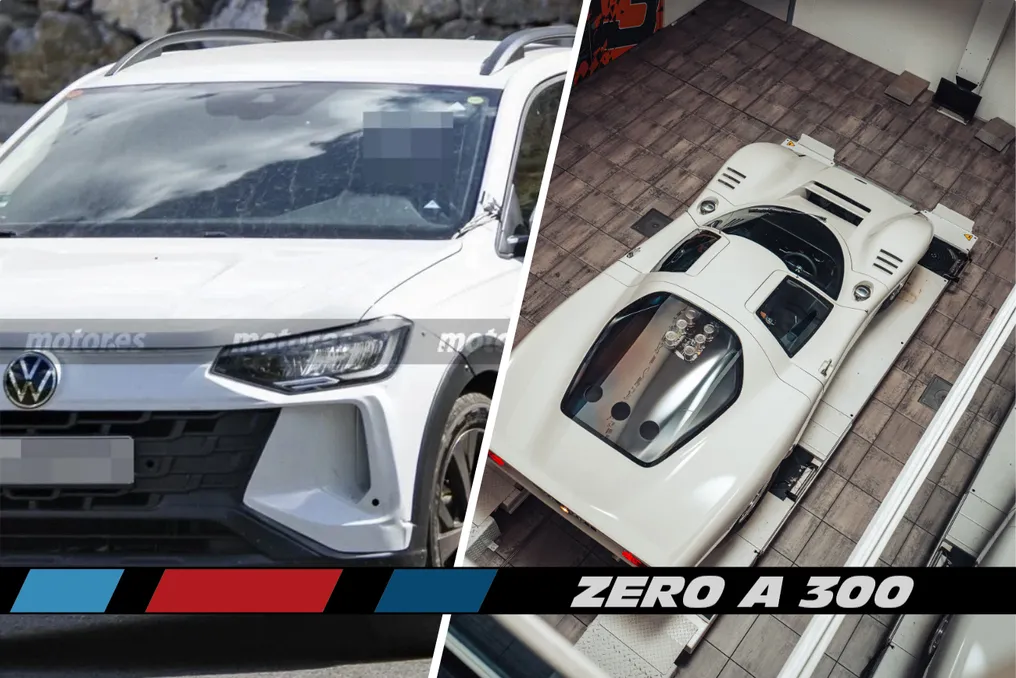
Volkswagen is preparing the second generation of the compact crossover Nivus, which is expected to arrive in Brazil next year. Prototypes of the model are already being tested, disguised to hide the adoption of a new platform.
The new structure will be based on the MQB Hybrid architecture, replacing the MQB A0 due to its support for hybrid systems. This platform change will allow the Nivus to gain in length, wheelbase, and width, slightly distancing it from the traditional compact segment.
Prototypes were spotted by vehicles from the website Motor.es, appearing similar to the VW Taigo (European version of the Nivus), except for the front end, which uses a VW Tera bumper to accommodate structural changes, mainly in the front width. The wheelbase will increase by 9 cm, reaching 1.65m, which will significantly benefit the legroom for rear passengers, a weak point of the current model.
The suggested powertrain options indicate a change in the strategy for the new Nivus. The 1.0 turbo engine should be replaced by the 1.5 TSI Evo 2, which can run on gasoline or ethanol and will be combined with a 48V mild hybrid system in entry-level versions. This configuration generates 150 hp and 25.5 kgfm of torque, using a six-speed automatic torque converter gearbox.
In higher versions, the MHEV system will be replaced by a full hybrid (HEV) setup, keeping the 1.5 turbo engine but with more power: 170 hp and 31.6 kgfm of torque. In this case, the transmission will be a seven-speed dual-clutch unit.
To celebrate Fiat's 50 years in Brazil, which began with the iconic 147 in 1976, the manufacturer launched a special series for the Toro pickup and the Fastback crossover, both with 550 units available.
The Toro, based on the Volcano version, features exclusive 'Maximum Steel' gray paint, commemorative emblems, and darkened details on the wheels and trim. It has a black roof, and the interior features suede upholstery on the doors and seats, with 'Fiat 50 Years' embroidery and a special message on the dashboard. It is equipped with a 10-inch multimedia center and an ADAS package, including automatic braking, lane departure warning, front parking sensors, blind spot sensor, and rear cross-traffic alert. Its engine is the 1.3 turbo flex with direct injection and a 48V mild hybrid system, delivering 176 hp and 27.5 kgfm of torque, coupled to a six-speed automatic gearbox.
The Fastback Special Edition Fiat 50 Years follows a similar aesthetic but in Amalfi Blue. Based on the Fastback Impetus, it stands out with a panoramic sunroof. It includes a digital dashboard, a 10.1-inch multimedia system with wireless connectivity for Apple CarPlay and Android Auto, and an ADAS package with emergency automatic braking and lane keeping assist. The engine is the 1.0 GSE turbo flex with a mild hybrid system, producing 130 hp and 20.4 kgfm of torque, connected to a simulated seven-speed CVT gearbox. Fiat has not yet disclosed the prices for this special series, which will start selling next Thursday (9).
Previously, it was explained that the growth of Chinese EVs was driven by local incentive policies. However, preliminary data from the China Passenger Car Association (CPCA) shows a 13% contraction in the market compared to the previous year, after hundreds of brands were created and supply exceeded demand.
Several factors contribute to this decline, such as local economic instability, leading Chinese consumers to wait for a possible price war. Additionally, the gradual withdrawal of government subsidies has reduced the appeal of EVs compared to hybrids. The Chinese government has already cut tax exemptions this year and confirmed that it will completely eliminate annual incentives for electric, hybrid, and fuel cell vehicles starting January 1, 2027.
This local slowdown may impact the global market, especially large importers like Brazil. Due to excess stock, reduced margins, and financial risks, Chinese manufacturers need to export this surplus. Brazil has an incentive program for these vehicles coming from China. Analysts predict that China will continue to break export records in 2026, projecting 10 million units, a 41% increase over last year.
Currently, only three manufacturers actually profit in China—BYD, Xiaomi, and Leapmotor—two of which are strong in Brazil. Consulting firms like AlixPartners estimate that at most four more brands will survive this crisis, citing GWM and Geely. The others will face bankruptcy or merger.
Bruce McLaren is a prominent figure in motorsport history, known for victories in Formula 1 and the 24 Hours of Le Mans, and for founding McLaren. His main aspiration, however, was to apply his track experience to creating road cars. Although McLaren became a major supercar manufacturer, the New Zealander died in 1970 during testing of the McLaren M8D.
The M6GT, the car conceived by Bruce McLaren, was a closed, street-homologated version of the CanAm prototypes. More than half a century later, McLaren officially realized this concept through McLaren Special Operations (MSO), creating a unique example based on the final design of the 1960s.
The project focused on historical fidelity, avoiding modernizations. The chassis was taken from a contemporary M6A race car, and the body replicates the original molds, preserving even minor development modifications made during tests of that decade. Mechanically, the vehicle uses a central-rear V8 small-block engine with heads identical to the originals, along with period transmission and suspension. The artisanal work included the manual fabrication of hidden structural elements and the replication of the windshield via digital scanning. The interior features green vinyl seats and a walnut wood gear knob. The exterior paint, Colnbrook White, pays tribute to the region where Bruce began his activities, evoking the look of the 1966 McLaren M2B Formula 1.
The M6GT will be displayed at the Goodwood Festival of Speed, alongside models such as the Can-Am M8A and the McLaren F1 GTR, representing the DNA of all McLaren road supercars.
After ceasing operations in Russia in March 2022 due to economic blockade, the Avtotor factory in Kaliningrad was not dismantled. Instead, it ignored the end of the partnership and resumed production of the X5, X6, and X7 models using spare parts left in the warehouses, without authorization from the German headquarters, which disclaimed any responsibility.
Although sales in authorized dealerships dropped drastically to 505 units in 2023, the brand managed to regain leadership in the Russian premium segment in 2025, thanks to the importation of wheels from China and neutral countries. However, the Kaliningrad scheme is considered marginal. Local media reports that more than 145 of these 'unlicensed' SUVs were sold between 2025 and 2026 to wealthy clients. The price of an X5 produced under this scheme starts at 11.9 million rubles (approximately US$ 155,000), making it more competitive than that practiced by independent importers.
A notable aspect of this survival engineering is the embedded technology. Since Avtotor workers are merely assembling a puzzle with what remained before the embargo, the cars are dated 2025 and 2026, but retain the mechanics and appearance of 2022 models. Later aesthetic or technological facelift updates are absent. Furthermore, since BMW no longer participates, the ECUs do not receive official updates, which has become a selling point: these SUVs cannot be remotely blocked or disabled by BMW programmers in Germany.
To keep production active, the factory had to improvise with components from Russian manufacturers, expanding local production to models like the X6 40d, which was not originally manufactured there. Parallel production will only cease when the core stock runs out, unless they find a local or Chinese supplier to replicate the components.