Cape Town Theatre presents the dance performance 'Un-Touched', which explores a generation forced to adapt to significant changes in modern society. This work was created by InSPIRAtions Youth Company and InSPIRAtions Company.
Cape Town Theatre presents the dance performance 'Un-Touched', which explores a generation forced to adapt to significant changes in modern society. This work was created by InSPIRAtions Youth Company and InSPIRAtions Company.
The production examines the lives of millennials who grew up at the intersection of two eras: they experienced the time before smartphones and social media while simultaneously navigating the constantly connected digital world. The piece analyzes how culture, technology, social issues, politics, and personal experience have shaped the beliefs, challenges, and successes of this generation.
Amidst the constant evolution of discussions about careers, relationships, identity, and mental health, 'Un-Touched' offers an opportunity to contemplate what has influenced a generation known for its creativity and resilience. Audiences are invited to move beyond stereotypes and understand the stories of the people who helped shape the modern world. The performance will take place at the Arstcape Theatre on Friday, July 17, and Saturday, July 18, at 5:00 PM.
Additionally, other events are scheduled in the city. A magical musical adaptation of the classic story 'Peter Pan' invites the public to travel to Neverland. This is an ideal option for family entertainment during school holidays. The story of Peter, Wendy, Tinker Bell, and the Lost Boys will come to life on stage at the Canal Walk Shopping Centre until Sunday, July 19, at 11:00 PM.
An unforgettable evening of classical music will also take place. Young pianist Isaac van der Merwe will hold a special charity concert in support of the Baxter Theatre. At only 22 years old, Isaac demonstrates award-winning talent by performing works by Mozart, Berg, and other renowned composers. The concert will be held at the Baxter Theatre Concert Hall on Friday, July 17, at 6:30 PM.
The President signed a decree in early April of this year concerning the preparation and celebration of the 35th anniversary of the state sovereignty of the Republic of Uzbekistan. In accordance with this decision, 'Independence Holidays' have begun to be held in various regions. Currently, people are in a festive mood, actively discussing themes of freedom, national independence, and personal integrity, which helps individuals realize their position and recall current achievements.
We often speak easily about ourselves and our personalities, but this is a very responsible and significant issue. State independence can be achieved in a single day, and there is historical evidence for this. However, personal independence is a complex process that takes years to form. Therefore, people in one society achieve independence at different times. We ourselves have gone through this process and can confidently state today that our people are completely independent.
Confidence in this statement is based on freedom of conscience. Personal freedom is linked to freedom of thought and belief. These two aspects are extremely important for a person to be able to fully realize themselves as an individual and achieve their goals and dreams.
However, there is another point: the freedom of one person must not violate the boundaries of others' inviolability. Achieving consensus among people on this issue is extremely delicate and difficult, especially in a society where many different nations and ethnicities live, like in our country. This involves a dual responsibility. The success of reforms in New Uzbekistan lies in the fact that this complex mission is being carried out very effectively.
After gaining independence, freedom of conscience was enshrined in the Constitution. Despite this, some issues continued to worry the people in real life. For example, a person could be placed on a 'blacklist' due to a single mistake and would be completely isolated from society. Such people could not work anywhere, and even private employers were reluctant to hire them. It is sad that sometimes the innocent were also included in this list.
These misunderstandings caused sadness in society and negatively affected the country's prestige on the international stage. Taking an example from heard cases, let us present a story: a literary scholar bought an old book by Ahmad Yassavi at a flea market in Chorsu. He then decided to take the book on the metro. The employees who stopped him examined the book and, seeing Arabic script, interrogated him. A young employee, unfamiliar with Yassavi, started an argument due to misunderstanding. After half an hour of discussion in a special room, he was allowed to pass.
There are two important facts here. Firstly, only punitive methods were used in the fight against false ideas. People prosecuted under such accusations found it almost impossible to be acquitted. As a result, there were cases where the innocent spent their lives in prison. People like our literary scholar wasted invaluable time and nerves on unclear proceedings. The situation was such that even the sounds of the azan in mosques were turned off. Those who asked questions about this were subjected to 'interviews' as suspects. Because of this, illiteracy increased, and even among great figures like Ahmad Yassavi, a layer appeared that could not read.
Thanks to the widespread dissemination of knowledge in our country, our people are becoming increasingly literate. An indicator of our opinion is the positive decision in subsequent years to print about 1100 literary works of religious and educational nature, approved by various organizations in 2025. Significant innovations are also observed in this area. Ensured openness and accelerated response times lead to an increase in positive decisions.
These changes have created huge opportunities and conveniences both for people engaged in science and for our compatriots who need religious and educational literature. In recent years, Uzbekistan has been recognized as a model country that fights radicalization not with force, but with science and knowledge, in the global community. Our country has turned into a major scientific center envied by others.
Secondly, previously our people viewed law enforcement agencies as a stigma. Since a 'plan' is a heavy burden, it weighed down shoulders, forcing people to make mistakes, show ignorance, and misunderstanding. As a result, an atmosphere of alienation formed in society. We saw from experience that the hardest path was chosen in the fight against crime, aimed at expanding the circle of culprits. This called into question the full guarantee of human rights.
Thanks to the firm political will of the President, these views have completely changed. Reforms initiated for the value of human beings were initially aimed at personal independence. Fair punishments have been established for crimes. Simultaneously, the practice of understanding and providing opportunities to people is being widely implemented.
One example is the release of over 20 thousand citizens who were under special surveillance on suspicion of religious tendencies, and their return to society. Full conditions were created for them to return to social life, find work, and engage in entrepreneurship. The people welcomed this with great enthusiasm, as dozens of relatives and friends of these more than 20 thousand people lived around them, feeling as if they were on a 'blacklist'. It is clear that we do not forget these big changes every day. Even when they come to mind, we simply say: 'Yes, such things happened.'
It is also worth noting issues related to law enforcement agencies. If viewed from afar, they can cause concern. They might stop and ask questions about 'registration'. Today, some young people try to blame law enforcement agencies for their mistakes, filming videos and assuming that stating the situation on the phone will make them right. However, our ancestors taught us to always be grateful for every blessing. Therefore, we need not only to remember this but also to strive to live up to it.
In this regard, it is important to mention the policy of tolerance. Support has been provided to our citizens who were misled, believing in various false calls and ending up in difficult situations in foreign countries. Within the framework of the 'Mehr' humanitarian aid operations, over 530 citizens were returned to the country from conflict zones in Syria, Iraq, and Afghanistan. Nearly 75 percent of them are children. These operations took place when many developed countries refused to accept their citizens. The UN, the Organization for Security and Cooperation in Europe (OSCE), and international experts assess this experience of Uzbekistan as a 'model and the most humane model for the global community.' Many countries have begun to study the 'Uzbekistan experience' in rehabilitating lost women and children.
Citizens returned to our homeland deeply felt that they were under the protection of the state, as guaranteed by our Constitution. Thanks to the 'Mehr' operation, the returned people are leading calm lives, working honestly. Children receive education and learn crafts. Orphaned children are housed in homes of mercy. Their new life and outlook on the world have improved.
The return of citizens has strengthened our society as a unified people and a single nation. The 'Mehr' operations have further reinforced this. These matters have received a worthy assessment on the international stage, and Uzbekistan has achieved positive indicators in global rankings. Not only have we achieved them, but thanks to reforms that do not retreat, we have proven to the world that we have the right to actively promote the religious tolerance inherent in our people.
Regarding specific facts, at the 72nd session of the UN General Assembly in New York on September 19, 2017, in practical embodiment of the President's initiative, a special resolution titled 'Knowledge and Religious Tolerance' was adopted at the following plenary session of the Organization in 2018. The draft document, developed by Uzbekistan, was unanimously approved by all UN member states.
As you know, the main goal of this resolution is that the foundation of our five-thousand-year statehood has always paid great attention to science and knowledge. You can be sure that New Uzbekistan relies on the heritage of its ancestors in its domestic and foreign policy, choosing the path of modern development. Thus, the main goal of the resolution is to provide opportunities for learning for all, eliminate illiteracy and ignorance, and to attach great importance to ensuring tolerance and mutual respect, guaranteeing religious freedom and protecting the rights of believers without subjecting them to humiliation.
Today, the problem of extremism and terrorism has intensified in various forms around the world. Currently, intolerant and senseless attitudes towards various representatives of religions and beliefs are observed. In such historical situations, our ancestors fought ignorance through science and knowledge, resolving disputes. There is sufficient historical evidence for this. One example here can be cited is the path of Abu Mansur al-Maturidi. We believe that in the 21st century, the world was acutely in need of such an enlightening idea.
Uzbekistan filled this void—the UN resolution on 'Knowledge and Religious Tolerance' was adopted. This document is particularly important because it promotes the issues of knowledge and education as an effective means of combating global threats.
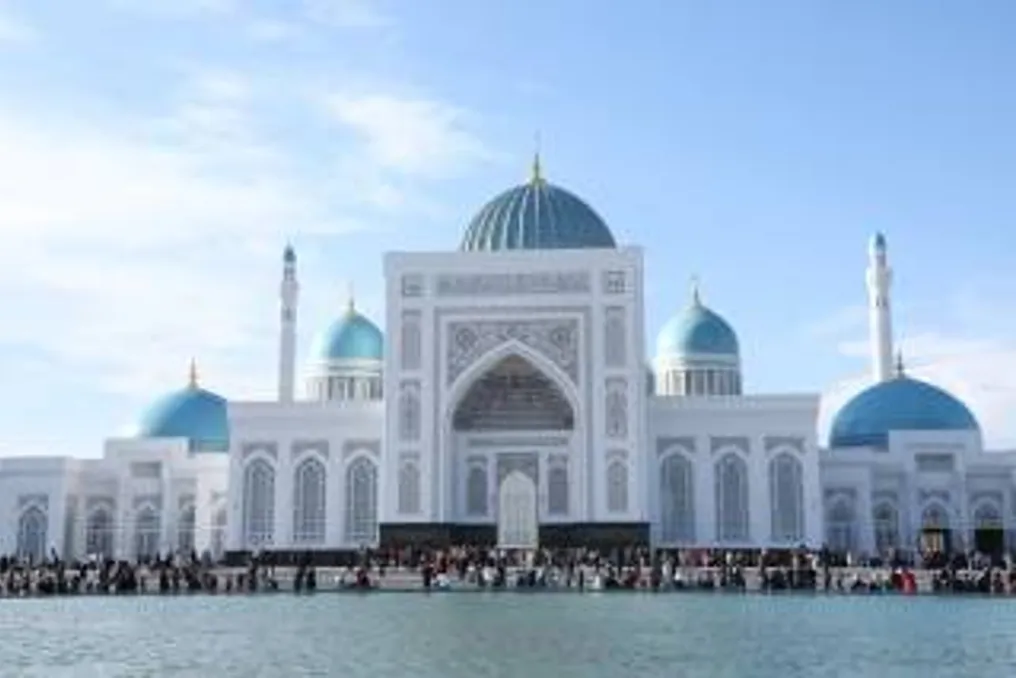
Another megaproject in this direction is the creation of the Center for Islamic Civilization in Uzbekistan. One of the project's goals is to present to the world the knowledge that our ancestors were proud of. A person visiting the Center will see how rich and multifaceted our history is. Furthermore, the religious environment created by the wisdom of our ancestors and freedom of conscience can become a model even for the most developed democratic states. Indeed, this center is not only a reflection of the greatness of our people but also the core of world knowledge.
Uzbekistan is a country that has the full moral right to promote religious tolerance and knowledge to the world. First and foremost, this mission has always been carried out at a high level by our ancestors. Today, this mission continues properly. For example, more than 130 nations and ethnicities, as well as representatives of 16 confessions, live in peace in Uzbekistan based on the principle of tolerance. The ability of different nations and religions to freely profess their beliefs is one of the most important conditions for social stability. As we emphasized above, forming and maintaining such an environment is a very complex and difficult task. In our country, a solid legal framework has been created for this, and the indicators change annually in a positive direction and are growing.
In particular, in 2025, 14 regulatory legal acts concerning the religious and educational sphere were adopted. Special attention was paid to ensuring the right of citizens to freedom of conscience during the development of these documents. Also, one of our greatest achievements is the fundamental reform of the field of religious education, since religious knowledge cannot be obtained without knowledge.
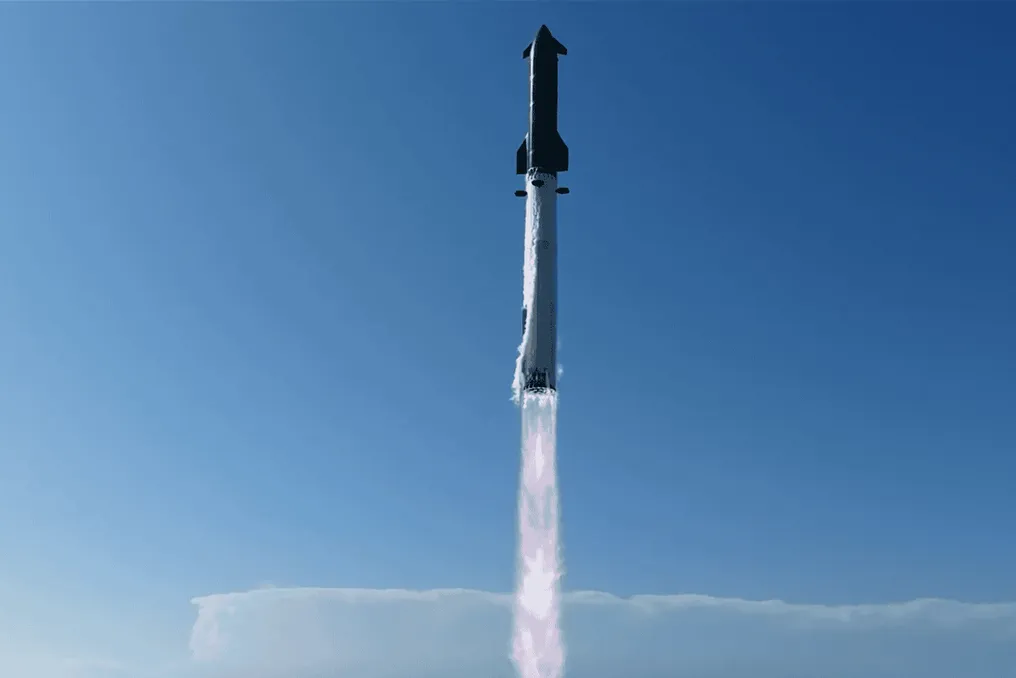
SpaceX is conducting the thirteenth launch of Starship, an event that can be watched live. The broadcast will be hosted by Executive Editor Bruno Capozzi and astronomer Marcelo Zurita, an OD columnist, starting at 7:30 PM Brasília time, immediately following Olhar Digital News with Marisa Silva.
Elon Musk's company allowed a 90-minute window to initiate takeoff, and the total flight is expected to exceed one hour. The main objective is to monitor the system's operation in crucial phases, such as module separation, engine ignition, and vehicle return.
A major point of attention is the performance of the Super Heavy booster. In a mission conducted this May, this stage failed to return properly for a controlled landing, resulting in its fall into the ocean. SpaceX reported that it has implemented hardware and software corrections to address the issues detected in that flight.
In addition to testing the rocket, this operation will serve as a demonstration for new components of the Starlink network. 20 Starlink V3 satellites will be launched, following a suborbital trajectory and being destroyed upon atmospheric reentry. According to the company, the Starlink V3 models are larger and promise to substantially increase the capacity of the satellite internet network.
During the test, these satellites will also attempt to establish communication with the Starlink constellation using high-capacity lasers before reaching the atmosphere. Six of these units will be equipped with cameras to record images of Starship and its heat shield throughout the flight.
The flight history of Starship includes various milestones and challenges. Flight 1, in April 2023, ended with the explosion of Starship while still attached to Super Heavy, due to engine failures that activated the vehicle's self-destruct system.
In Flight 2, in November 2023, the spacecraft successfully separated from Super Heavy for the first time, but the subsequent booster exploded, leading to the loss of Starship before the flight concluded.
Flight 3, in March 2024, lasted approximately 50 minutes and was considered a significant advance, even though the craft was lost before the planned landing.
In June 2024, Starship achieved a controlled landing in the Indian Ocean, while Super Heavy landed in the Gulf of Mexico.
Flight 5, which occurred in October 2024, allowed SpaceX to capture Super Heavy on the launch tower for the first time, and Starship also performed a controlled reentry.
In November 2024, the booster completed a controlled landing, and the spacecraft managed to reignite an engine in space.
Subsequent flights recorded losses: Flight 7, in January 2025, resulted in the loss of Starship after an explosion during the test, and Flight 8, in March 2025, saw the upper stage lose stability about eight minutes after launch and be destroyed.
Flight 9, in May 2025, marked the first reuse of a Super Heavy, although failures prevented some planned experiments from taking place.
Mission Flight 10, in August 2025, achieved important goals, such as tests with satellite simulators, engine reignition in space, and controlled reentry.
Flight 11, in October 2025, successfully concluded the Starship V2 phase, including the controlled landing of Super Heavy, the craft's reentry, and new operational tests.
Finally, Flight 12, in May 2026, was the first test of the Starship V3 version, showing notable progress, such as launching satellite simulators and two modified Starlink satellites. However, the Super Heavy booster failed during the return attempt because the engines did not reignite correctly after separation.
The area known as Hipódromo Condesa emerged in the 1920s as one of the pioneering examples of modern urbanism in Mexico City. This neighborhood was built on the former capital's hippodrome, which gave it a unique urban identity, marked by an organic and curved design, maintaining the memory of the equestrian circuit through the current Amsterdam Avenue.
In the 1930s and 1940s, Hipódromo established itself as a avant-garde residential refuge, adopting Art Deco as the dominant style. Beyond the formal aesthetic, this movement proposed a new way of living, characterized by functional, well-lit apartments intimately connected to urban life.
In this historical and urban setting, the Popocatépetl 35 building is part of the Art Deco fabric that defines Hipódromo Condesa. The renovation of this apartment aims to establish a dialogue with this tradition, focusing not on a literal restoration, but rather on a temporal continuity that preserves the memory of the neighborhood and projects it toward new standards of living.
Originally, the apartment presented a state of deep decharacterization, due to the addition of carpets, drywall partitions, and the loss of its original finishes and arches.
Plaza Popocatépetl serves as the immediate landscape and urban reference for the project, with its roundabout being a social and spatial landmark of the surroundings. The central vaulted structure, with its clear geometry and civic function, inspires the edge vault of the intervention. This creates a sense of refuge and spatial continuity, functioning as a connection point for daily communal spaces, such as the living room, kitchen, powder room, and access.
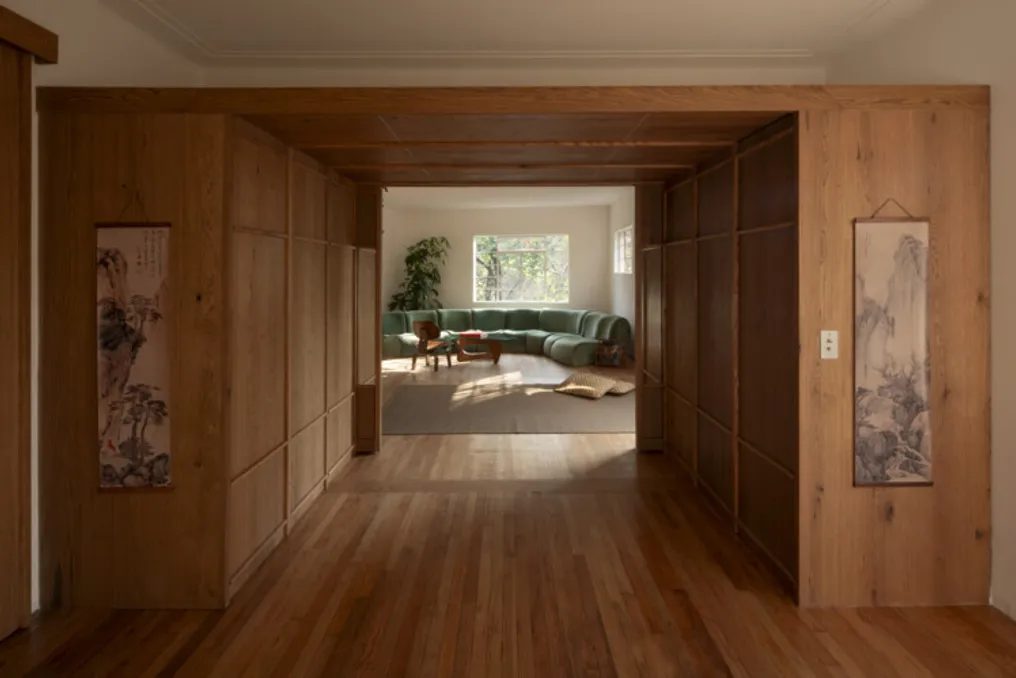
The curved path, echoing the old hippodrome, gradually guides the resident to the center of the vault, which becomes the visual and spatial focus of the project. The master bedroom connects to the living room through a closet positioned where there was previously a dividing wall. This large piece of furniture is strategically open, allowing the bedroom to integrate with the living room space and extend its views to the plaza.
The carpentry used in the kitchen, closet, and bathrooms has a unified language, as do the curved doors. Combined with white ceramic tiles, brushed steel elements, and locally molded granilite in a curved shape in the central corridor, the project uses a limited selection of noble materials. The goal is to promote coziness and maximize the entry of natural light, which now flows continuously through the integrated environments.
The intervention revitalizes the apartment by directing visual perspectives, hierarchizing the communal spaces, and using geometries that converse with the curvature and concentric logic of both the plaza and the old hippodrome. Plaza Popocatépetl transcends the role of mere background, integrating itself as a perceptual extension of the interior, strengthening the link between architecture, urban memory, and daily life.