In India, there is a problem of dependence on imported equipment, whether it is machines in factories, automation in hospitals or warehouses. Such equipment is often expensive to purchase, slow to maintain, and inaccessible to most enterprises.
In India, there is a problem of dependence on imported equipment, whether it is machines in factories, automation in hospitals or warehouses. Such equipment is often expensive to purchase, slow to maintain, and inaccessible to most enterprises.
iHUB Robotics, founded in Ernakulam, Kochi, in 2022, aims to bridge this gap by manufacturing humanoid robots in India from scratch: including the chassis, embedded systems, and artificial intelligence that controls them.
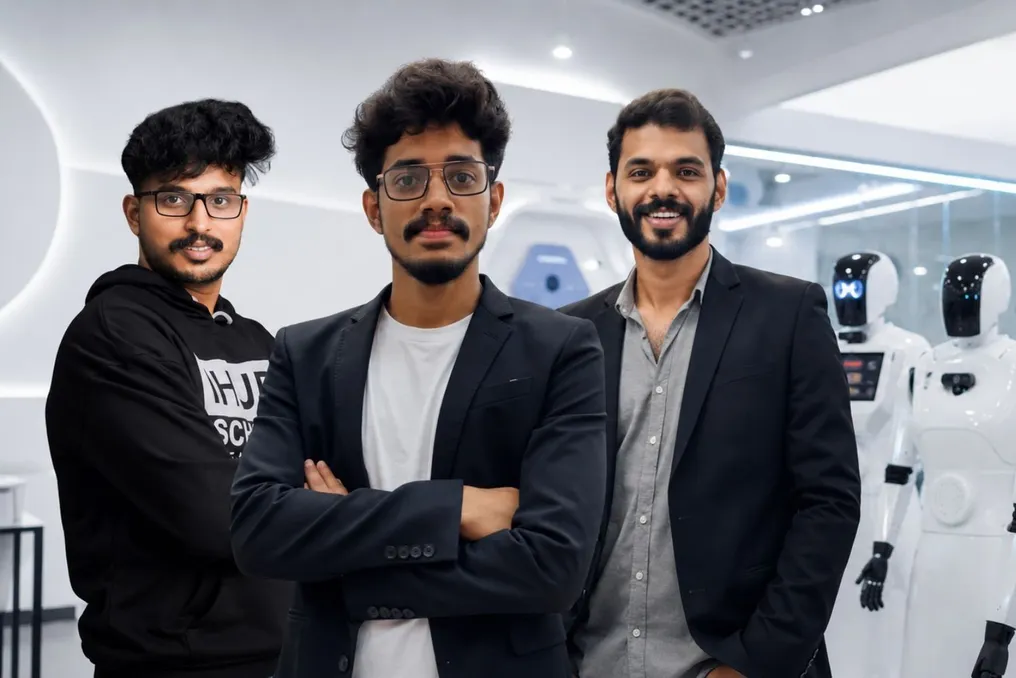
The company's journey took seven years. Three friends from Kerala—Athil Krishna, Akhil K Haridasan, and Sarat S—began researching humanoid robots in 2018, studying mechatronics in Coimbatore when the Indian ecosystem could barely support such work.
Despite this, they presented their ideas to the government, submitting defense proposals in 2019. In 2020, both the Border Security Force (BSF) and the PMO responded, with the BSF requesting a demonstration. However, the COVID-19 pandemic struck before they could create a working prototype, and the demonstration never took place. In 2022, they resumed work and officially launched iHUB, which is an abbreviation for Innovation Hub for Robotics, to turn research into a finished product.
The first product appeared in 2024—Tara Gen-1. This semi-humanoid service robot can speak over 100 languages, recognize faces and gestures, hold meaningful dialogues, and navigate a room autonomously using SLAM (Simultaneous Localisation and Mapping) technology.
It is released in various modifications: Tara Greet, Tara Learn, and Tara Care, which are adapted for the needs of hospitality, healthcare, education, banking, and public services. About 35 such units have already been deployed in three countries. This was followed by a heavier machine—Daksha, a general-purpose industrial humanoid capable of lifting loads up to 25 kg and operating at heights of eight to ten feet.
The foundation for both robots is what iHUB calls physical AI. Instead of the 'text-in to text-out' logic inherent in large language models, their robots operate on Vision-Language-Action models, which link what the machine sees with the language it understands and the movement it can perform.
The company creates its entire technology stack itself: from manufacturing and embedded systems to fine-tuning models and design, using an object in Kochi, Kalamassery. A corridor spanning about 24,000 square feet allows the robots to master tasks through repetition.
This vertical integration is a key advantage, as is the pricing policy, which allows systems to be used starting from approximately $10,000, significantly lower than the cost of imported humanoids. In January 2025, iHUB became the first Indian company selected for NVIDIA's Humanoid Robotics Program.
iHUB primarily sells its products to enterprises in sectors such as hospitality, healthcare, education, banking, manufacturing, and logistics, and also has a separate line for defense and security. The company has signed memorandums of understanding with EY Global and SAP Germany, as well as several Indian IT and industrial firms.
Tara Gen-1 has been exported to the UAE and Saudi Arabia. Currently, the company is financed by revenues from early projects and prototypes, rather than large external investments. In March 2025, it raised 4.3 crore rupees in a pre-seed funding round from American angel investors. These funds will go towards building the largest humanoid manufacturing plant in India, according to the company.
Future plans include scaling up production, securing research grants, and establishing an R&D center for industrial humanoids in Bengaluru, with plans to hire over 150 employees within two years. In addition to hardware, the founders intend to establish the iHub Training School to prepare students in robotics and AI.
The broader goal, although difficult to achieve, remains unchanged: India must produce humanoids independently, rather than importing them.
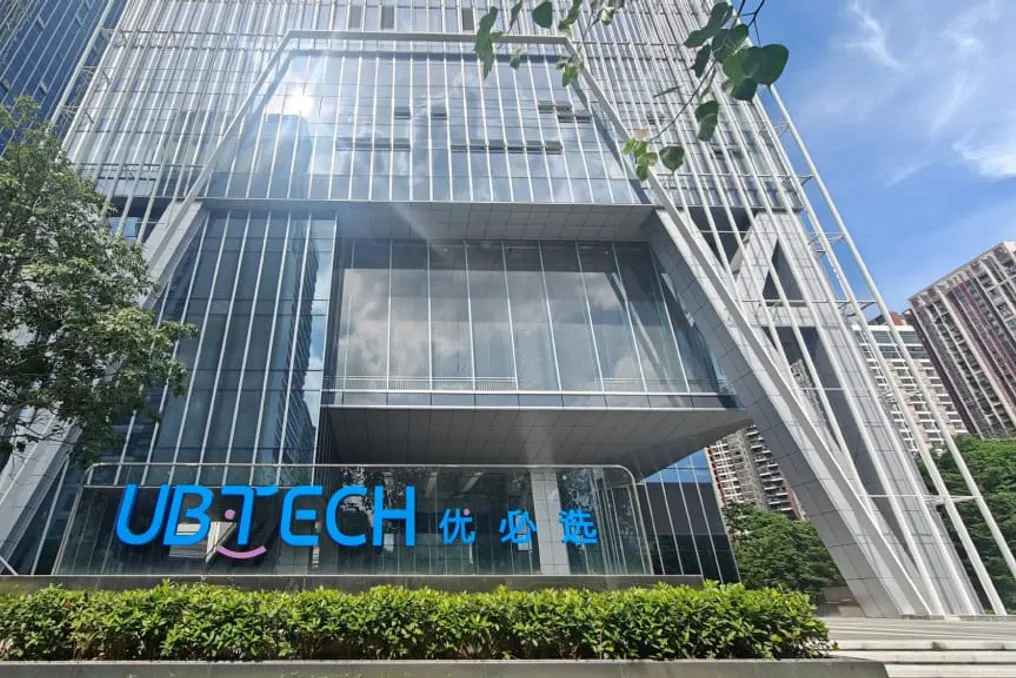
UBTech has launched the U1, an android conceived to be an emotional companion, distinguished by its hyper-realism. The presentation event took place in Shenzhen, characterized by a futuristic aesthetic and featuring the Norwegian DJ Alan Walker.
According to the South China Morning Post, the intention behind this robot transcends mere technology, aiming to integrate into daily life as a constant presence. The U1 was developed to converse, react to its surroundings, and adapt its behavior personally to user interaction.
The company claims that the robot has the ability to detect signs of stress or fatigue, responding with supportive phrases or milder suggestions during use. Among its listed capabilities are: synchronized movement of head, eyes, and mouth; identification of mood changes and fatigue; learning preferences over time; reminders for appointments and medication times; and suggesting basic routine care.
It is important to note, however, that UBTech emphasizes that the U1 does not perform household chores such as cooking or cleaning.
UBTech describes the U1 as the 'first full-size humanoid robot with ultra-realistic appearance.' The model is available for customization, offered in male and female versions. Despite the technological advancement, the product generates debate, raising concerns related to emotional dependence and privacy, especially due to local data storage.
In response to these issues, UBTech assures that all information is encrypted and is not used for training artificial intelligence systems.
In China, the presence of robots is already notable in industrial environments and public spaces, enjoying greater acceptance compared to other markets. The country is a global leader in humanoid development and concentrates a significant portion of worldwide production of these systems. In recent years, there has been a rapid increase in the number of models and companies, supporting projections of strong growth until 2030.
With this launch, UBTech seeks to expand the application of this technology to the domestic environment, aiming to test a new format of coexistence between humans and machines, going beyond the industrial context.