Astronomers have conducted a new analysis of the exoplanet GJ 3378b, suggesting that it may possess characteristics more similar to Earth than previously believed. This celestial body is located approximately 25 light-years from our Solar System, orbiting a red dwarf star in the constellation of the Giraffe.
Scientific Review and Updated Data
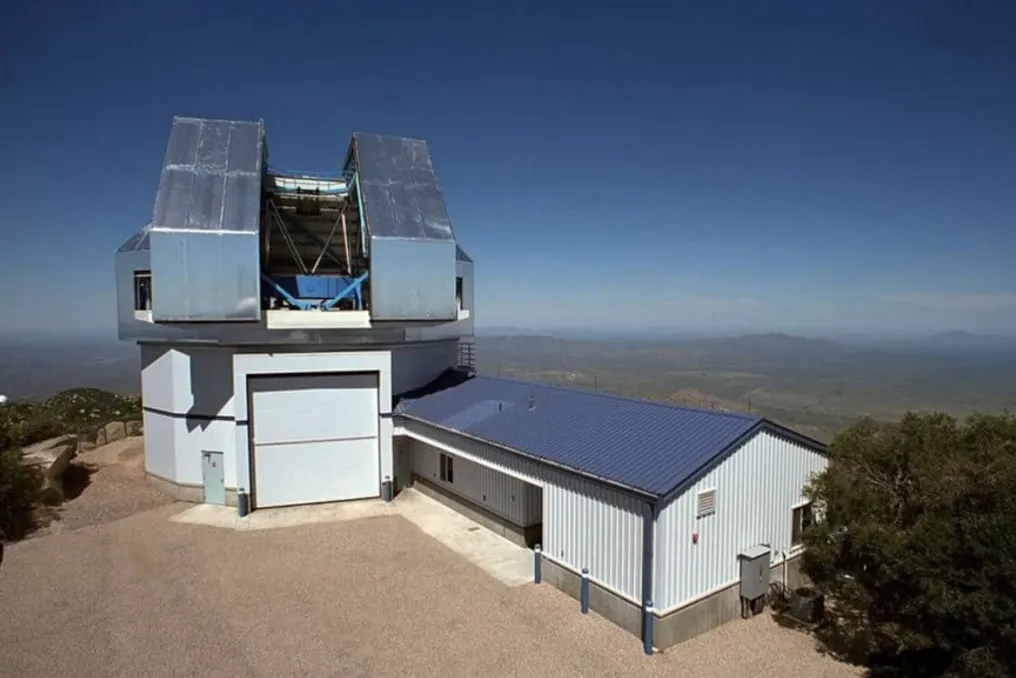
The initial identification of the planet occurred in 2024, carried out by French researchers using measurements captured by the Canada-France-Hawaii Telescope, installed at the Mauna Kea observatory. A subsequent update, conducted by scientists from the United States, refined the data, presenting significant changes regarding the planet's mass and orbit.
Although the planet is located in a region considered favorable for the existence of liquid water, specialists cannot yet confirm whether it has an atmosphere or if the conditions are suitable to sustain life. This is due to the intense activity of the host star, which may have caused the loss of gaseous layers over time.
Changes in Planetary Characteristics
The scientific reevaluation resulted in a reduction of the planet's mass estimate, dropping from 5.26 to about 2.3 times the mass of Earth. This change led to a modification of the initial classification, which pointed to a possible mini-Neptune, to a scenario more aligned with a rocky super-Earth.
Additionally, the orbital period was corrected from 25 to 21 days, implying closer proximity to its star. This adjustment strengthens the theory that the planet receives about 90% of the solar radiation that Earth receives, placing it within the estimated habitable zone. The detection method used did not rely on the planet passing in front of the star, but rather on the gravitational effect that induces a slight oscillatory movement in the star, detected through the spectral shift of the emitted light.
Challenges in Assessing Habitability
A crucial limitation is that the planet does not transit in front of its star, which prevents the use of telescope techniques like the James Webb to analyze its atmospheric composition. Consequently, it is impossible to identify any chemical signatures that could indicate life-favorable conditions.
Scientists warn that red dwarf stars have the capacity to emit very strong radiation, capable of stripping planetary atmospheres. For this reason, there is still no definitive consensus on the presence of gases around GJ 3378b. The scientific community's expectation is now focused on future missions, such as the Habitable Worlds Observatory, planned for the 2040s, which should help determine if the planet retains an atmosphere and if there are signs of a life-friendly environment.