A concert will take place at the City Hall featuring over one hundred young musicians from the Cape Town Philharmonic Youth Orchestra (CPYO) and the University of Cape Town Symphony Orchestra (UCTSO). The event is scheduled for October 13th.
A concert will take place at the City Hall featuring over one hundred young musicians from the Cape Town Philharmonic Youth Orchestra (CPYO) and the University of Cape Town Symphony Orchestra (UCTSO). The event is scheduled for October 13th.
The concert, conducted by Brandon Phillips, is dedicated to the development of young talent and the collaboration between the two orchestras. The program includes the performance of Rachmaninoff's Piano Concerto No. 2 with soloist Isaac van der Merwe, as well as Dvorak's Symphony No. 9 'New World'. Additionally, the audience will hear the world premiere of 'Chaos in Disguise, Part 1' by South African composer Kyle Benade.
Brandon Phillips, who serves as the permanent conductor of the University of Cape Town Symphony Orchestra, a staff conductor of the Cape Town Philharmonic, and a former musical director of CPYO, noted that this performance highlights the long-standing partnership between the ensembles. He stated that this collaboration reflects a shared commitment to developing the next generation of orchestral musicians, providing young performers with an opportunity to hone their skills and gain valuable experience.
Phillips expressed satisfaction at the opportunity to welcome Van der Merwe back as a soloist, noting that Rachmaninoff's Second Piano Concerto remains one of the most captivating and rewarding pieces in the piano repertoire for both audiences and performers. The award-winning orchestral work by Benade will also be presented; it received the University of Cape Town Ian Royce Prize for Orchestral Composition. Phillips described this composition as a 'bold and inventive score' and emphasized that such performances help support emerging South African composers.
The concert will begin at 7:30 PM. Tickets can be purchased through Webtickets or Artscape Dial-A-Seat at 021 421 7695.
Soft power has recently been recognized as one of the key tools for the international positioning of states, allowing them to shape their image abroad through culture, education, science, tourism, sports, and media. For Uzbekistan, which possesses a vast historical heritage and a growing role on the world stage, developing this area is of paramount importance.
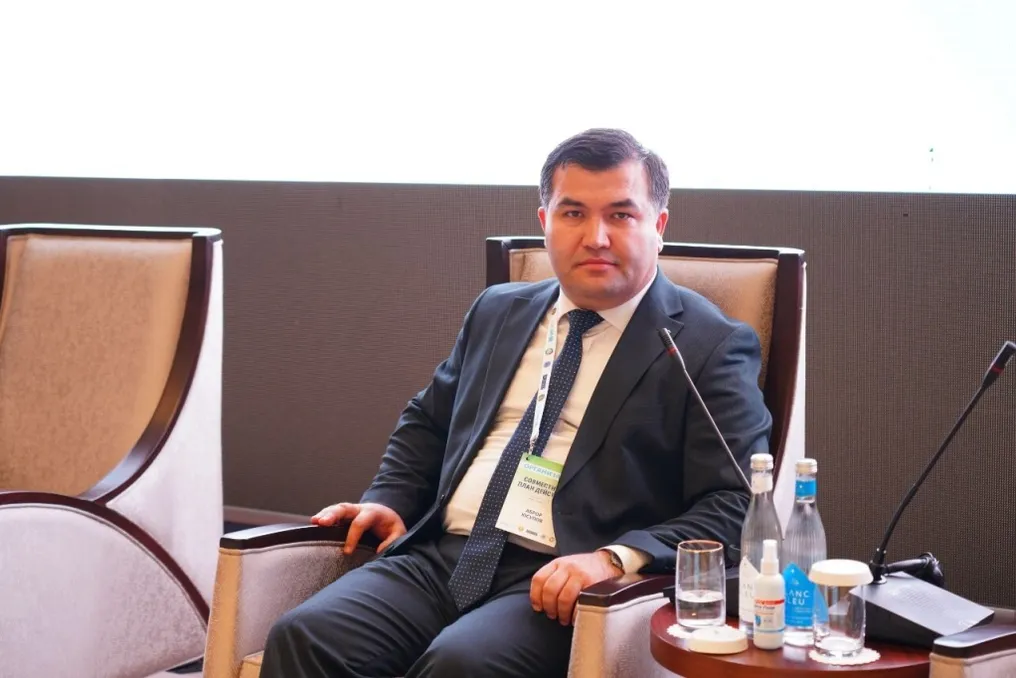
Dr. Abror Yusupov, a Doctor of Philosophy in Political Science, discussed in an interview with Podrobno.uz how the concept of soft power is changing amid digitalization and geopolitical changes. He noted that authoritative studies, such as the annual Global Soft Power Index 2026 report by Brand Finance, help assess not only a country's fame but also its reputation, as well as the influence of culture, education, and science on shaping the national image.
According to data from a study published in January 2026, Uzbekistan improved its ranking by seven places, reaching 92nd globally, which is one of the most noticeable positive trends in Central Asia. This reflects the growing interest of the global community in the country's reforms, cultural heritage, and foreign policy. However, Yusupov emphasized that Uzbekistan's soft power potential is not yet fully utilized.
The expert pointed out that many humanitarian, educational, and informational initiatives are developing in isolation, without a single long-term promotion strategy. Consequently, individual successes of Uzbekistan do not always receive due international coverage and support. Therefore, forming a comprehensive and systemic soft power policy is critically important for strengthening the state's position in the context of global competition.
Global experience demonstrates that there is no universal model of soft power; each state creates its own strategy based on its unique historical features, economic advantages, and goals. Abror Yusupov drew attention to examples of Japan, China, and Germany, which have managed to transform national strengths into effective tools of influence.
After World War II, Japan focused on education, technology, and culture, using the popularization of language, grant programs, and the promotion of anime, cinema, and cuisine. Beijing, meanwhile, actively promotes its image through infrastructure projects, digital technologies, automotive manufacturing, and the operation of over 260 Confucius Institutes in 75 countries. Germany built its model on science, engineering education, and technological reputation, supporting the Goethe-Institut and promoting German quality.
Yusupov concluded that successful soft power does not happen by chance but is always based on a long-term state strategy, investment in human capital, and systematic work to form an attractive image.
The expert believes that international experience can be extremely useful for Uzbekistan, given its rich historical and cultural heritage, civilizational experience, development of tourism, and achievements in science and sports. The main question now is how to unite existing resources into a single international positioning strategy.
Although Uzbekistan was previously often perceived as an unknown region, the situation is changing. The country is increasing its international presence through the development of tourism, art, and creative industries. Traditional elements, such as Uzbek cuisine, music, and historic cities, attract millions of tourists. Simultaneously, the creative sector, including film, design, and digital content, is developing, serving as an effective channel for promoting culture among youth.
The growing international interest is confirmed by the expansion of academic presence of the Uzbek language: starting from the 2024-2025 academic year, courses in Uzbek and Old Uzbek languages have appeared at Oxford University. By the end of 2025, Uzbekistan welcomed 11.7 million foreign tourists, and the ancient city of Khiva was included in the list of top travel destinations for 2026 by National Geographic.
The opening of the Center for Islamic Civilization is seen as an opportunity to present to the world the contribution of Uzbekistan's ancestors to world civilization in mathematics, astronomy, and medicine, positioning the country as a center of enlightenment. Furthermore, young citizens of Uzbekistan demonstrate high results on the international educational stage, receiving grants to prestigious universities such as Stanford University. Sports also contributes to forming a positive image, as chess players and football players act as 'people's diplomats.'
The Favelas Museum, located in the Historic Center of São Paulo, will present a diverse program throughout July. Events include the exhibition titled Com Amor, Alcione, dedicated to the 50th anniversary of the Maranhão singer's career, as well as the fourth edition of Arraiá das Quebradas, holiday activities for children, and celebrations related to the International Day of Black Women in Latin America and the Caribbean.
This temporary show was conceived and produced by the Vale Maranhão Cultural Center. It displays over 650 items from Alcione's private collection, ranging from rare photographs and videos to costumes and objects illustrating her artistic journey. After passing through São Luís (MA), the exhibition arrives in São Paulo with an unprecedented section exploring Alcione's connection to the city of São Paulo.
Additionally, the new part of the exhibition discusses the impact of migration on the development of large metropolises, also highlighting the contributions of Afro-Indigenous, Black, and Northeastern cultures to the formation of Brazilian identity.
During the school recess period, the Favelas Museum will host the special season of the Di Quebradinha project, executed in collaboration with the AfroBrinkar Collective. On July 18, 19, 21, 22, and 23, from 10 am to 4 pm, this project will offer a free program consisting of workshops, group games, and playful activities, inspired by the cultural manifestations of the peripheries, aiming to value Afro culture for children and their families.
The children's schedule is also integrated with Arraiá das Quebradas, which takes place on July 18. On the 19th, the Museum's hall will host the performance Karingana – Playful Performance for Childhoods, a work created by Gustav Courbet in partnership with Thiago Franco.
On July 18, the Páteo do Colégio will be the venue for the 4th edition of Arraiá das Quebradas, running from 12 pm to 6 pm. The event will bring together musical performances, workshops, traditional games, and a fair of local entrepreneurs, offering typical gastronomy and original products. Participants include DJs Jade and Jojo Machado, the Forró dus Pretes collective, and musicians Eliane Melo and Mazinho Teclas. The program also includes the Elements of Play workshop, taught by Bel Carvalho, and an open public forró workshop.
On July 25, the commemorative date of the International Day of Black Women in Latin America and the Caribbean, the Favelas Museum will promote the launch of the Climate & Care report and a debate on climate justice. This material is a development of an exhibition shown in 2024 at the Museum of Tomorrow in Rio de Janeiro, and collects narratives from women actively defending their territories.
On the same date, from 3 pm to 5 pm, the 12th edition of Baile Tá ON!, dedicated to Alcione, will take place. This gathering, led by Bruna das Virgens and featuring singer Ana Be, celebrates the artist's 50 years of career and her influence on various generations of Black and peripheral artists.
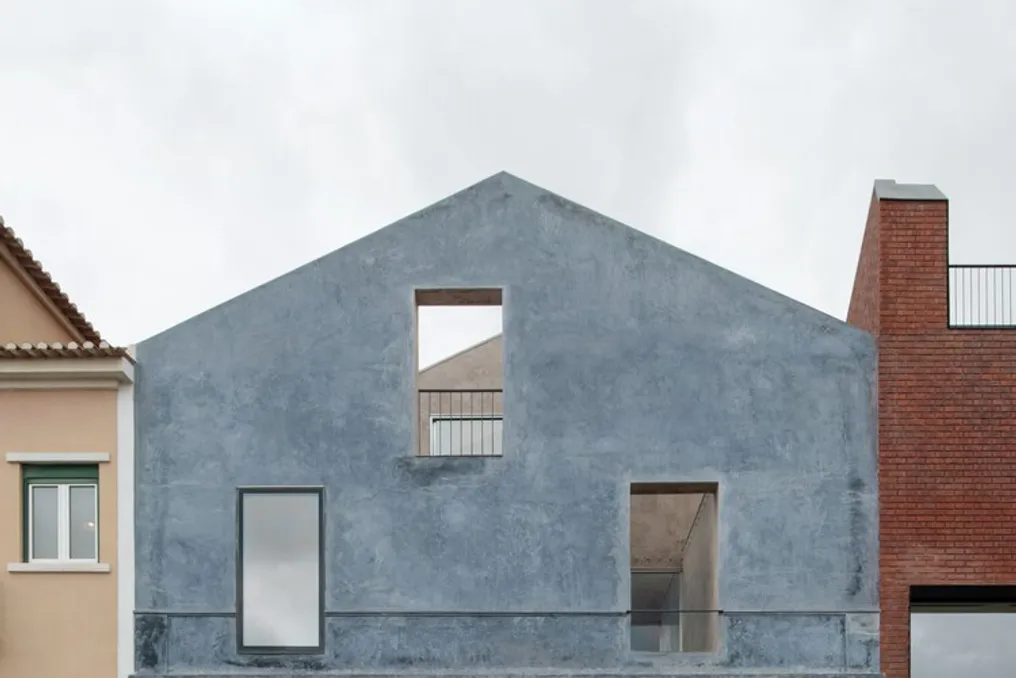
The Casa Azul Project / extrastudio is part of a series of three residences called 'poor houses'. These homes were developed during a period marked by uncertainty but maintained their original scale.
The conception of these houses focused on reduction to the essential, resulting in a character that appears unexpected, raw, and intense.