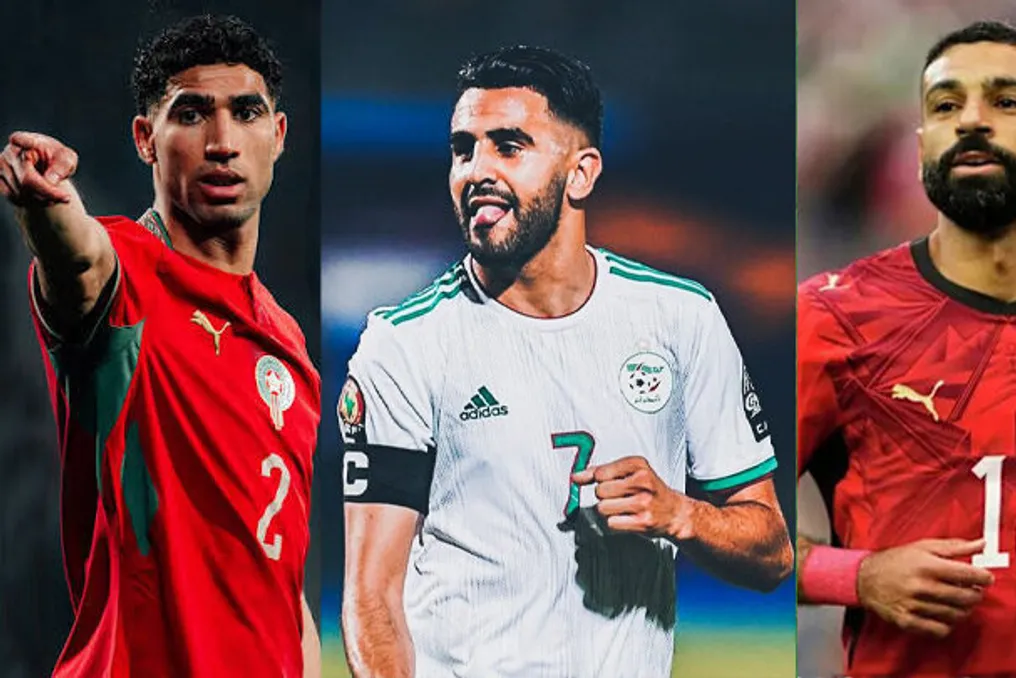
Arab football has reached a new milestone at the 2026 FIFA World Cup, with a record number of eight teams qualifying for the expanded 48-team tournament. Although several teams failed to advance past the group stage, Morocco, Egypt, and Algeria once again demonstrated the ability of Arab nations to compete with the world's best teams.
Record participation of Arab nations
The participants included teams such as Algeria, Egypt, Iraq, Jordan, Morocco, Qatar, Saudi Arabia, and Tunisia. This number exceeded the previous record of four Arab representatives at the 2018 and 2022 World Cups, indicating continuous progress in Arab football over the last decade.
Best performances of Arab teams
Among the eight qualified teams, Morocco, Egypt, and Algeria showed the strongest results. Morocco confirmed that their impressive run to the semi-finals in Qatar four years ago was not an isolated incident. The 'Atlas Lions' once again impressed with their organization, discipline, and quality, proving they are among the leading global teams. Considering the country's preparation for co-hosting the 2030 World Cup, the future of Moroccan football looks promising.
Egypt also made a positive impression. The 'Pharaohs' came close to the quarter-finals, and it seems unfair to them that they could not advance further. A slight lack of composure at critical moments might have changed their fate, but their campaign highlighted Egypt's ability to perform at the highest level.
Results of Algeria and Saudi Arabia
Algeria also had reasons to be satisfied after reaching the Round of 32. After a difficult opening loss to defending champions Argentina, the 'Desert Foxes' responded well by securing a place in the playoffs, although their journey ended against Switzerland. This marked Algeria's best performance in the World Cup since 2014.
Saudi Arabia, however, could not replicate the excitement of the 2022 World Cup. Their famous victory over future champions Argentina in Qatar remains one of the greatest surprises in the tournament's history. This time, the 'Green Eagles' managed draws with Uruguay and Cabo Verde but suffered a heavy defeat to Spain, failing to reach the knockout stages.
Unsuccessful campaigns and achievements
Tunisia had an unforgettable tournament. The 'Guardians of Carthage' lost all three group matches, failing to score any points and conceding 12 goals. For one of Africa's traditional football powers, this was a disappointing performance that will almost certainly trigger a period of reflection.
For Iraq, Qatar, and Jordan, simply qualifying for the World Cup was an achievement in itself. Iraq returned to the world stage for the first time since 1986 but faced an overly difficult task against France, Norway, and Senegal. Although the 'Lions of Mesopotamia' lost all three games, their qualification was an important step forward for Iraqi football.
Qatar failed to build on its experience hosting the 2022 World Cup. A draw with Switzerland raised hopes for a successful campaign, but defeats to Bosnia and Herzegovina and Canada led to an early end to their tournament.
Jordan, making its debut at the World Cup, fought bravely in every match despite losses to Austria, Algeria, and Argentina. Although the results were not favorable, the experience gained on the biggest football stage could prove invaluable for the country's future development.
Prospects for Arab football
The results were mixed, but Arab football has every reason for optimism. The record number of participants, along with the impressive performances of Morocco, Egypt, and Algeria, indicates that the gap between Arab teams and traditional powerhouses continues to narrow. If these nations continue to invest in youth development and coaching staff, even stronger results can be expected in future World Cups.