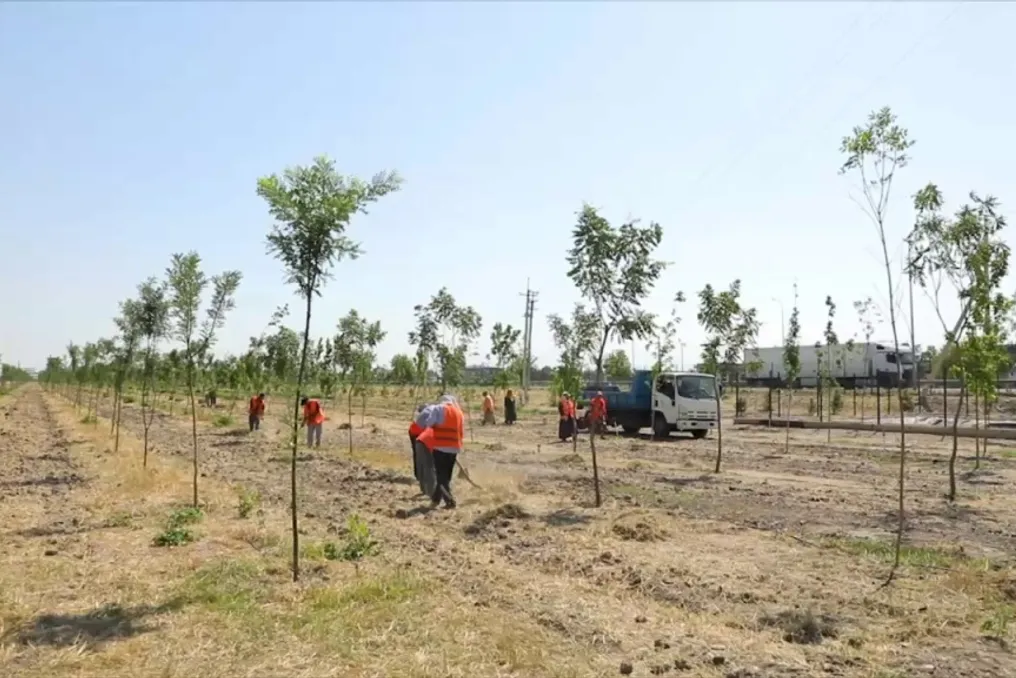
Uzbekistan authorities have confirmed their intention to implement a large-scale project to form a 'green belt' around the capital. According to the plan, no less than 50 million drought and heat-resistant trees and shrubs will be planted in this area by 2045.
Goals and Scale of the Project
This project was initiated by presidential decree and is overseen by the National Committee on Ecology and Climate Change. The main objectives of the initiative are to improve the ecological situation in Tashkent, reduce dust, and increase the area of green zones around the city. It is planned that the protective forest plantations will cover an area of at least 58 thousand hectares, using plant species capable of effectively retaining dust and adapted to the local climate. The survival rate of the new seedlings is expected to reach 85%.
Current Activities and Zone Expansion
Greening efforts are already underway: over 1.35 million trees have been planted in the capital and neighboring districts over the past years. During 2025–2026 alone, new plantings were carried out in Bektemirsky, Yangihaotsky, Tashkent, and Kibray districts. In the future, the project will be expanded, with new green areas appearing in Yangihaotsky, Sergeli district, and Bektemirsky districts. Additionally, a green area of about 100 hectares is planned along the Chirchik River.
Additional Greening Measures
In addition to creating the green belt, over 385 hectares have been allocated in Tashkent and the region for botanical and dendrological gardens, as well as nearly 140 hectares for public parks. Authorities emphasize that the 'green belt' concept goes beyond simple planting; it includes implementing irrigation systems, ensuring continuous care for vegetation, monitoring air quality, and protecting these areas from construction development.
Regulation and Control
Specialists will assess trees growing along roads: if they meet established standards and do not impede traffic, they will be preserved and integrated into the general green infrastructure. Responsibility for preventing illegal logging or damage to trees rests with the ecopolice, the Ministry of Internal Affairs, and the National Guard. Previously, Uzbekistan updated the regulations for the use of trees and shrubs not included in the state forest fund. Now, the felling of large trees within the framework of state or major investment projects is possible only by presidential decision. The new document also establishes rules for replanting, introduces paid permits, and strengthens requirements for the care of green spaces.