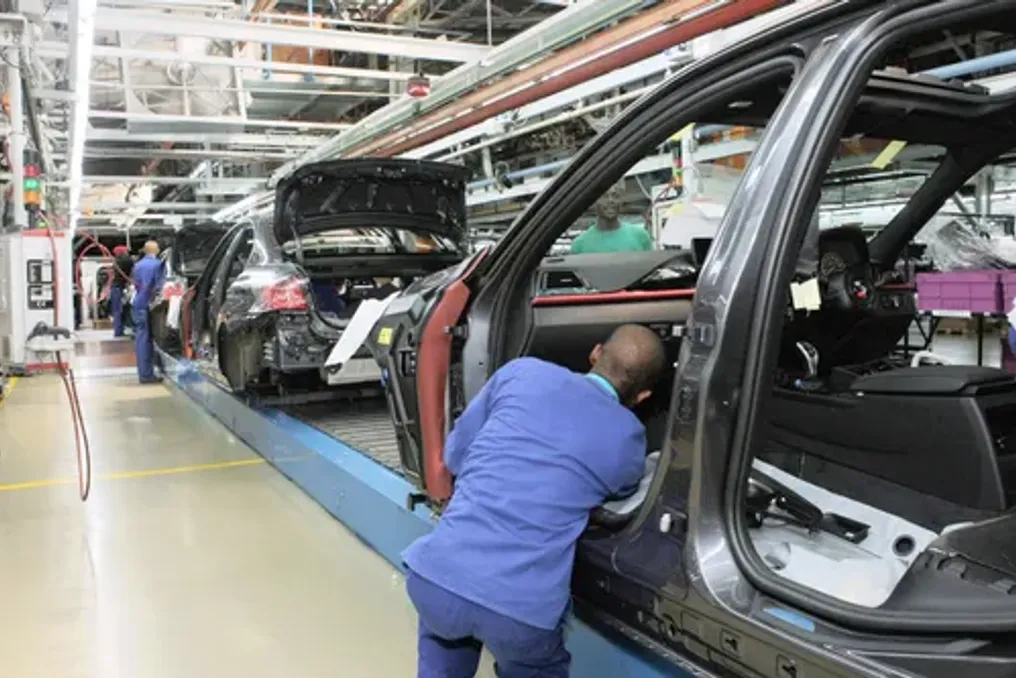
The National Association of Automotive Components and Related Industries (NAACAM) insists that the government must compel international automakers to increase the share of local content in vehicles assembled in South Africa to 60%.
Masterplan Challenges
The South African Automotive Masterplan (SAAM) 2035 is currently under review because, at current rates, it is highly unlikely to achieve its goal of increasing local production content to 60%, which was intended to create 224,000 jobs.
NAACAM's Position
NAACAM CEO, Renay Mutilial, told a representative from the MISA union, Fakimile Khlubi-Majole, that localization is the most effective lever for stimulating the domestic economy, creating employment, and developing local skills, as component manufacturing provides the highest employment in the automotive value chain.
Mutilial cited Brazil, Thailand, and Turkey as examples where governments impose mandatory conditions on Original Equipment Manufacturers (OEMs). In these regions, compliance with state-set localization requirements is not an option but a condition for selling vehicles.
He emphasized: 'We should not apologize for this. Localization effectively guarantees that you receive significant added value from OEMs. The global standard for localization is 60%. In South Africa, we are stuck at 40%, and we deserve more. OEMs in South Africa receive a lot of support from the state and the working class. We feel we must be decisive. 60% is the target in the Masterplan.'
According to Mutilial, this target exists only on paper and lacks the political will to ensure its achievement.
Union Support and Expert Opinion
MISA, the main union in the retail automotive industry representing 79,000 members, supports NAACAM's view. The union noted that creating sustainable decent jobs is central to the Masterplan.
MISA's Chief Operating Officer, Martle Kater, stated in a declaration that 'it is not unreasonable to demand that OEMs who manufacture locally and receive substantial government incentives commit to creating real manufacturing jobs.'
Marin Firi, Director of Oxyon People Solutions, noted earlier this year that Chinese automotive brands lead globally in electric vehicles (EVs) and intend to remain in South Africa. However, in her opinion, the opportunity lies in encouraging these brands to utilize existing enterprises, skilled local workers, and local suppliers.
This would allow a shift from importing cars to local production, aligning with green industry growth goals. Firi added that South Africa's location provides access to African Continental Free Trade Area markets duty-free, and trade agreements open doors to Europe and beyond. With a reliable supply chain, the country could become an EV production base if policy supports it.
Nevertheless, Firi pointed out that production costs in South Africa are higher than in China. While recent tax incentives for hydrogen fuel and EV vehicle investments are a good start, more is needed. 'We need discounts for companies that hire locals and comply with content rules. Furthermore, there needs to be funding for factory modernization and assisting suppliers in transitioning to EV parts. Without a cost reduction plan, investments will go to other countries,' Firi stated in her declaration.