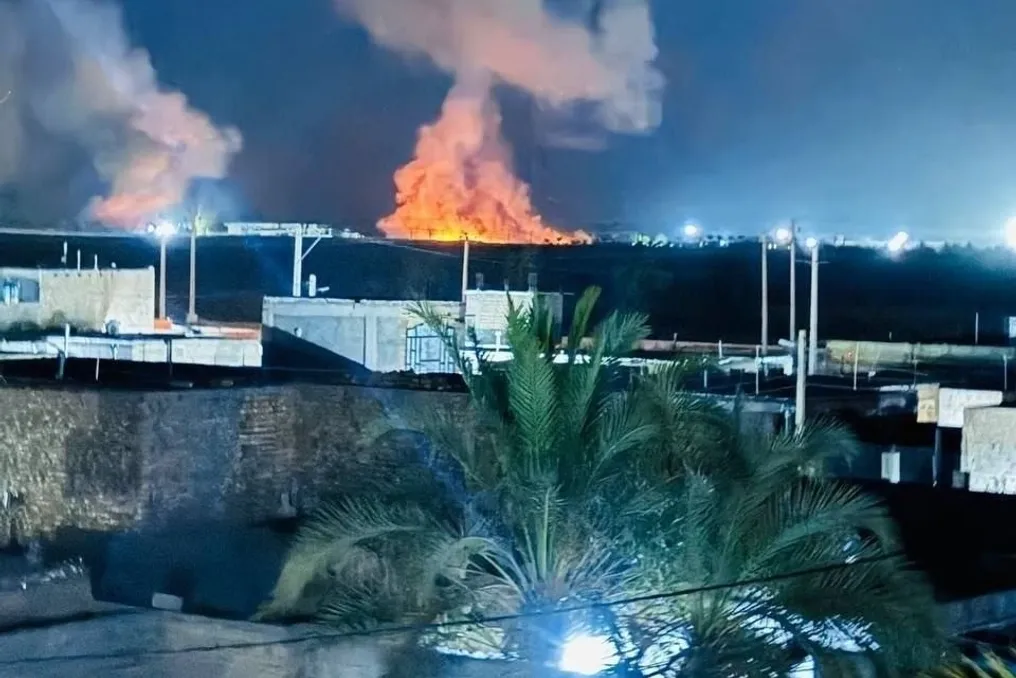
The growing military tension between the United States of America and Iran has begun to affect global energy supply. After the American army conducted attacks on several Iranian facilities for the second consecutive day, ship traffic in the Strait of Hormuz has practically stopped. Since oil and natural gas shipments pass through this sea route for almost half the world, the increased tension in this region has caused serious concern worldwide.
State of Maritime Traffic
Maritime traffic passing through Hormuz is currently slowed. Most ships are using the northern sea route, which was approved by Iran. Meanwhile, movement along the southern corridor, supported by Oman and the US, has become extremely rare. According to reports, only one supertanker with US approval and one container ship of Iranian origin passed through the strait in recent hours.
Shipping Dynamics
According to the analytical firm Kpler, before a temporary agreement was reached between the US and Iran, an average of 34 commercial vessels passed through Hormuz daily over three weeks. By June 24, this number reached 59. However, after the recent military clash, this figure sharply decreased, with fewer than 20 ships passing through the route on most days during the fighting.
Strategic Importance for Iran
According to military and defense expert Alexander Alfiraj Shirsa, quoted in an Al Jazeera report, Iran is prepared to risk a major conflict with the US to maintain control over the Strait of Hormuz. He considers this waterway its main strategic asset and intends to use it as a lever of pressure in any future negotiations.
Pressure on the International Community
At the same time, pressure is being exerted on the US and GCC countries to prevent the Strait of Hormuz from turning into a fully Iran-controlled maritime zone. Experts believe that although the temporary agreement between the US and Iran has not been completely annulled, it has reached a very weak position in the current situation.
Accusations and Retaliatory Actions
Meanwhile, Iran has accused the US of violating ceasefire agreements and the UN Charter. The Iranian Foreign Ministry stated that US attacks on various facilities, including two railway bridges, are a 'false pretext' for attacks on ships in Hormuz. Iran claims that at least 14 people were killed and many others were injured as a result of the American attacks.
Strikes on Regional Targets
Furthermore, Iran announced missile and drone attacks on US military bases in Qatar, Kuwait, and Bahrain. Explosions have been reported in several areas around Hormuz, including the islands of Bushehr, Chabahar, Bandar Abbas, Sirik, Jask, and Abu Musa. If tensions between the two countries do not decrease soon, it could have a long-term impact on the world's most important oil supply route, directly affecting crude oil prices, gas supplies, shipping costs, and the global economy.