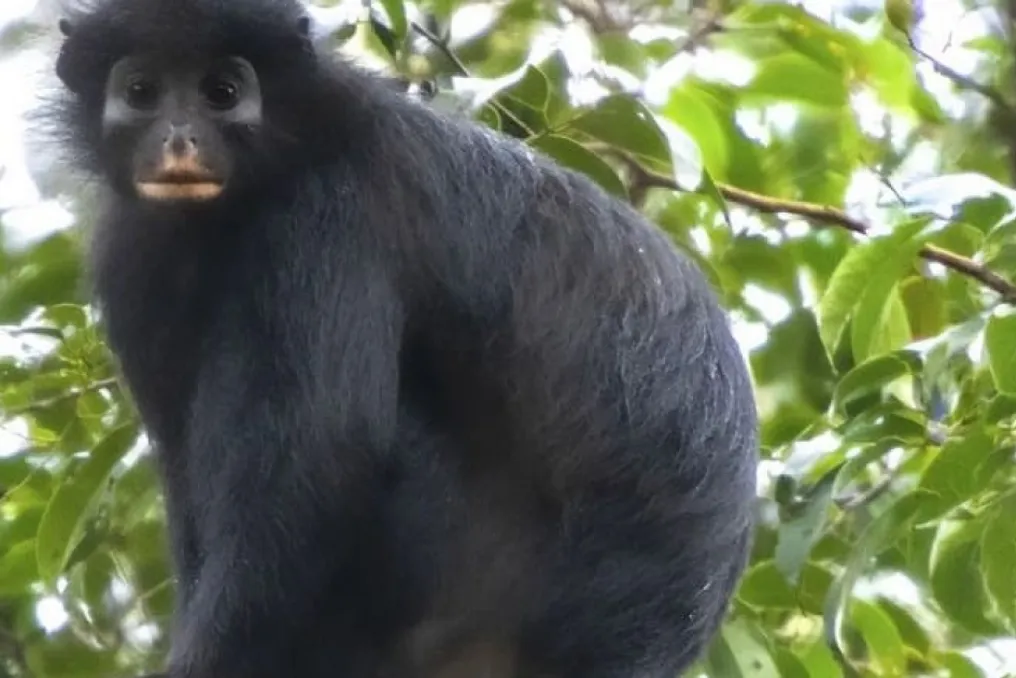
Zoologists have discovered and described a new species of monkey belonging to the genus Colobus, which inhabits the jungles of eastern Democratic Republic of Congo. This species has been named likveli. Its distinction from other colobuses lies in its more compact size, the presence of orange lips, and a white patch around the anus.
Genetic Origin and Threats
Genetic studies have established that likvelis belong to an evolutionary branch that separated approximately four to five million years ago. Unfortunately, due to their limited range, as well as deforestation and hunting, this new species is under threat of extinction. The results of this scientific investigation were published in PLoS One.
History of New Primate Discoveries
Although over 500 primate species are known to zoologists, discoveries continue, often by assigning the status of a separate species to already known populations based on genetic, morphological, and acoustic data. In recent times, the Skywalker howler, the Tapanuli orangutan, and Schneider's guenon have been discovered. Previously, in 2005, the monkey Rungwecebus kipunji, related to baboons, inhabiting the mountain forests of Tanzania, was described, and in 2012, the monkey Cercopithecus lomamiensis from the Democratic Republic of Congo was described.
Details of Likveli Discovery
John Hart of the Lukuru Nature Research Foundation and his team reported the discovery of another new primate species. The first evidence of its existence appeared in 2008 when researchers recorded a small long-tailed monkey in the jungles of eastern Democratic Republic of Congo that differed from all local species, although most of the animal in the picture was hidden by foliage. Between 2018 and 2019, after the creation of Lomami National Park in the area, these monkeys were sighted and photographed about ten times. These new images clearly show that they have black fur, elongated on the back and shoulders, and on the bare skin of the face, there are orange lips and a lip groove, as well as a gray 'mask' around the eyes and a white patch around the anus. This combination of coloration is not found in any known African primates.
Scientific Research and Classification
From 2020 to 2022, Hart and his co-authors conducted in-depth research on these monkeys from Lomami. The team observed them, recording their sounds, and took three individuals for genetic and morphological analysis. The analysis showed that the Lomami monkeys belong to the genus Colobus (Colobus) of the family Cercopithecidae, but they differ from all described representatives of the genus in their coloration, smaller size (weighing about seven kilograms), skull structure, and vocalization method. They are most similar to black colobus monkeys (C. satanas) living approximately 1200 kilometers to the west, between Cameroon and Gabon. Nevertheless, the latter are larger, and they lack the orange markings on the lips and the white patch around the anus. Genetic comparison revealed that the Lomami monkeys and black colobus monkeys are sister evolutionary lineages that diverged about four to five million years ago.
Assignment of New Name and Range
The researchers decided to designate the Lomami monkeys as a separate species, naming it Colobus congoensis. Local residents use the vernacular name 'likweli', which the authors also recommend. However, surveys in the presumed habitat area showed that this species is known to the local population in only eight out of fifty-two locations. According to Hart and his colleagues' estimates, the likveli's range covers a limited area of about 1700 square kilometers on the right bank of the Lomami River. These monkeys live in dense jungles with tall trees on clay soil uplands, at an altitude of 406–490 meters above sea level, mainly near the Lomami River. The likvelis are almost constantly in the canopy, descending to the ground only rarely.
Behavior and Conservation Status
Between 2018 and 2022, 114 encounters with these primates were recorded. They move alone or in small groups (averaging 6.2 individuals), often accompanied by one to six other species of monkeys, such as Angolan colobus (C. angolensis) and red colobus Piliocolobus parmentieri. Based on dental structure, likvelis feed on fruits, leaves, and flowers, unlike their closest relatives, black colobus monkeys, which mainly consume seeds. Since likvelis are rarely encountered even within their limited range, researchers recommended assigning the species the endangered status (EN). The main threats to them remain deforestation and hunting. Given the rapid growth of the region's population, a significant reduction in the number and range of likvelis is predicted in the coming decades. The authors emphasize that the most effective way to guarantee the future of this species is through strengthening the protection of Lomami National Park.