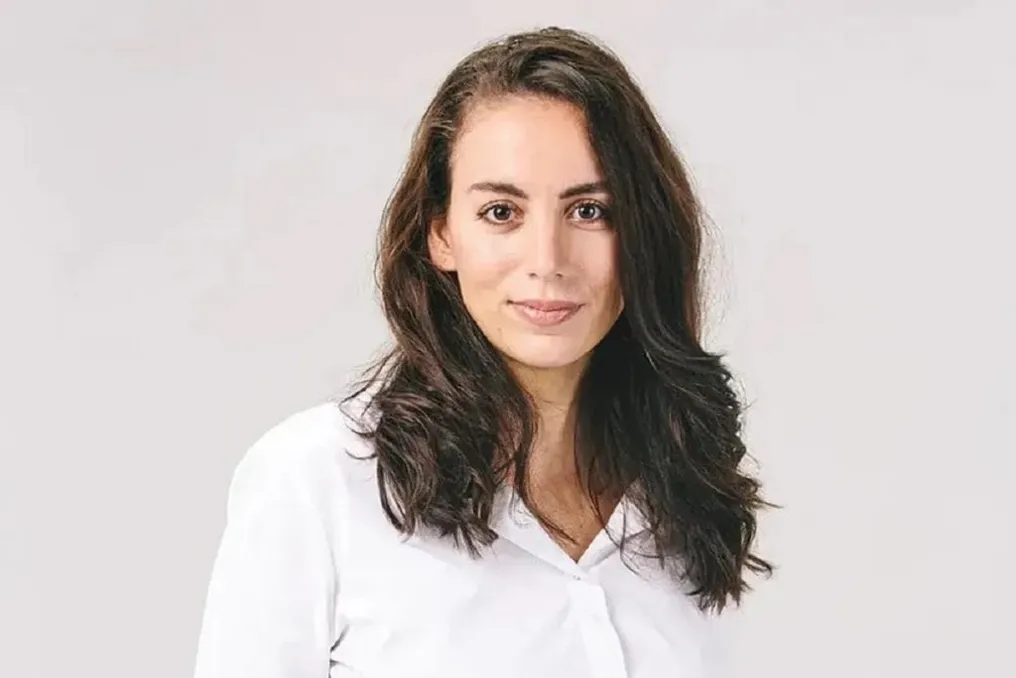
Thinking Machines Lab, a company founded by Mira Murati, former CTO of OpenAI, announced the launch of its first artificial intelligence model, named Inkling. This system utilizes an open weights structure, allowing developers and organizations to modify the model using their own datasets.
Focus on Flexibility and Cost
Thinking Machines Lab developed Inkling aiming for a balance between performance, cost, and adaptability, in contrast to direct competition with the market's more sophisticated proprietary models. Although Inkling contains a total of 975 billion parameters, a smaller number compared to the estimates of major closed models from companies like OpenAI and Anthropic, the company's proposal is to provide a more adjustable option for users.
The company itself stated that Inkling was trained to be a comprehensive and balanced foundational model, strong in various areas and sufficiently flexible for adaptation. It was emphasized that it is not currently the most powerful model, whether open or closed. Despite having nearly one trillion parameters, only 41 billion are activated during each query, a tactic that, according to Thinking Machines, reduces computational expenses and speeds up task execution.
Positioning in the AI Market
This launch occurs in a context where a part of the AI industry advocates for open weights models, opposing the closed development method adopted by corporations such as OpenAI and Anthropic. Thinking Machines points out that this initiative reflects a broader sector reaction to the concept of a 'walled garden,' where systems remain under the exclusive control of creating companies.
Industry leaders, including Alex Karp, CEO of Palantir, and Satya Nadella, of Microsoft, had already issued warnings about the risk of companies compromising their own business models by feeding centralized generalist systems with strategic institutional data they do not control.
Additionally, the company mentions that this launch integrates a Silicon Valley effort to increase the availability of open models developed in the United States, offering an alternative to solutions provided by the Chinese company Alibaba and startups like Z.ai. The company observes that many American companies have been migrating to Chinese open-weights models for less complex AI tasks, seeking to reduce expenses and diversify strategies.
Personalization and Fine-Tuning
Inkling can be customized through Tinker, the first product offered by Thinking Machines. This cloud-based platform allows researchers and developers to fine-tune large AI models without needing to manage the supercomputing infrastructure used in training. The goal is to enable this work to be performed even from a laptop computer.
Last month, Thinking Machines and the hedge fund Bridgewater Associates published a report detailing the use of Tinker to optimize the Chinese open-weights model Qwen3-235B with Bridgewater's own data. According to the report, the resulting model outperformed GPT-5 and Claude Opus in financial document classification while reducing computing costs by over thirteen times.
Training and Partnership with Nvidia
Thinking Machines communicated that the pre-training of Inkling was done from scratch, utilizing 45 million tokens composed of text, images, audio, and video. In the post-training phase, intended to shape the model's behavior, the company combined distillation techniques—which use other AI models as references—with its own reinforcement learning process. The entire training process was conducted using cutting-edge Nvidia hardware.
In March, the two companies formalized a long-term partnership in which Nvidia invested in Thinking Machines. As part of this agreement, the startup committed to implementing at least one gigawatt of next-generation chips to train and operate its future AI models.
Safety and Decentralized Vision
Thinking Machines assured that Inkling underwent rigorous safety testing before its launch. Scenarios analyzed included the model's potential to assist in the creation of biological weapons and to support hackers in cyberattacks, and the system performed well in these tests. However, the company acknowledges that it is still investigating how the safeguards integrated into the model could be altered by third parties, a concern raised by developers of proprietary models due to the system's open nature.
On Friday (10th), Thinking Machines released its first manifesto, exposing its perspective on the future of AI. In this document, the company advocates for a decentralized development model based on local knowledge. It compares the current standard of closed-source AI labs to the concept of 'central planning.' According to the company, although the latter may be effective in specific tasks, such as mathematics and chess, it does not accurately reflect the dynamics of daily human work.
Citing economist Friedrich Hayek, the company argues that 'central planning fails not due to a lack of intelligence, but because of the nature of productive knowledge: tacit, local, ephemeral, and privately held by those who acquired it through their work.' Thus, attempting to consolidate knowledge for a centralized intelligence faces similar challenges.