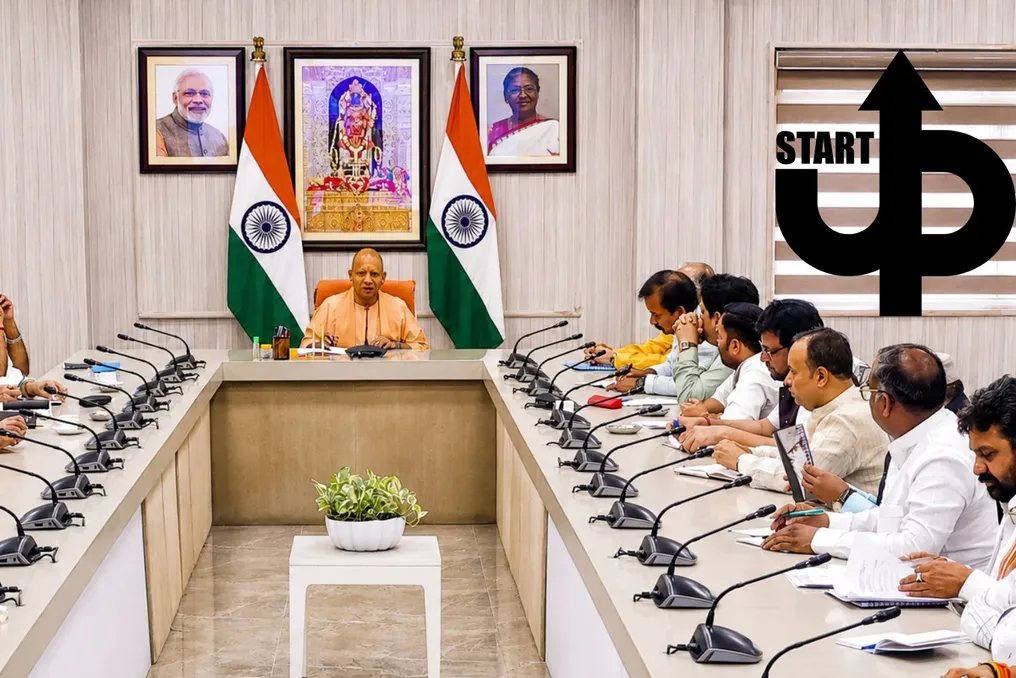
The Uttar Pradesh state government has provided a single point of entry for its innovators. At the cabinet meeting chaired by Chief Minister Yogi Adityanath, the state approved the Uttar Pradesh Startup Mission—a specialized authorized agency that will consolidate all state efforts in startups and innovation under one roof.
For a founder in Lucknow, an incubator in Kanpur, or a student prototyping in Noida, the message is clear: there is now one address for the entire journey, from idea inception to scaling.
How the 'Mission' Will Change the Game
Previously, startup support in Uttar Pradesh was distributed across various departments, programs, and agencies. The new Mission unifies this system into a single autonomous body, which takes on the role of the state's authorized agency for startup implementation. Thus, policy, funding, and mentorship will flow through one coordinated channel.
To ensure accountability at the highest level, the Mission's governing council will be headed by the Chief Secretary, while daily operations will be overseen by a special executive committee. In practice, this means faster decision-making, improved coordination, and a clear definition of responsibility for the state's innovation agenda.
Uniting All Stakeholders
The true strength of the Mission lies in whom it brings together. Now, startups, incubators, investors, industry, and academic circles will work on a common platform, rather than in isolated sectors.
For startups, this means a clear path to funding, mentors, and markets. Incubators and innovation centers will receive institutional support and a network to connect with. Investors can access a curated and reliable stream of enterprises. Industry will gain early access to new talent and technologies. The academic environment will get a bridge to turn university research into real companies. When these stakeholders stop working in isolation and start acting in concert, the entire ecosystem is strengthened.
Comprehensive Support at Every Stage
The Mission is designed to accompany the founder at every stage, not just provide a grant and disappear. Its suite of support tools includes: mentorship to help nascent founders make complex early decisions; acceleration programs for the rapid and proper growth of promising ventures; digital platforms ensuring seamless application processing, tracking, and access; and innovation centers providing physical and technical space for ideas.
Together, these elements form a continuous ladder leading from the spark of an idea to scaling ready to compete nationally and internationally.
Innovations Reaching Villages
One of the Mission's most ambitious goals is geographical reach. Instead of concentrating opportunities in a few metropolises, the state aims for entrepreneurship to stimulate innovation and support the rural economy across Uttar Pradesh. By expanding mentorship, digital access, and innovation infrastructure in regions historically outside the startup map, the Mission intends to transform local problems into local businesses, and local businesses into local jobs.
Building Block for a Trillion-Dollar Economy
The Startup Mission is part of a group of growth-oriented measures approved at the same cabinet meeting. All these decisions were aimed at the state's main goal—becoming a $1 trillion economy. Alongside this, the cabinet approved new policies for data centers and other measures covering industry, healthcare, education, and urban development. The signal is clear: innovation is viewed as core economic infrastructure, not a secondary project.
The state's Department of Information Technology and Electronics is expected to announce detailed operating rules and establish the Mission's directorate in the coming months. By creating a single, empowered agency and bringing together founders, sponsors, industry, and universities on one platform, Uttar Pradesh is betting that coordination is the missing element in its innovation history. If the Mission fulfills its promise of comprehensive support from state to village, the next major Indian startup could emerge in a small UP town as easily as in a metropolis.