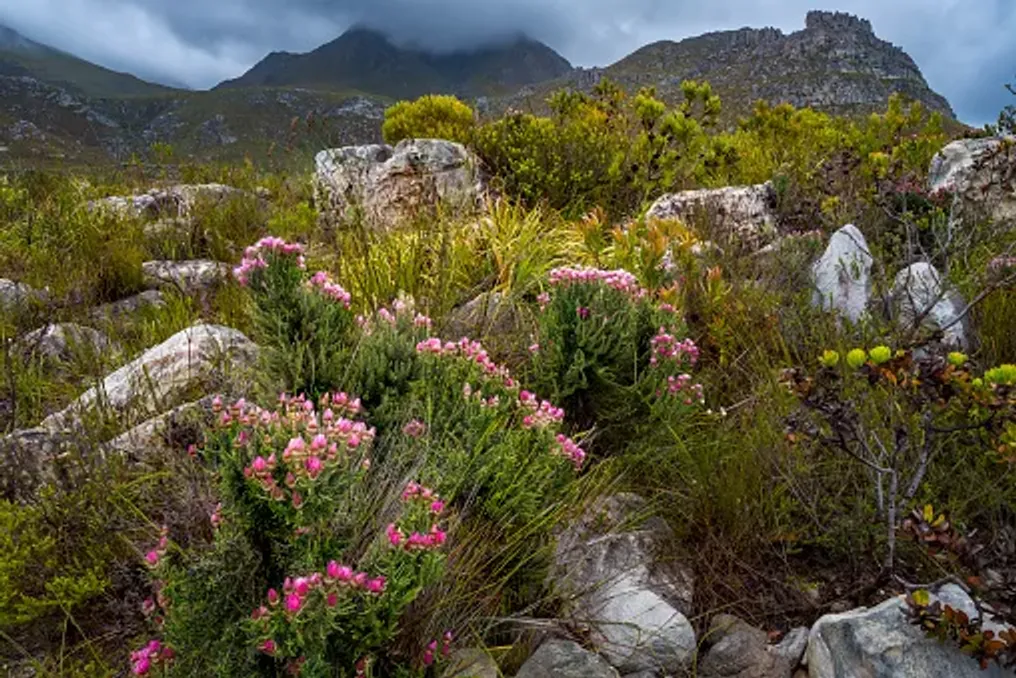
Although the Namakwa region is known as the best place in South Africa to view spring flowers, there are many other locations where nature puts on an impressive floral show. Across the Western Cape, mountain slopes, coastal plains, and reserves burst into color with blooming proteas, ericas, fynbos, and countless other local plants.
A Rich Floral Kingdom
The Cape Floristic Region, being the smallest yet richest floral kingdom in the world, is home to over 9,000 plant species, nearly 70% of which are found nowhere else. While flowering times depend on altitude, rainfall, and species, late winter and spring are generally considered the best seasons to view these amazing landscapes in their most vibrant form.
If you want to see South Africa's extraordinary fynbos without going to the Namakwa region, these destinations deserve a spot on your travel list.
Cederberg Biosphere
Often called the botanical heart of the Cape Floristic Region, the Cederberg Biosphere boasts one of the highest concentrations of plant diversity on the planet. This UNESCO-recognized biosphere stretches between Gordon's Bay, Betty's Bay, Kleinmond, and Grabouw, encompassing about 2,000 plant species, many of which are unique.
Winter and spring transform the mountains into a mosaic of blooming proteas, ericas, leucadendrons, and fynbos. Scenic drives along Clarence Drive offer numerous viewpoints overlooking colorful carpets of fynbos on rugged mountains above the Atlantic Ocean, while hiking trails allow for closer inspection of this unusual ecosystem.
Groote Schuur Nature Reserve
Located above Walker Bay near Gansbaai, Groote Schuur has long been renowned for its exceptional biodiversity, where over 900 native plant species thrive on ancient landscapes. The reserve has become even more remarkable following recent ecological recovery after natural fires. Dormant seeds under the soil have led to an abundant surge of new growth, which conservationists have termed a fynbos superbloom.
Visitors can spot delicate orchids, bright irises, fiery lilies, and young proteas in the recovering landscape. Botanical tours provide insight into the resilience of the fynbos and the crucial role of fire in maintaining one of the world's most diverse plant kingdoms.
De Hoop Nature Reserve
Few places combine spectacular coastal scenery and exceptional fynbos as beautifully as De Hoop Nature Reserve. Known for its limestone fynbos, the reserve creates a unique floral landscape where colorful shrubs and flowering plants stretch towards dramatic dunes and pristine beaches.
In spring, vibrant flowers attract birds, insects, and other wildlife, adding life to the reserve's already rich biodiversity. Visiting during whale season offers an added advantage, as Southern Right Whales are often visible from the shore while the surrounding fynbos reaches its seasonal peak. Hiking trails, cycling routes, and scenic drives provide excellent opportunities to appreciate the reserve's floral diversity.
Harold Porter Botanical Gardens
Situated within the Cederberg Biosphere in Betty's Bay, Harold Porter Botanical Gardens offers one of the easiest ways to experience local fynbos up close. Unlike many botanical gardens, Harold Porter blends organically into the surrounding natural landscape. Tidy flowerbeds transition into wild mountain slopes, creating a captivating experience where visitors can admire both cultivated collections and natural vegetation.
Proteas, ericas, restios, and flowering bulbs create colorful compositions in the cooler months, and well-maintained walking paths lead to streams, waterfalls, and panoramic views surrounded by local flora. Accessible trails and a tranquil atmosphere make it an excellent choice for families and leisurely walkers.
Cederberg
Known for its dramatic sandstone formations and premier hiking trails, the Cederberg also presents an impressive display of mountain fynbos. After winter rains, rocky slopes are carpeted with blooming proteas, ericas, and hardy shrubs adapted to the region's harsh conditions. The contrast between the bright colors and the towering orange sandstone formations creates unforgettable landscapes, especially for photographers and outdoor enthusiasts.
Many hiking trails pass through untouched fynbos habitats, offering visitors a chance to experience one of South Africa's most unique mountain ecosystems while enjoying some of the country's most spectacular wild landscapes.
The Importance of Fynbos for Travel
Unlike the mass spectacles associated with the Namakwa region, fynbos offers a more subtle and varied floral experience. Since different species bloom at different times, there is always something flowering somewhere in the Cape Floristic Region. Beyond its beauty, these plants play a vital role in supporting birds, insects, and other wildlife, helping to preserve one of Earth's richest biodiversity hotspots. Exploring fynbos landscapes also contributes to a deeper understanding of the unique ecosystems that make South Africa a world-class treasure in nature conservation.