Argentina plans to take to the field in its iconic dark blue away kit during the match against England in the 2026 FIFA World Cup semi-final. This decision is driven by both tradition and superstition.
Argentina plans to take to the field in its iconic dark blue away kit during the match against England in the 2026 FIFA World Cup semi-final. This decision is driven by both tradition and superstition.
When Argentina meets England in the 2026 World Cup semi-final at the Atlanta stadium, fans will notice a significant change before the game begins. Lionel Messi and his teammates will replace their usual light blue and white stripes with the dark blue away kit. This choice is dictated not by fashion, but by history, belief, and elements of football superstition.
Argentina submitted a request to FIFA for the right to use an alternative kit against England, despite the team being known worldwide for its traditional colors. The request was approved, sparking much debate among fans who are convinced that the dark blue shirt possesses a special magic.
The decision is rooted in the Argentine tradition of 'cabal'—the belief that repeating certain choices or rituals can bring good luck. In football, where rituals are common, many players and fans believe that history has a tendency to repeat itself.
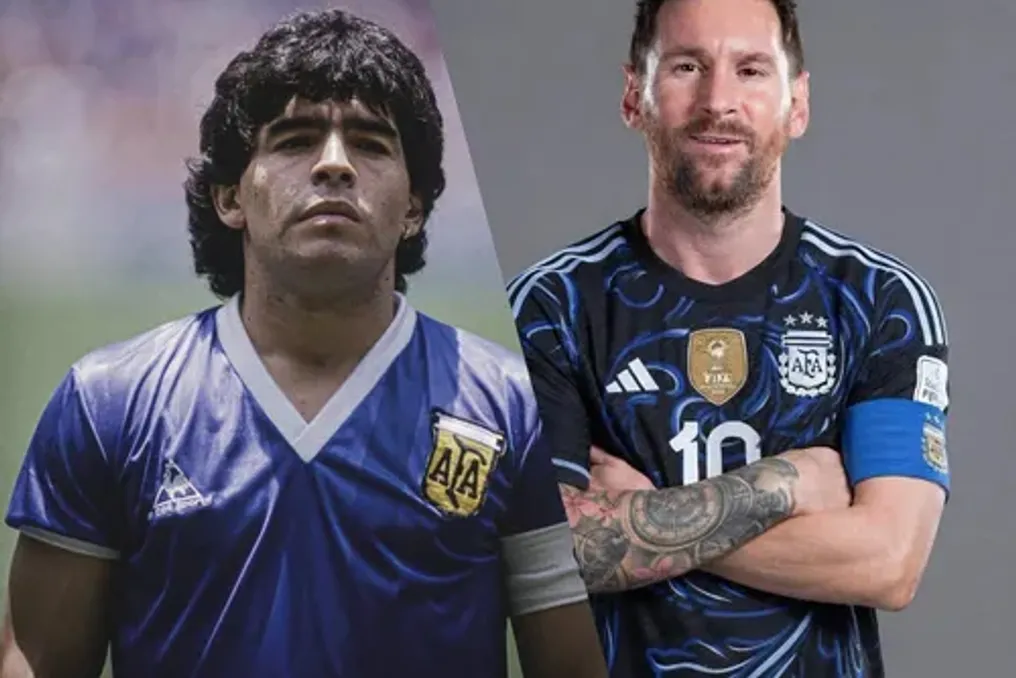
For Argentina, the blue kit is closely linked to two unforgettable World Cup victories over England. The first occurred in the quarter-finals of 1986 in Mexico. Wearing the dark blue kit, Diego Maradona delivered one of the most famous games in football history. He scored the controversial 'Hand of God' goal and then achieved a stunning individual breakthrough later dubbed the 'Goal of the Century,' securing a 2-1 victory for Argentina.
The second memorable instance took place at the 1998 World Cup in France. Argentina was again dressed in blue and beat England on penalties after a thrilling 2-2 draw.
This contrast is hard for many Argentine fans to ignore. In major World Cup matches, when Argentina played against England in its traditional striped kit, they lost both in the 1966 quarter-final and the 2002 group stage.
The blue shirt also has its own history. Before the 1986 match, Argentina needed a spare kit, and they ended up wearing a simple dark blue shirt. Maradona famously endorsed this choice, stating: 'It's a good shirt. We will beat England in it.' His words became part of Argentine football folklore.
Nevertheless, the shirt is not a guarantee of success. Argentina also used the blue color in the finals of the 1990 and 2014 World Cups, losing both times to Germany. Messi finally lifted the trophy in 2022, dressed in the team's classic light blue and white colors.
Today's match opens a new chapter in one of the greatest football battles. For Messi, it will also be the first time in his 21-year international career that he faces England. Regardless of whether the dark blue kit brings another glorious victory, Argentina's decision demonstrates that in football, history, belief, and tradition can hold as much weight as tactics.
Alan Donald's career, known as White Lightning, was marked by both incredible triumphs and painful defeats. Today, he uses both these experiences to shape a new generation of fast bowlers from South Africa.
Mentioning Alan Donald's name evokes strong memories even among the greatest batsmen in cricket history. Cricket folklore is filled with moments when balls zipped past noses, ribs were bruised, and fierce series of games were played against players like Brian Lara, Sachin Tendulkar, Steve Waugh, and Michael Atherton. For many South Africans, White Lightning will forever remain a symbol of the greatest performer in fast bowling.
During an interview on The Biggest Man in Cricket, Alan Donald shared thoughts that, in his opinion, only outstanding fast bowlers understand. He admitted that fast bowling has an addictive quality. According to Mike Procter, who mentored him, when a person reaches a state of complete dominance and feels invincible, they must understand the reasons for this, as the situation will change one day. He noted that there is no better feeling than completely controlling the game, taking wickets, and hitting the pads hard.
Discussing his career, Donald mentioned the 1999 Cricket World Cup semi-final against Australia. This moment remains one of the defining events in South African sporting history. He recounted that this experience made him look differently at the necessity of supporting players going through or experiencing such pain.
Thanks to this experience, Donald has become an influential coach. Having experienced both thrilling moments of complete dominance and crushing low points, he understands both sides of elite sport, and now passes these lessons on to the next generation of South African fast bowlers.
He expresses enthusiasm for Quinton de Kock, who is developing under his guidance in the Lions team. Donald notes that De Kock surpasses his peers at the school level due to his outstanding variations, but sometimes needs reminders about the importance of trusting his primary delivery more. He is confident that De Kock will join the national team this season.
Donald also positively rates Gerald Coetzee, calling him a 'super kid'. Despite a string of injury setbacks, he believes that given the number of matches during the summer, Coetzee could make it into the bowling reserve group.
Donald concluded his Test career with 330 wickets in 72 matches. Rabada has already surpassed this figure in just 73 Tests. However, Donald admires him not just for the statistics. He says: 'What a bowler, what a performer. You judge a person by stability, and he was exactly that and even more.'
Speaking about his work, Donald emphasizes that his goal is not to create another Alan Donald, but to help every young fast bowler become the best version of themselves. South Africa is very fortunate to have such a person with experience investing in its future. His lived experience of complete dominance and public turmoil has become his greatest tools in coaching.
The Ministry of Sport, Arts and Culture spent nearly 31 million rand on a program to support South Africa's participation in the FIFA World Cup. These funds were allocated to various aspects, including international fan events, official travel, and hospitality suites and match tickets.
The total amount of government investment, according to the department's latest expenditure reconciliation, amounted to R30,954,370. The program was designed to support South Africa's participation in the tournament while simultaneously promoting the country as a tourist destination, as well as its culture, creative industries, and investment opportunities to an international audience.
However, the department acknowledged that it cannot yet specify any particular investment agreement or trade deal concluded solely due to this program. It was stated that potential business contacts and investment opportunities gained through international activations are still being consolidated with program partners and will be included in the final report after verification.
The largest portion of the funding, amounting to R10 million, was allocated to public activations of South Africa in the cities of Mexico City, Atlanta, and Monterrey. These funds covered the conceptualization, design, construction, and operation of international exhibition venues, including branding, stage design, audiovisual production, venue setup, decorations, technical equipment, logistics, and subsequent infrastructure dismantling.
These activations took place over several days and weeks in different locations. They served as platforms for South African musicians and performers, chefs showcasing local cuisine, and exhibitors selling local art, craft, and cultural products. The department emphasized that these activations were a central part of its cultural diplomacy and national branding program, aimed at promoting South Africa as a destination for tourism and investment.
Expenditures on official travel and delegations totaled R7,865,134.97. This sum covered international and domestic flights, accommodation, ground transportation, daily allowances, travel insurance, and other operational costs associated with the department's program in the host cities. The official delegation included the minister, authorized executive staff, the CEO, departmental officials overseeing the management and implementation of the program, as well as staff responsible for logistics, communications, protocol, and operational coordination.
Travel expenses also included approved South African artists and cultural representatives participating in the cultural diplomacy and national branding program. Furthermore, an additional R6,706,925 was spent on the 'South Africa 2010 Legends' exhibition match and related heritage events. These funds covered the participation of former South African footballers in approved exhibition matches, as well as operational needs related to the football diplomacy and heritage program.
Hospitality suites in Atlanta and Monterrey cost taxpayers R3,361,845.18. According to the department, these facilities were used as official platforms for meetings between government representatives, sponsors, investors, strategic partners, international colleagues, football stakeholders, and invited guests. The purpose of these suites was to facilitate meetings, business networking, investment promotion, and the showcasing of South Africa's sporting, cultural, and tourism offerings.
An additional R3,011,465 was spent on 294 tickets for three matches attended by participants in Mexico City, Atlanta, and Monterrey. The tickets included Category 1, Category 2, and Category 3 seats, which had different prices within the FIFA ticketing system.
The program was financed through approved departmental allocations for the development of sport, arts and culture, heritage, international relations, strategic partnership, and executive support. Private sponsors separately provided participation for 'Lucky Fans', journalists, podcasters, influencers, and other fan mobilization events, which helped reduce the burden on the state.
Artists and cultural representatives were selected based on the requirements of the cultural program, including their significance to the host city's audience, ability to present a compelling South African offering, availability, and compliance with technical, visa, and transport requirements. Journalists, podcasters, influencers, and content creators were considered as a separate media group and selected based on audience reach, credibility, and the ability to create real-time content about football and lifestyle. 'Lucky Fans' were selected separately through a public video competition and evaluation process.
The department explained that it intentionally separated reporting among officials, artists, media participants, sponsored fans, and implementing partner personnel to avoid a distorted view of how the program was funded and executed. Expected outcomes of the program included international media coverage, tourism inquiries, stakeholder introductions, cultural exchange, audience attendance, digital engagement, and meetings with football federations, sponsors, embassies, and potential investors. The department clarified that projected media coverage would not be counted as a return of funds to the treasury.
Instead, it would be assessed whether the program managed to ensure sustainable coverage, valuable business contacts, interest in tourism, formal partnerships, and subsequent opportunities. Partnerships were established or strengthened with Brand South Africa, Coca-Cola, HONOR, Betway, Cell C, Old School, The Sports Trust, the South African Football Association, and South African diplomatic missions. These organizations assisted with fan travel, media participation, fan park experience, communications, and program execution.
The department also noted that expenditures remain under the control of the Public Finance Management Act, Treasury regulations, National Treasury cost containment measures, and its own financial and procurement policies. Safeguard measures included prior budget approval, separate accounting of public and private expenditures, account verification, tracking of tickets and hospitality suites, and reconciliation of travel, accommodation, and program expenses. A consolidated report after the tournament will only be published after reconciling all accounts, travel claims, sponsor contributions, and implementing partner invoices. The department preferred to publish a report that withstands audit rather than presenting figures that might require correction.