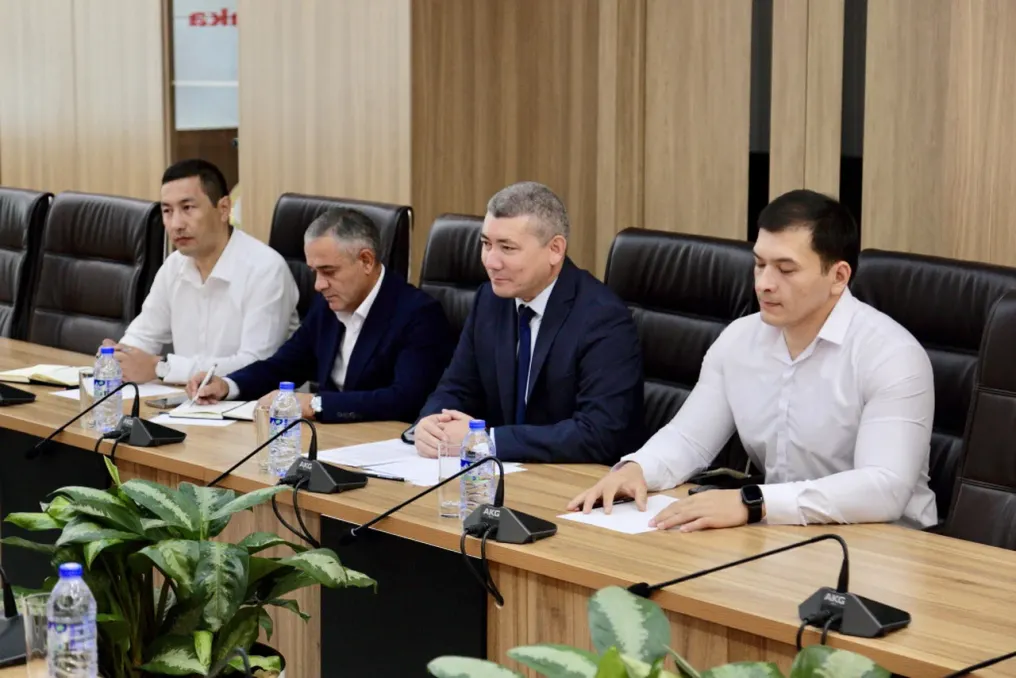
The Korzinka supermarket chain and the Ministry of Preschool and School Education of the Republic of Uzbekistan signed a memorandum of cooperation to implement joint projects aimed at supporting children and developing the education sector.
The Korzinka supermarket chain and the Ministry of Preschool and School Education of the Republic of Uzbekistan signed a memorandum of cooperation to implement joint projects aimed at supporting children and developing the education sector.
The first initiative under this partnership is called 'School Readiness.' This social and educational project is designed to help students in grades 2-4 from socially vulnerable families prepare for the upcoming academic year. As part of the program, 500 children will receive school supply kits, as well as gift vouchers from the Korzinka supermarket chain.
In addition to targeted material assistance to families, the project includes activities aimed at fostering a culture of reading, instilling skills for productive learning, and actively involving parents in the educational process.
Farhod Bokiyev, Deputy Minister of Preschool and School Education, noted that preparing children for school requires joint efforts from the state, society, and business. He emphasized that the ministry supports initiatives that help families and stimulate children's interest in learning, adding that the signed memorandum reflects a general commitment to educational development and child support across the country.
Akmal Asadov, CEO of the Korzinka supermarket chain, stressed that supporting youth and promoting education are vital pillars of the company's social responsibility. He indicated that collaboration with the ministry will help schoolchildren start the new academic year confidently while simultaneously promoting more active parental involvement in their children's education.
The company stated that this memorandum marks the next stage in expanding its social programs implemented jointly with state institutions and public organizations. It is expected that this partnership will lay a solid foundation for future efforts to improve access to quality education and implement long-term social programs that benefit the younger generation.
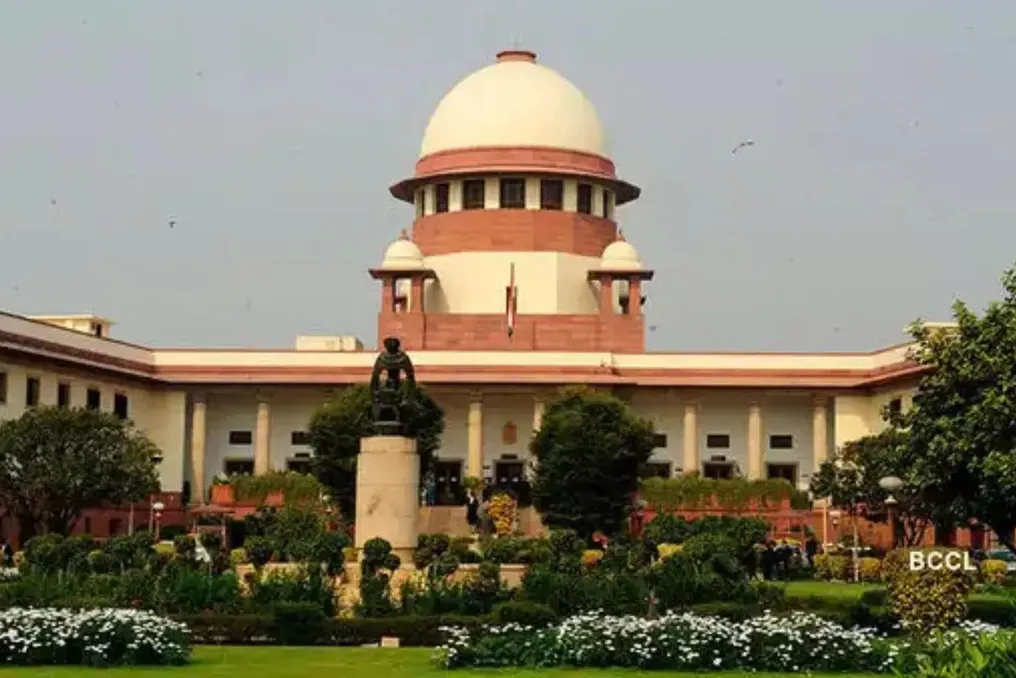
The Supreme Court of India commented on Thursday against the introduction of a third language in schools, noting that the decision to implement this subject at the ninth-grade level could create undue stress for students preparing for board exams.
The ruling was made by the bench of judges B. V. Nagarathna and R. Mahadevan while hearing an appeal by the Tamil Nadu government. This appeal challenged a directive from the Madras High Court concerning assistance in establishing Jawahar Navodaya Vidyalayas in every district of the state.
Judge Nagarathna suggested that if a third language needs to be taught, it should begin to be studied from the sixth grade. The Tamil Nadu government explained its objection as being related to the three-language policy. However, the court bench emphasized that this policy does not mandate the study of Hindi. The court noted: 'A state language must be taught, English must be taught, and any third language must be taught. It is not stated that this must be Hindi.'
In response to the assertion that the third language becomes mandatory from the ninth grade, Judge Nagarathna advised: 'You introduce it in the sixth grade. The earlier, the better.'
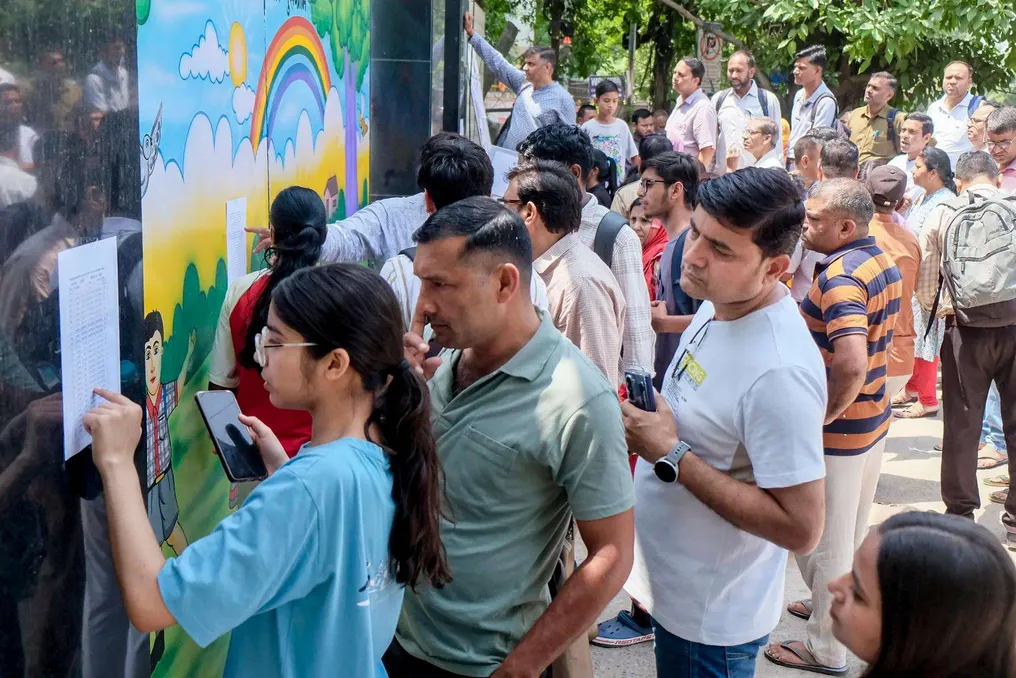
The NEET-UG 2026 exam showed a significant increase in performance among top participants following the material leak scandal and the nationwide retest. The leaders of the exam were Aryan Gupta from Punjab and Panshul Bansal from Haryana, who together scored 715 out of 720 possible marks.
Their result was 29 points higher than the 686 achieved by the 2025 winner. Last year, due to an unusually difficult exam format, no candidate managed to cross the 700-mark threshold.
The results also revealed strong trends regarding first-time takers and gender ratio. More than 93% of the 138 candidates scoring above 690 took NEET for the first time, with 99% of them being between the ages of 17 and 19. Women constituted over 58% of the total qualified candidates (11.21 lakh), and they showed a higher success rate—56.8%—compared to 55.1% for men.
The National Testing Agency (NTA) announced the results on Thursday evening. Approximately 20 lakh candidates participated in the retest held on June 21 across 5440 centers located in 551 cities in India and 14 cities abroad. The initial exam, which took place on May 3, was cancelled on May 12 after allegations of test material compromise surfaced. The Central Bureau of Investigation (CBI) is currently investigating the leak case.
The rise in top scores was quite noticeable: 19 candidates scored above 700, whereas there were none in 2025. Overall, 1492 candidates achieved a score of 650 or higher, 10,160 exceeded 600, and 90,780 scored at least 500. Out of the 138 candidates scoring above 690, 66 cities provided representatives.
In 2024, initially, 17 candidates received the perfect score of 720 amid a major dispute over bonus marks. After the review of one disputed question by order of the Supreme Court, the number of candidates retaining the highest score was reduced.
The number of qualifiers decreased from 12.36 lakh in 2025 to 11.21 lakh this year, but the number of participants also dropped from 22.09 lakh to nearly 20 lakh. Consequently, the overall qualification level remained relatively stable, at about 56%, despite the cancellation and retest.
Uttar Pradesh once again became the region with the highest number of successful candidates, where over 1.7 lakh people qualified, while Lakshadweep provided 43 representatives. In 2025, Uttar Pradesh also led with over 1.70 lakh qualifiers, followed by Maharashtra with over 1.25 lakh and Rajasthan with over 1.19 lakh.
The top 17 candidates, all scoring above 705, represented eight states: Punjab, Haryana, Rajasthan, Uttar Pradesh, Maharashtra, Bihar, Tamil Nadu, and Telangana. Seventeen regional leaders scored 700 or more, and 26 scored above 690.
Among the state and Union Territory leaders were Jigmet Yangchen Lhamo from Ladakh with 530 marks, Dhruv Tripathi from Andaman and Nicobar Islands with 606 marks, and Famida Anes from Lakshadweep with 573 marks. Representatives from every northeastern state were also included in the list of regional leaders.
Although NTA did not publish a classification by rural and urban areas or educational background, the presence of 138 top scores in 66 cities, as well as regional leaders from remote Union Territories and all northeastern states, indicates a wide geographical spread beyond the largest metropolises. This coverage contrasts with the more noticeable concentration in the top-100 list of 2025, where Delhi contributed 17 candidates, Rajasthan 14, and Maharashtra 11. Last year, only one woman made it into the top 10, although women accounted for 7.22 lakh out of 12.36 lakh qualified candidates.
Among social categories, 5.12 lakh candidates from the OBC-NCL group qualified, followed by 2.91 lakh from the general category, 1.59 lakh from the SC category, 95,026 from Gen-EWS, and 63,716 from ST communities. The successful pool also included 3,666 candidates with disabilities (PwBD) and 303 candidates with disabilities (PwD). The exam was conducted in 13 languages.
NTA reported that the announcement of results was timely to ensure continuity in medical counseling and admissions. The preliminary answer key was published on June 25, and scanned OMR sheets and recorded answers were displayed from July 13 to 15, with the final key and results released on July 16. The NEET-UG 2025 results were announced on June 14. Successful candidates will now proceed to counseling for MBBS, BDS, AYUSH, and allied specialties. The current list from the National Medical Commission shows 129,602 MBBS seats in 823 colleges for the 2025-26 academic year, although the final seat matrix for 2026-27 may change before counseling begins. Due to the material leak scandal, the government has decided to transition from the 'paper and pen' format to computer testing for NEET-UG starting from 2027 as part of exam reforms.
A delegation from Uzbekistan visited Russia to study the system of training and certification of medical personnel in the country. The review covered all stages: from career guidance and training of mid-level medical staff to postgraduate education for doctors and the development of management competencies for healthcare leaders.
At Medical College No. 1 in Moscow, the delegation familiarized itself with modern methods of teaching nurses and other mid-level specialists. Special attention was paid to practice-oriented curricula, the application of simulation technologies, and cooperation between the college and medical institutions.
At the Human Resources Center of the Moscow Department of Health, delegates were presented with a unified system for assessing the professional skills and knowledge of healthcare workers. Furthermore, during a visit to the Russian Academy of Continuous Professional Education, programs for residency, retraining, and advanced training for doctors were discussed. The parties considered the possibility of creating joint educational programs and internships for Uzbek specialists.
The delegation also visited the Russian Presidential Academy of National Economy and Public Administration, as well as the Academy of Administrative Directors of the President of the Russian Federation. There, the approach to training managers in healthcare was studied, including the development of managerial abilities, project management, strategic planning, and the evaluation of medical institution efficiency.
At the end of the visit, the parties discussed the potential for launching joint educational initiatives, training teachers, organizing internships, and implementing modern methods for testing the knowledge and practical skills of medical workers in Uzbekistan.