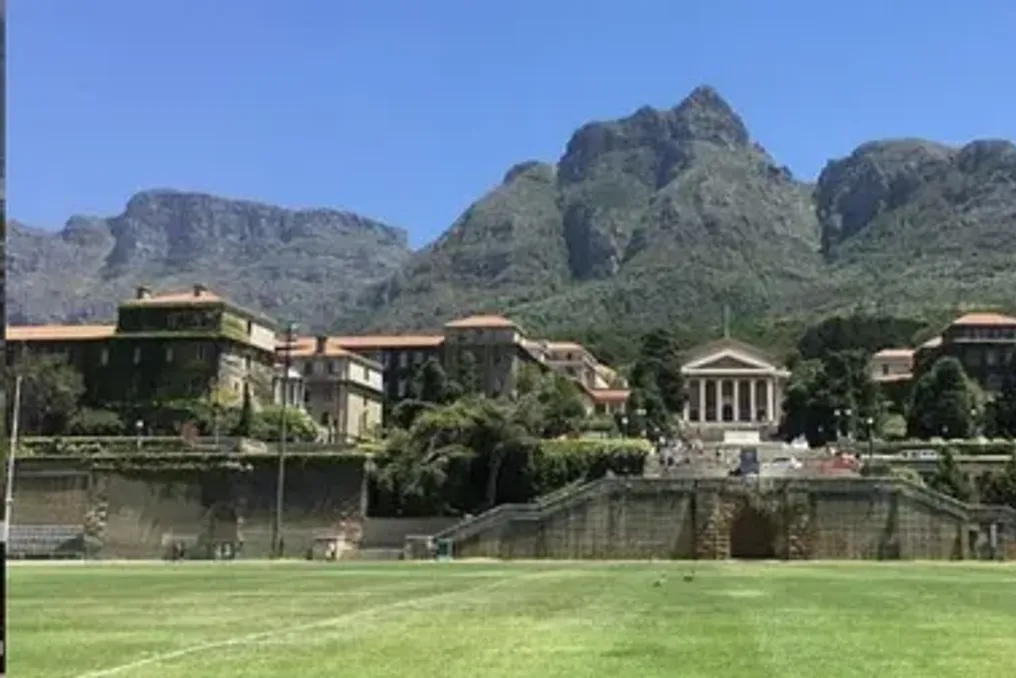
In the context of discussions on human resource policy at the University of Cape Town, Tebogo Letsi, chairperson of the Parliamentary Committee on Higher Education and Training, expressed concern over statistical data. He noted that 39.7% of professors are white, 39.3% are foreign nationals, while African, Indian, and Coloured professors account for only 22.6% of the total.
Racial Debates and Nation Building
More than three decades after the end of apartheid, it is worrying that South African legislators continue to engage in national discussions using racial frameworks inherited from that era. The latest controversy surrounding the hiring of foreign academics in universities, which occurred amid nationwide protests against xenophobia, demonstrates how deeply these disagreements are rooted in the country's political discourse.
Letsi emphasized that while these figures may require careful study, especially regarding the transformation and development of local academic staff, the manner in which these debates are conducted is more alarming. South African leaders often speak of prioritizing South Africans, yet simultaneously they continue to divide citizens along the racial lines of the apartheid era, while treating foreign nationals as a single group. This contradiction undermines the project of nation-building that democracy was supposed to promote.
Socio-economic Background and Xenophobia
The country proudly calls itself 'one nation, many peoples,' and unity is evident, for example, during support for the Bafana Bafana, Springboks, or Proteas teams, where race, language, and ethnicity take a backseat to a shared national identity. Nevertheless, many politicians revert to divisive language when discussing migration, transformation, and employment.
This occurs against a backdrop of growing public discontent. Rising unemployment, slow economic growth, low quality of public services, and pervasive corruption have made many South Africans feel abandoned. As public trust in institutions declines, it becomes tempting for political leaders to seek simple explanations for complex problems, and debates about xenophobia become one such channel.
The Importance of International Knowledge Exchange
Accusing foreigners of systemic failures risks diverting attention from the true causes of the crisis: weak economic growth, inefficient governance, outdated infrastructure, and inadequate educational outcomes. More troubling is the apparent forgetting of South Africa's own history. During apartheid, many African countries hosted South African emigrants, activists, students, and freedom fighters, providing them with refuge and support, which contributed to the liberation struggle and the formation of modern democratic South Africa.
Therefore, it is extremely disheartening that many Africans coming to South Africa in search of opportunities are now subjected to suspicion, hostility, and sometimes violence. This does not mean, however, that South Africa should abandon efforts to support its citizens. Every government has an obligation to ensure that its population benefits from economic opportunities and public investment, but prioritization must not be confused with exclusion or become an excuse for xenophobia.
Academic Environment and Globalization
The discussion about universities illustrates why these differences matter. A university is not just another workplace; it is an institution created to generate ideas, conduct research, and educate future generations. Academic excellence has always depended on the movement of people and ideas across borders. The world's most respected universities are global structures where scholars regularly work outside their home countries, and scientific breakthroughs often arise from international collaboration.
South Africa has benefited immensely from this exchange of ideas. Scholars from across the African continent and beyond have strengthened local universities through research, postgraduate supervision, and mentorship. In many cases, they hold senior positions due to rare skills acquired through decades of study and experience. This is particularly critical for a country facing a shortage of doctoral program directors and researchers.
Balance Between Quality and Development
Creating a professor differs from filling a vacancy in a regular organization because academic expertise requires years, often decades, of development effort. In highly specialized fields such as engineering, health sciences, artificial intelligence, mathematics, and biotechnology, competition for qualified scientists is very high. Closing doors to international talent would weaken universities, reduce scientific output, and ultimately harm students.
At the same time, proponents of internationalization must acknowledge legitimate concerns about transformation. Letsi is right to question why, despite years of investment in programs to develop Black South African scholars, some institutions still cannot transform their higher academic ranks. State funding aimed at building local capacity must yield measurable results.
The key question is not whether a scholar is a foreigner or a South African. The real question is whether universities successfully balance excellence, transformation, and national development. These goals do not exclude each other; on the contrary, the best higher education systems in the world pursue them simultaneously. Countries like Canada, Australia, Germany, the UK, and the USA attract global talent while actively investing in the development of domestic researchers and scholars. South Africa should follow this example.
Conclusion: Globality and National Goals
Universities must remain globally connected while demonstrating a clear commitment to nurturing local talent. Every appointment must be transparent, lawful, and linked either to genuine skill needs or academic excellence. Foreign scholars must contribute not only through teaching and research but also by mentoring South African colleagues and assisting in the training of future scholars.
The government, for its part, must accelerate efforts to graduate more doctoral students, researchers, and professors from historically disadvantaged communities. Complaints about foreign academics ring hollow if the state does not expand the pipeline of local talent. Ultimately, this discussion should never be reduced to a choice between South Africans and foreigners; it should concern the creation of universities capable of competing on the world stage while serving the goals of national development.
Minister of Higher Education Buti Mnamela insists that South Africans should have priority in employment but warns against reducing the complex issue to slogans, xenophobia, or disinformation. He argues that internationalization is not a loophole to bypass local employment or dilute transformation. Prioritizing South Africans is certainly important, but South Africa cannot be left in isolation. The most successful nations are those that attract the best minds, develop their own talents, and ensure their mutual growth—which is the balance that South African universities and politicians should strive for.