Coastal food gathering is gradually shifting from random seasonal harvesting to organized coastal farming. Farmers are beginning to use resilient, marine plants to diversify local food systems.
The History of Dune Spinach Cultivation
One striking example is dune spinach (Tetragonia decumbens). This nutritious species, historically valued as a beach stabilizing plant, is gaining recognition in South African agronomy. Due to its exceptional climate resilience, this wild plant has successfully moved from the coastline to research agricultural plots, indigenous chefs' kitchens, and modern restaurant menus as a sustainable crop.
The journey of cultivating dune spinach began in 2016. At that time, Lubi Rush, a food innovator, activist, author, and coordinator of the Local Wild Food Hub program at the Sustainability Institute (SI), established the Cape Wild Food Garden experimental garden on the Moya weKhaya urban farm in Hout Bay, Western Cape. This initiative received support from SI and Abalimi Bezekhaya.
Rush recalls that funding was available at SI 'by pure chance.' She notes that, to her knowledge, this was the first attempt to cultivate dune spinach alongside six other Cape wild plants she observed in nature and wished to test the viability of intentional cultivation for.
Scientific Research and Range Expansion
These early trials led to the establishment of the Local Wild Food Hub at SI in 2022. Today, the organization conducts field trials with Edible Futures in collaboration with the Royal Botanic Gardens, Kew, at SI and Grootbos Foundation. Researchers collect data using soil moisture sensors and weather stations to develop practical growing recommendations, including planting densities, watering schedules, and expected yields.
Rush explains that laboratory analysis confirmed the high mineral content in the selected wild plants, which could aid in combating malnutrition. Dune spinach is not only found in the Western Cape; it grows far into Gqeberha and along the Wild Coast in the Eastern Cape.
One woman speaking the Khoisan language, who sold jewelry near a local hotel, recounted taking a piece of dune spinach from a basket and calling it 'Morogo, imifino' (wild leafy greens), which was a 'surprising living confirmation' for her.
Potential Beyond Culinary Use
Research has also shown that dune spinach can help in soil desalination and adapt to both hot, dry conditions and wet seasons. This makes it a promising crop for year-round production with minimal irrigation.
Although human nutrition remains a priority, Rush believes dune spinach can also be used as livestock feed. She shared an experience where several carts of it were given to pigs, and they 'almost fought each other to get to the dune spinach,' leading her to consider it a potential pasture plant.
However, creating a market remains the biggest challenge. Rush emphasizes that 'the supply flow depends on the farmers who grow it and the chefs interested in using it.' To bridge this gap, she wrote guides for farmers and chefs, trained farmers and educators through the Local Wild Food Hub, and helped integrate this crop into school nutrition programs and restaurant kitchens.
Versatility of the Coastal Plant
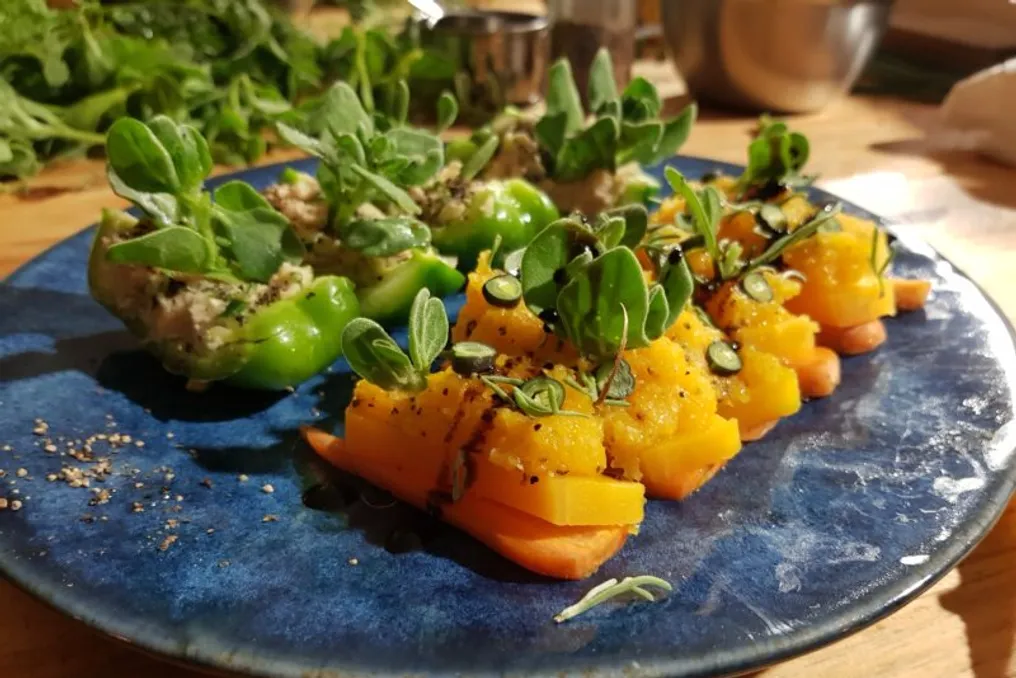
For an indigenous chef and cultural food system practitioner, Shihan Domingo from Retreat, Cape Town, this coastal plant is a living ingredient that changes its profile depending on the time and place of harvest. Domingo asserts that the plant's versatility allows it to be used in both raw and cooked dishes. The tender tips provide a crunchy texture in salads or as sandwich toppings, while the broader leaves hold their shape well when fried, baked, or slow-cooked in traditional stews.
Beyond culinary appeal, Domingo introduces participants of her cultural 'Dream Walks' to dune spinach as a vital historical food source and building material along the coast. She highlights the unique, practical connection to this species that goes beyond simple foraging. Domingo explains that the dense foliage acts as a natural insulator, keeping the soil cool under the scorching sun. Thus, on a hot day, one can shelter under the dense canopy of leaves or dig into the sand beneath it if protection is needed. The reverse effect is observed when temperatures drop: the thick mat of leaves retains heat, protecting roots from cold coastal nights. 'It's warmer at night, and there's wind protection, plus a nutritious snack nearby.'