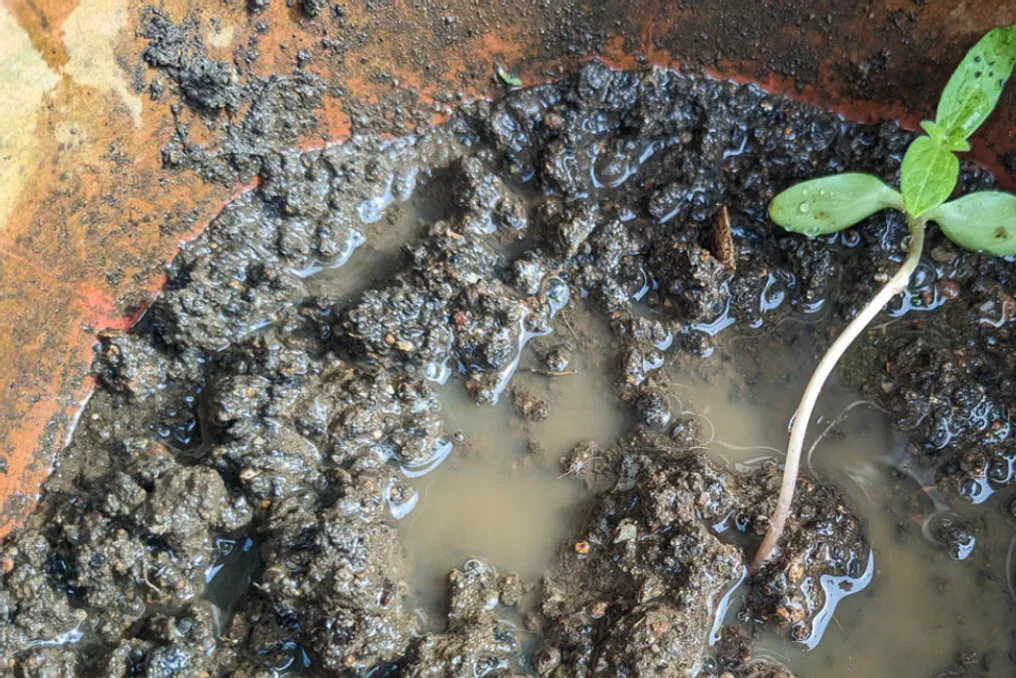
Several days of continuous rainfall can create serious problems for garden crops because the soil does not dry out quickly, pots remain heavy, and plants begin to lose freshness, leaves pale, stems soften, and flowers wilt prematurely.
The Importance of Air Access for Roots
Many believe that waiting for the sun is enough, but by then, underground damage may have already begun. Roots need air as much as they need water, and prolonged exposure to water leads to life support problems for the plant.
Steps to Combat Overwatering
There are several simple measures that can be taken during the rainy season to minimize damage.
Ensuring Water Drainage
If puddles form around the plants, one cannot wait for them to disappear on their own. The longer the water stays near the roots, the higher the risk of root rot. Garden tools, a stick, or a broom handle should be used to create shallow channels directing water away from the planting area. These channels should be three to five centimeters deep and gently slope towards a lower part of the garden. If raised beds are present, ensure that drainage channels remove excess water without washing away the soil. After every heavy rain, these channels should be checked, as leaves and dirt can quickly clog them.
Raising Potted Plants
Potted plants often suffer from clogged drainage holes with dirt or from being pressed against the floor. To solve this problem, the pots should be slightly raised using bricks, broken tiles, wooden blocks, or special terracotta stands. Even a small gap of two or three centimeters will help water drain properly. During the rainy season, it is recommended to inspect the drainage holes every few days and remove any roots, moss, or soil that might be clogging them. If water collects in the saucer under the pot, it must be emptied immediately so that the plant is not sitting in water.
Loosening the Topsoil Layer
Heavy rain often compacts the soil surface, hindering air access to the roots. It is necessary to wait until the soil is moist, not waterlogged, and then gently loosen the top layer by one or two centimeters using a fork or an old spoon. It is important to avoid digging deeper, as wet roots are easily damaged. This small step also promotes more even drainage of future rainwater instead of forming puddles in one spot.
Mulching After Rain Subsides
Mulch is beneficial, but applying it during a heavy downpour can trap excess moisture around the roots. As soon as the weather improves, spread a thin layer of dry leaves, coconut coir, rice husks, or wood chips around the plants. The mulch should be kept about five centimeters away from the stem to reduce the risk of fungal diseases. If the mulch gets wet and starts to smell musty, it should be replaced with a fresh, dry layer.
Temporary Tilting of Heavy Pots
Large containers often hold significantly more water than small ones, especially if the potting mix is dense. If moving the pot is difficult, it can be carefully tilted for a few hours after the rain stops. This helps to drain trapped water through the drainage holes faster. However, the pot should not be left tilted overnight, as this can disrupt the condition of the roots or cause the plant to lean permanently. Once the excess water has drained, the pot should be returned to its original place.
Adding a Ring of Coarse Sand
Some plants have difficulty during monsoons because the topsoil remains too wet. A thin ring of coarse river sand can be formed around the base of the plant, which helps to drain surface water faster and keep the stem area drier. A small gap must be left around the stem itself. It is important to avoid using fine construction sand, which can harden when wet and worsen drainage problems.
Using Clay for Moisture Absorption
An unglazed clay container can help draw excess moisture from overwatered soil. An empty clay pot should be buried halfway into the ground next to the affected plant, leaving the opening above the surface. Porous clay absorbs moisture from the surrounding soil, helping the area around the roots dry out a bit faster. This method is especially effective in vegetable beds and flowerbeds where water often accumulates after repeated rains.
Removing Wilted Parts
Old flowers and damaged leaves stay wet longer in damp weather and are often the first places where fungal problems occur. Wilted buds and leaves that have turned black, soft, or mushy should be removed. This improves air circulation around the plant and allows it to focus energy on healthy growth. Cutting tools should be cleaned before moving to another plant to prevent the spread of diseases.
Suspending Fertilization
After several days of heavy rain, many gardeners reach for compost or fertilizers, assuming nutrients have been washed away. It is usually better to wait. Overwatered roots are unable to absorb nutrients effectively, and fertilizing too early can create additional stress for the plant. The soil should be allowed to dry out a bit, and you should wait until new healthy shoots or leaves appear before fertilizing again.
Careful Leaf Inspection
The soil provides only part of the information, but the leaves often reveal much more about how the plant is coping. Pay attention to yellow spots between veins, drooping appearance despite moist soil, curled edges, or black spots. This could be an early sign of root problems. Daily inspection of plants in the morning after the rain will help notice problems at an early stage and improve drainage before serious damage occurs.
Conclusion
Heavy rains are part of any growing season, but they do not have to negate months of care and patience. Plant care during monsoon season is less about increasing effort and more about taking action at the right time. Ensuring water drainage, maintaining air access to the roots, and regularly inspecting plants after each downpour will help them recover faster and continue to grow once the skies clear.